King Diamond Offers 11th Hour Compromise to End U.S. Debt Crisis
Posted by Keith Spillett in General Weirdness, King Diamond For President in 2012, The Politics Of Catastrophe on July 22, 2011

The King Speaking To Reporters At Today's Press Conference
Tired of the political bickering taking place between the Republicans and Democrats over the raising of the debt ceiling, metal legend King Diamond has offered a compromise in the hopes of averting a major economic crisis in the United States. At a 7:30 PM press conference, The King scolded President Obama and the Republican Party for “playing political games” at a critical time. “This is unacceptable!” shouted the King in a mild falsetto voice, “My sleep has been disturbed by rumors of the US Bond rating being downgraded. Do you people understand what the fiscal ramifications of that would be!?!?! This must stop nowwwwwwwwwwww!!!!!”
In response to the stalemate in Washington, The King offered an economic package that he felt would be acceptable to both sides. The King’s debt deal would shave 3.8 trillion dollars off of the Federal Debt over a 10 year period with only a modest tax increase and minor cuts to Social Security and Medicare. He intends to generate additional revenue by putting a 20 percent tax on all albums by “awful mallcore bands”. He also plans on heavily taxing all hipster related products. “You know those stupid tee-shirts they sell at Target with pictures of Spam and Dr. Pepper on them. We are going to tax the hell out of them. Teach those people to dress like adults!” opined the King. “I’m not worried about hipster backlash. Hipsters don’t even like hipsters!”
The King has summoned President Obama and House Speaker John Boehner to a meeting at his hidden lair located somewhere in the Alps. The King’s Lair has only been seen by a handful of people and has never been photographed. There have been rumors over the years that he has the world’s last remaining minotaur in a pit in his backyard. According to The King the meeting, set for Tuesday afternoon, should straighten everything out. “If I was able to put my differences with Mercyful Fate aside in order to reunite and make great music back in the 90’s, these humans can certainly put aside their petty differences,” said the King in a scornful, frustrated voice.
The King had harsh words for the politicians standing in the way of a deal. He threatened Tea Party members and others who are willing to risk default on the U.S. debt with “a trip to grandmother’s house”. The King has another press conference scheduled for Wednesday afternoon at which he plans to bring either a signed agreement or “a bag full of their skulls.”
Dispatches From The Republican Convention September 14th, 2040
Posted by Keith Spillett in The Politics Of Catastrophe on July 19, 2011

Nixon Thrills 130,000 People In San Francisco
The Republican Party seems poised to return to power after their thrilling convention concluded in San Francisco, California last night. The keynote convention address, given by Republican Presidential Candidate LeVance Nixon, brought the house to a twenty minute standing ovation. Nixon pledged that the Republican Party is committed to “freedom now, freedom tomorrow and freedom forever” in a speech that some commentators are calling the best in the party’s history. Several polls taken within minutes of Nixon’s speech showed that Nixon picked up 8 to 12 points against his opponent, Democratic Incumbent Juan Jose Herrera and now leads in 31 of the 44 states.
Nixon’s campaign theme of entirely eliminating nearly every function of government has gained steam in the past few months. His major idea of privatizing the entire United States military and offering it to other countries as a mercenary defense force has captured the imagination of many. Nixon claimed last month that the US could have the money to re-aquire the state of Oregon and allow the Social Security Age to dip below 95 for the first time since 2030 if the program is instituted. Other Nixon programs, including the elimination of public schools by 2050, a program dismissing taxation for Americans making over 250,000 dollars a year and the immediate closing of the Food and Drug Administration, have also gained popularity since Nixon announced his intention to run for the Presidency last year.
A year ago, many of his ideas seemed far-fetched, but even the most radical ones have gained an audience. Nixon’s revolutionary re-working of the welfare system, once thought to be too radical, is a hit even now with some Democrats. His program, originally decried by many for its cruelty, would force people receiving federal benefits for more than two years to exchange a kidney for continuing benefits. “The poor have senselessly and selfishly hoarded their kidneys without regard to the harm they have caused. You can sell a functional kidney for $25,000. It’s time the poor do their part to make America great again! Even the lazy can contribute to our once great nation!” Nixon told the screaming crowd of conventioneers.
The Problem of the Moths has plagued much of the Presidency of Juan Jose Herrera. Nixon looked to capitalize on this issue through a proposal to give a ten year long tax holiday to any corporation that captures more than 100 giant man eating moths per year. According to Nixon the program will “encourage the growth of the real generators of the Great American Job Engine…corporations. It will also help to stop moths from consuming the flesh of innocent, hard-working Americans.”
The energy around the Nixon campaign is a testament to the youthful, revitalized nature of the Republican Party. Many of the parties core supporters are 18 to 34 years old. They are attracted by the Parties strong anti-government message. It was a Republican Congress and President, as most remember, that legalized all drugs in 2025 and gay marriage in 2026. Since those fateful decision, the Party has attracted a slew of gung-ho, young supporters. Hundreds of young Nixon supporters, calling themselves the Nixon Youth, staged a spontaneous rally outside of the Harvey Milk Arena after his speech. “Nixon’s for freedom and freedom is for America. Government sucks! It’s that simple!” shouted Emilia Antonia, a Nixon supporter who had travelled all the way from the ruins of Boston to be a part of the special evening.
Moronball
Posted by Keith Spillett in Blithering Sports Fan Prattle, General Weirdness on July 16, 2011

Some people dream of having their own twenty-room mansion, some fantasize about owning a yacht, others imagine purchasing their own tropical island. If money was no object and I could buy anything I wanted I’d immediately purchase the Colorado Rockies. Here’s the thing, I’m not even a Rockies fan and I’ve never been within 300 miles of Colorado. So, why would some multi-billionaire Mets fan want to purchase the Rockies? Because it would allow me to put into play a baseball system that would forever revolutionize how the game is played. I like to call the system Moronball and it could be the greatest innovation in how the game is played since the creation of the curveball.
Moronball is a system that utilizes several idiosyncrasies within the game to the greatest possible advantage. It is similar to the Oakland A’s Moneyball system in the fact that it tries to achieve success without spending a large amount of money. The difference is that instead of creating a team built around a boring, clichéd goal like winning; Moronball is built around creating the most bizarre and entertaining possible experience imaginable.
The first and most obvious question is, ‘Why Colorado’? The homerun is the most critical offensive component in Moronball. Therefore, we will try to create a team that will hit the most possible homeruns and in the process sacrifice nearly every other important offensive category. The thin air of Colorado can offer a possibility of a nearly endless stream of homeruns if the fences are moved in a bit. Right now, you need to hit the ball 415 feet to get a homerun in straight away center. That’s ridiculous! Nobody wants to go to a game to watch long outs. We will move that that to about 350 and put a 275 foot short porch out in right and left field. As Founding Father and diehard baseball fan James Madison once said, “Chicks dig the longball.”
The next step is finding players that fit the system. Homerun hitters tend to be a bit overpaid unless they lack speed, the ability to hit for average and anything approaching average defensive ability. The Moronball Rockies are going to resemble a 35 and up beer league softball team. My outfield will feature athletes like Wily Mo Pena (5 HRs in 46 AB this year), Andruw Jones (14th on the active list of homeruns per at bat with 1 per every 17), and Matt Stairs (25th on the same list 1 HR per 19 ABs). I’d even talk to Barry Bonds about coming out of retirement to roam the outfield. Granted, what I have just outlined is the worst defensive outfield in the 150-year history of baseball, but the point is to win games 22 to 17, not 3 to 1.
At third base would be Russell Branyan (7th on the active AB/HR list with 1 per every 15 ABs) and our first baseman will be Cubs power hitter Carlos Pena (anyone who can hit 26 homeruns with a sub .200 batting average like Pena did last year belongs with us). Pena would cost us somewhere in the neighborhood of 10 million per season, but, honestly, we’re not really paying anyone else all that much so why not shell a little money out for a guy who could potentially hit 75 homeruns in our ballpark. Many, many records would fall in Colorado.
It gets a bit tricky when you get to shortstop and second base, because the bloated power hitters are either making too much money for us or have been moved to the outfield. However, keep in mind that we are not committed in anyway whatsoever to playing anything that would even remind a baseball fan of defense. Therefore, I would use Spring Training to convert some Triple A power hitting phenoms who can’t make the show into middle infielders. Mike Hessman, who is currently playing in Japan, is the active minor league homerun leader. I bet that he’d be willing to play second base if I promised him an everyday gig. Shortstop would be manned by power hitting journeyman Bill Hall who is, ironically enough, actually a shortstop. Our catcher would be slugger Miguel Olivo who does almost nothing but hit the ball out the park.
Our starting pitching staff will be another unique facet of Moronball. 3 knuckleballers. That’s it! Tim Wakefield, R.A. Dickey and Charlie Haeger. Jim Bouton once said that knuckleballers pitch better when they are tired. These starters are going to be looking at logging something in the neighborhood of 40 starts so they will be completely exhausted. One of the most entertaining things to watch are knuckleballers, so I say, give the people what they want to see! We’d then carry 9 relief pitchers who could come in and throw hard in order to capitalize on the fact that seeing knuckleballers all day long will cause the opposition’s timing to be a bit off. They can all be flame-throwing journeymen; I really don’t care. We could even have a contest and put a fan on the roster as a middle reliever for the entire season. As long as our team ERA is somewhere below 15.00 we are going to be competitive or, at the very least, fun to watch.
The Rockies have a great amount of talent. I’m sure I could get the players I’ve mentioned because I strongly doubt teams like the Red Sox are going to turn down an offer like Troy Tulowitzki for 44 year-old Tim Wakefield. With the players I’ve mentioned and a few bench players, I think I can keep the payroll somewhere around 35 million per year. I will invest an additional 5 million in order to find the best steroid doctors in the world. If it means forcing our players to inject substances that would have made Mr. Ed win the Kentucky Derby, we will do it.
Baseball purists will hate our team. The commissioner will threaten to close us down. Announcers will lambaste us every time they watch us play, but a Colorado Rockies game will be the most exciting 6 hours the fans have ever seen. We will put hills in the middle of the outfield, place a giant sinkhole between first and second base and even mine the infield grass, whatever we need to do to make Rockies baseball the greatest show on earth.
The Howling Man
Posted by Keith Spillett in The Poetry of Death on July 12, 2011

The following is an account of what took place on the evening of Sunday March 14th, 1996 in New Paltz, New York. It was the most frightening night of my life…
“AAAAAAAAAAARGGHRRHRHHHRRHAHGHHH!!!!!!!!!!!!”
I looked at the alarm clock. 3:14 AM. What on earth was that horrible noise?
BANG!!!!! BANG!!!!! BANG!!!!
Loud thumping from the front door. What on earth?!?!?
“AAAAARRRGHRGRHHRRAAAA!!!!! HELP ME!!!! AAAAAAAAARGHTHHTERGG!!”
BANG! BANG! BANG!
What could it be? I stared at cracked wood paneled ceiling above me. Eyes pinned open. Was someone banging on my door? Why would someone be banging on the door at 3:14 in the morning?
BANG!!! BANG!!! BANG!!!!!!
“HEEEEEELLLLLLLLLLLLLLLPPPPPPPPPPP!!!!!”
The bleariness of sleep quickly disappeared from my mind. Cobwebs melted away and were quickly replaced with horror. What on earth? ‘I should go downstairs’, I mumbled to myself.
BANG!!!! BANG!!!!! BANG!!!!!!! BANG!!!!!!!!!
I shot out of bed and grabbed the 36-ounce aluminum Easton bat from my closet. I threw a shirt on, took a deep breath and started to walk to the hallway that connected our living room to the front door. I lived in an apartment with two other people who were both out of town. It was just me. The hallway led to a creaky wooden door that probably couldn’t handle much more of the pounding that whatever was on the other side was inflicting on it.
“ADAARGREHEREHERHREHR!!!!! HEEEEEEEEEELLLLLLLLLLLLLLLLLLPPPPPP!!!!”
It didn’t even sound human, whatever it was. Some filthy, snarling beast on my front porch. Why? Maybe it would go away if I…..
“HHHHHHHHEEEEEEEEEEEGGGGGGGGHHHHH!!!!”
BANG! BANG!!!! BANG!!!!!!!
Pounding with two fists! Screeching! What was on the other side of the door?
“ARGGRHRRRHRHT!!!!! HHHHHHHHHHHHEEEEEEEEEEEEEEE!!!!”
BANG!!!!!
BANG!!!!!
BANG!!!!!
Only feet away from the door handle. Now, the door handle in my hand. NOW!
I flung the door open and I’ll never forget what I saw.
No shirt, covered in some red substance that was either blood or strawberry syrup, dark bruises on his body, a deranged, confused expression on his face. Only feet away from me. I knew him right away from the moment my eyes met his. It was Bill Clinton.
He began looking at the sky and howling a sick, miserable shriek.
“AAAARRRRRRGGGGGHBSHFBSHMHGGGGGGGGHHHHHHHH!!!!!!”
“Mr. President, are you alright?” I asked filled with astonishment and terror.
“I know…..I know……I know……I know…….FEAR!!!!!”
“Are you hurt?”
He stared blankly into my face. His body was no longer filled with electric, crazed energy. An empty vessel. Eyes filled with nothing as if he was listening to a song that only he could hear. He was covered in blood and chicken feathers.
“I know pain,” he whispered to me in a voice that projected complete sadness and desolation.
“I KNOW PAIN!!!! ARRRRRRRRRRRRRRRRRRRRRRRAGHRGRHRGRGGG!!!!!!!!!” he screamed.
The next thing I knew he began running away…..howling. The way his body moved was not even human. Like some combination of an eel, a toad and a man. He disappeared into the woods on the side of the house. What had just happened? The howling faded into the distance and I was left alone in the oppressive darkness.
I tried to call the police. They told me I was crazy. I told my friends. They didn’t believe me. I tried to find news reports about the whereabouts of the President on that evening. The newspapers claimed he was in France on an official visit. I knew better.
I never have figured out what happened that night. I will probably never know. For a few moments, Clinton became a vulgar, demented beast. Maybe it was who he was all along or maybe he strayed from the light for just one evening. That night he was a monstrosity.
It’s not the screaming or the banging or the look in his eyes that I remember most. I remember his howl he let out as he disappeared as if I heard it yesterday. It was the noise an animal made when it sensed its own demise. It was the repugnant terror of existential emptiness and complete alienation all pressed together in one terrible, resonant sound. In that moment, he spoke from a horrific place that I hope I do not ever see. I never looked at him the same way again.
George Clooney Agrees to Buy Bones of Bathory’s Quorthon For 1.6 Million Dollars
Posted by Keith Spillett in General Weirdness on July 11, 2011

In a highly awaited auction, film star George Clooney outbid several other interested collectors for the rights to purchase the bones of former Bathory frontman Quorthon at Southeby’s in London on Friday. Clooney paid a record 1.6 million dollars for the skeleton, the most ever paid for the remains of a metal artist.
Clooney, a lifelong Bathory fan, felt this was the best way to pay his respects to the band that got him into metal. “I’ll never forget the day I bought Under The Sign of the Black Mark,” said Clooney with a nostalgic, distant look in his eye, “it was the first time I ever fell in love.”
The purchase of the organs and bones of dead metal artists has become a hobby among Hollywood celebrities of late. Julia Roberts started the trend last year when she purchased the spinal column and jawbone of Ronnie James Dio for five hundred thousand dollars. Roberts has already offered two million for the corpse of former Iron Maiden singer Paul Di’Anno, who has not yet died. Roberts plans to consume the corpse in a stew with several other diehard Maiden fans while listening to the album Killers at her palatial home in Malibu, California.
The bidding war over the corpse of Mayhem and Burzum’s Varg Vikernes reportedly may run over 10 million dollars. The country of Albania has already expressed interest in buying his lungs and placing them in the town square in the city of Tirana as a potential way to ward off the evil spirits that have plagued that European nation for the past century.

The recent surge of interest in the band Bathory contributed to the high cost of Quorthon’s bones, which six months ago could have been purchased on Ebay for only four thousand dollars. However, since last month’s release of the Bathory celebrity tribute album, “It’s Never a Fine Day to Die”, the band has become a household name. The first single of off the album, a duet version of Necromansy performed by Elton John and Ke$ha, climbed to number 7 on the Billboard chart this week. Other major Bathory tributes are popping up all across the United States.
Mississippi Governor Haley Barbour proposed a bill to recognize February 17th as Quorthon day in the state “for his contributions to the black metal movement” and Dairy Queen has offered to give anyone free French fries if they bring a copy of “Blood Fire Death” into any of their nearly nine thousand nationwide stores for the next month.
Quorthon’s estate upped the bidding by promising to give a full ten percent of the purchase price to The Salvation Army. Clooney was thrilled not only to be able to finally caress the femur bone of his favorite vocalist; he was also happy to be able to help out a good cause in the process. Salvation Army spokesman Marshall Whitcomb praised the donation and remarked “I haven’t heard much of this Bathory, but my daughter assures me they are great. We look forward to building churches and community centers around America in Quorthon’s name.”
Souls in The Heads of Corpses: A Psychological Review of Allegaeon’s “Fragments of Form and Function”
Posted by Keith Spillett in Existential Rambings, Pointless Music Reviews, Pointyheaded Highbrow Stuff on July 9, 2011
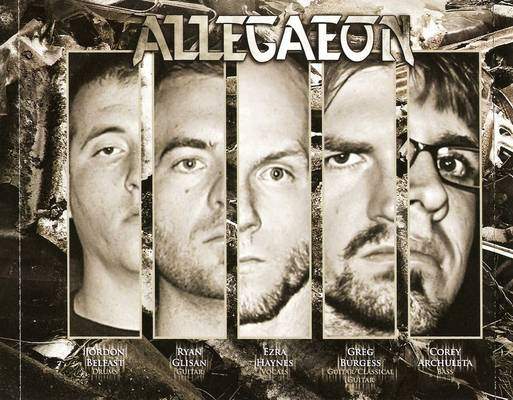
Few people realize that the recent Allegaeon album “Fragments of Form and Function” is a doorway to a separate dimension. Even if it hadn’t turned my body into a giant alpha wave and projected me into the substratum of the upper atmosphere, I’d have thought it was an entirely captivating record. At first, my ears began to shoot orange beams from them. My children noticed this and were immediately frightened. Eventually, they got used to it and my daughter continued talking to my toes and trying to feed them milk. As the solo from the song The God Particle came through my cheap 9-dollar Sony headphones, I became a bundle of pure light energy and bounced from wall to wall. I had the right headphone in my left ear and vice versa, which caused my body to carom with on a strange, knuckleball like trajectory. And then…..a universe without dimension……
Freud once posited that original sin was actually a strange response to witnessing a patricide. After all, the divine sacrifice wouldn’t be called for unless it was in response to a murder. A universe that avenges theft with murder or lust with murder or greed with murder would be the most unjust possible universe. But why would this idea bother us so much? Maybe it is the idea that what creates life also “owes its death to the universe” that fills us with such dread and wills us to punish ourselves over and over. When you are hurdling through the universe at light speed, it all seems irrelevant. The human conception of justice cannot be understood at this speed. All actions happen simultaneously. From above, it’s all the same.
As the stirring stillness of the post-script guitar solo in “Biomech –Vals No. 666” began to well up in my consciousness I became vaguely aware of the illuminated bits of human spiritual form in these bodies of light that surrounded me. Then, the whole ride came to a screeching halt. I realized that I was, in fact, deliriously spinning into some weird new age fantasy that had no baring on anything and would be useless to anyone unfortunate enough to read it. People don’t devolve into sweetness and light, they lumber along in these fleshy tombs for what qualifies as eternity (or about 76.8 years, depending on where you live). We are not spiritual beings on some wondrous journey. We are getting deader by the hour. There is nothing poetic about a corpse that isn’t aware enough of itself to begin rotting. Trapped in this dying form and making up stories about interconnection and light and love and beauty and meaning. Charming.
“WHO ARE YOU TO DESIGN THE LIFE WE LIVE?!?!?!?!!?!!”
A Cosmic Question. Don’t bother. Don’t bother with any of it. “What defines reality? What defines a soul?” That’s your problem, pal. I’m just decay with a bit of personality. Apatheism is the only answer that allows my monstrous form any solace. Yet…I want to know as well. Do I suffer because I want to know or do I suffer because I cannot dream? Descartes went around trying to find souls in the heads of dissected corpses. (Come out with your hands in the air!!!!!!! Put the soul on the ground next to you and don’t make any quick moves!!!!! Up against the wall, Descartes!!!!!) I’d take it over pretending knowledge I do not have or seeking knowledge I cannot gain. I prefer the ever-quickening pace of the double bass in “From Seed To Throne” to any rational explanation of what I am or to anything else this moment can offer. There is that much for now.
Solutions Are Not The Answer: Political Communication For Toddlers
Posted by Keith Spillett in General Weirdness, Pointyheaded Highbrow Stuff, The Politics Of Catastrophe on July 8, 2011

Photo By Angie Hill (picture is of her son Braxton)
It has often been said that you can learn a lot from listening to a child talk. People tend to mean that you can learn a great deal about the beautiful simplicity of life and the importance of innocence. These are valuable lessons, but certainly not the only things children can teach you. What I have found from listening to my children is that they have an amazing understanding of how political communication works. It’s not that I am one of those parents who think their children are so smart they can handle molecular biology in the first grade, but my two year old and four year old have given me remarkable examples of arguments that are popular in the realm of American political discourse. Carter could have gotten a third term with some of the things my kids say in passing.
Fallacy of Extension or The Strawman Argument
My 2-year-old daughter looked at me yesterday and announced, “It’s not night daddy, it’s the morning.” She was certainly correct, it was 10 o’clock in the AM and the sun was shining brightly. The intriguing part about her statement was that I had never said anything about it being nighttime. She had ascribed to me a position that was both irrational and, more importantly, not mine. She had used this to make her own case for the fact it was daytime. Somewhere, Roger Ailes was smiling. This argument is the backbone of much of the political debate that goes on today.
In the “non-toddler world” it works like this. I accuse you of saying something you have never said and do not believe and then make my case in opposition to the illogical premise that now belongs to you. You look like a lunatic and I look like my argument is not only correct, but a common sense response to the weird stuff that you have said at another time (even though you never said it!) Richard Nixon’s Checkers speech is the most famous example. The man was accused of misusing 18 thousand dollars and ended up making an argument over how his political enemies were asking him to give a dog back that his children really loved. No one had said anything about the dog except him. Even my two-year-old couldn’t pull that off with a straight face.
Misdirection or The Old Red Herring
This one is common among children when the subject of bedtime comes up. My four-year-old son has this down to a science. He is a naturally curious boy, but this curiosity comes in spades right around the time he’s looking to stall the natural forces of parenthood.
Me: “It’s bedtime.”
Son: “Why do the leaves fall off of trees?”
Me: “Let’s talk about it tomorrow, it’s bedtime.”
Son: “Where do the stars come from?”
Me: “We can talk about that first thing tomorrow, it’s time to go to sleep.”
Son: “Why do people sleep?”
Politicians often use this one when they get in trouble. The same sort of change the subject magic can be seen at many a press conference. Here’s a made up example that should look familiar to anyone who spends more than a half hour a month watching the news.
Reporter #1: “Is it true that you took illegal contributions from the law firm of Screwed, Over and Often?”
Politician: “The question of what makes a contribution illegal is an important one. Political contributions have been the bedrock of our great political system. Without them, many great Americans wouldn’t have had the chance to become President. Lincoln took contributions from great Americans like Cornelius Vanderbilt. Lincoln was one of our greatest Presidents. He took a stand against the evils of slavery.”
My son hit me with this one yesterday and nearly ruined what was left of my barely usable brain.
Me: We’ll be here for 18 more days.
Son: 1, 2, 3, 4, 5, 6, 7, 8, 9, 10, 11…uhm. Daddy, it can’t be 18, 18 isn’t a number.
Basically, he was saying that if he doesn’t know what it is then it simply can’t be true. In politics, there are many bizarre variations on this hustle. The most surreal is the use of the absence of something to prove its existence. Future Supreme Court Justice Earl Warren ran this one out back in the early 1940s to justify some of the post-Pearl Harbor, anti-Japanese sentiment in California “I take the view that this lack (of enemy subversive activity in the west coast) is the most ominous sign in our whole situation. It convinces me more than perhaps any other factor that the sabotage we are to get, the Fifth Column activities are to get, are timed just like Pearl Harbor… I believe we are just being lulled into a false sense of security.”
If you observe children enough, you’ll see all sorts of interesting political communication going on. The argument from personal charm is another standard. “I’m cute and harmless, therefore, even though I have a chunk of my brothers hair in my hands, I couldn’t possibly have done that bad thing you are thinking I did.” This explains much of the political career of Ronald Reagan. The argument ad infinitum is a common tool used when politicians repeat the same expressions thousands of times to try to cement them in the minds of voters. When your 4-year-old asks you for the six thousandth time for the Thomas the Train Misty Island Rescue Set, understand that they are exhibiting traits that may one day allow them to lead this great nation.
If you are interested in more of the great strategies used to obfuscate truth and contribute to the further cheapening of language, check out this link…http://www.don-lindsay-archive.org/skeptic/arguments.html
Dispatches From The Democratic Convention September 7th, 2040
Posted by Keith Spillett in The Politics Of Catastrophe on July 4, 2011

Democrats Moments Before President Herrera's Speech
Last night, the 2040 Democratic Convention came to a boisterous end. President Juan Jose Herrera gave a rousing speech to the conventions nearly 90,000 spectators who were crammed into Phoenix, Arizona’s newly built Cardinal Arena. Phoenix, which some have taken to calling The Capital of The New Southwest, has been a leader in the recent nanotech boom that has revitalized the American economy and brought unemployment below 15 percent for the first time since 2019. Herrera’s popularity has been on the upswing in the last year after a string of positive economic reports and an end to the nearly 10-year war in Ethiopia. “A new day has dawned in America,” announced Herrera to the galvanized crowd, “and we are on the forefront of becoming great once again!”
The convention has not been without its difficulties. Herrera, a master campaigner, led his party to victory 4 years ago by uniting a unique coalition of Hispanic Americans, Social Conservatives (SoCons) and Weather Watchers. His ability to woo SoCons by connecting traditional family values and economic equality brought a new base to the Democratic Party and allowed them to win states that had traditionally gone Republican like Georgia and Utah in the 2036 election and in the 2038 midterms. In the last Presidential election, nearly 78 percent of people who considered themselves SoCons voted for Herrera. As President, Herrera has been able to pass several SoCon initiatives including a Constitutional Amendment mandating a moment of silence or prayer at the beginning of the school day. He has been less successful with legislation banning the abortion pill and outlawing human cloning. Pundits have predicted that he will have a difficulty carrying that high a number because of the challenge in his party from breakaway SoCons like Reverend Marcus Falwell-Guzman. Falwell-Guzman, who famously quipped during the 2036 race that the only thing SoCons ever got out of the Republican Party were “prayer breakfasts and lip service”, is still considering a 3rd Party Presidential run, but insists he is firmly behind the President “for now”.
The Weather Watcher movement has also had issues with President Herrera. The movement, started as a response to the Great Northeastern Flood of 2028, is firmly committed to strong environmental protection legislation including the bill to end the use of coal by 2050 that stalled on the floor of the Senate last month. Herrera has embraced many of the Weather Watchers core issues but has not been successful passing many of their legislative priorities. Still, the No Government Regulation by 2055 pledge issued by the Republican Party last year has forced most of the remaining Independent and Republican Weather Watchers into supporting the Democrats.
Then, of course, there is the Problem of The Moths. In his speech, Herrera gave special attention to the issue stating,“The Problem of The Moths is not an easy one to solve. It will require patience and commitment. I see it not as a Problem…but as an opportunity. We can add thousands of jobs by putting together task forces and work crews to deal with our Moth problem. As your President, I will continue to call on Congress to spend whatever it takes to put an end to the Problem. Together, as a nation, We Will Stop The Moths!!!”
The Problem of the Moths, now entering its 12th year, was a major issue Herrera used to help defeat Republican President Leland Jackson in 2036, but Americans have seen little improvement. However, as of right now, voters seem to be willing to look past the issue in this election. In a recent RGE Poll, 72 percent of Americans think that The Problem of the Moths will not hurt Herrera’s re-election prospects. Still, some Americans are wary. “He’s had 4 years to fix it and it isn’t getting any better!” shouted a Republican protestor in a moth costume arrested out in front of the Convention. If the Problem doesn’t improve between now and November, the voters might just have a change of heart.
Mitt Romney Claims He Was Abducted By “Evil Liberal Twin”
Posted by Keith Spillett in General Weirdness, The Politics Of Catastrophe on June 29, 2011

In a stunning announcement, Presidential hopeful Mitt Romney divulged that his evil twin Mittt was actually responsible for many of the decisions made while he was governor. “After years of deliberation, I’ve decided to come forward with the truth about many of my decisions as governor of Massachutsetts. Passing the health care bill and many other leftist decisions were made by my twin. It is he who is a liberal. I have always been committed to positions consistent with the most died in the wool conservative Americans.”
According to Romney, he and his twin are mirror images of each other. Even the names are even extremely similar. Romney claims that the twin’s name is pronounced exactly the same. The final “t” is a silent and is neither pronounced nor written. While the two share identical features, they couldn’t be more different in terms of political views. Romney described his twin as a “card carrying socialist out of touch with the views of mainstream Americans” and excoriated him for his support of Massachusetts’ “dangerous and potentially apocalyptic” health care law.
During today’s press conference, Romney detailed how his twin locked him in a meat locker in the basement of the governor’s mansion for two years while “evil Mittt” made terrible decisions that turned the State of Massachusetts into a “communistic wasteland”. Romney was only able to survive by eating Vienna Sausages and reading from the two books he had with him, The Bible and The Wit And Wisdom of Ronald Reagan. “In my darkest moments, it was the words of God and The Gipper that allowed me to survive.”
Romney claims that at one point the Ghost of Barry Goldwater came to lighten his spirits. After Goldwater’s pep talk, Romney was able to use a frozen lamb shank to smash the lock and escape. “If not for the spirit of conservatism, I’d have surely frozen to death,” announced Romney proudly.
There have been several other occasions where the Republican Presidential Candidate has been abducted and hidden by his liberal brother. “That whole thing about being pro-choice, that was my twin. And the stuff about letting clerks issue marriage licenses to same-sex couples. Him again! Pretty much all the things that have made me appear moderate in anyway whatsoever are the responsibility of Mittt. I’ve never had a thought in my mind at anytime that was even remotely liberal. I have never been within 300 feet of anyone who has ever been a member of the Democratic Party. I will not eat food produced packaged in plants that employ liberals. Mittt’s is the guilty one. It was him all along!”
So far, no one has been able to contact Romney’s twin. Romney has furnished the media with pictures of Mittt (see below) but claims he has not spoken to him in years and is not sure where he is. “He’s joined Al-Qaeda for all I know,” fumed Romney, “I doubt we will see him again. Certainly not until the New York primary.”
The resemblance between the two Romneys is incredible….
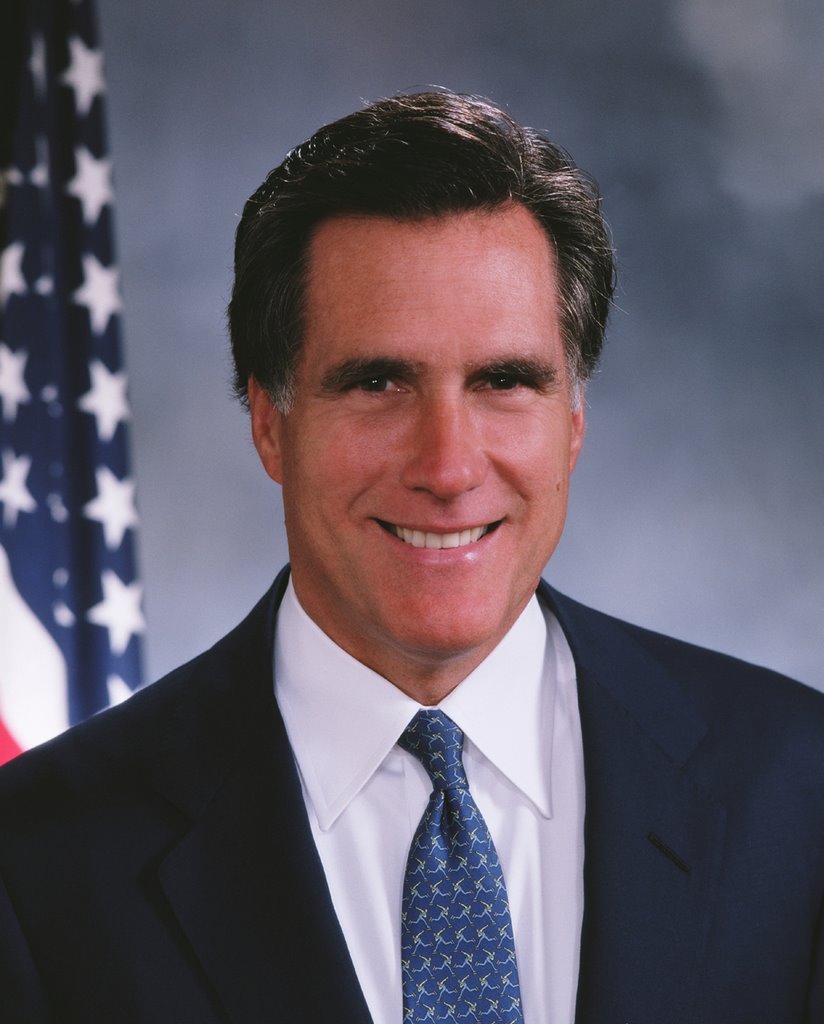
The Real Mitt Romney

Romney's Evil Liberal Twin, Mittt
Review As Revelation: A Call To Arms
Posted by Keith Spillett in Pointless Music Reviews, Pointyheaded Highbrow Stuff, The Poetry of Death on June 27, 2011

“children guessed (but only a few and down they forgot as up they grew)”
-ee cummings
The music review has been pronounced dead in many quarters. Some say it has lost its relevance, some argue it no longer has a story worth telling. I think there is some truth to this idea. There is a formula for a standard review and it is tried and true. A few strong metaphors, a band comparison or two, a reference to earlier work and the albums place within its genre and you’ve got a review. This is not to demean much of the writing that is out there. There are some truly exceptional writers who can take the standard form and make it deeply engaging, but there are a lot of reviews out there that simply don’t make an impact on me. I don’t believe that this is the fault of the writers but rather the fact that the medium they are using has confined its creator to the narrow world of observing and reporting. I think it is fair to say the music review as pure informational medium is probably on its last legs. While I believe that its role as informer of music fans is ending, I believe that it is in the process of going in a bold, exciting new direction that can make it relevant again and even an art form of its own.
Audiences no longer want to be informed, they want to be involved. They are not just looking for information about a band; they are looking for a deeper understanding of what it is like to experience the music. Audiences want to connect to the music, not just read about it. The dramatic shift that I believe is taking place is moving the review away from being about the artist and towards about the experience the artist has created.
The star of the review is no longer the band, but the audience as voiced by the writer. The goal of the writer used to be to melt into the background and let the band be heard. Objectivity was a characteristic to be aspired towards. The idea of the writer as passive communicator no longer has a major place in the all-at-once culture of engagement that we live in. More and more, the writing I see is coming to reflect this truth. The writer, no matter how much he or she tries, is a subjective creature. This is not a liability. The experience had by the audience is, in my opinion, the single most interesting thing about music today.
Director Jean Luc-Goddard supposedly once said the only way to review a movie is to make a movie. To me, this is a near perfect description of that the type of writing that will move the review to its next level. The review itself is an act of creation. A review can exist nearly independent of the original material. It can be a story unto itself that uses its source material as a beginning step into a labyrinth of unbridled creativity. A review can mark a unique moment in time, the moment when the artist meets the audience. Inspiration transfers from musician to writer and a new world is created. This world would not exist without the musician but it has transcended the original idea and morphed into something beyond its original intent. When the writer simply describes, it short-changes the audience of the revelatory power of the music. What has the music awakened within you? What did you see? What did you find? What did it genuinely make you feel? Instead of a medium that narrows the experience, a review can be something that becomes more than what was originally intended expanding exponentially through each person it comes into contact with.
In order to achieve this the writer must shun the formula and go beyond. The review need not be constricted by anything, even words. It can be photography, painting, sculpture, and maybe even more music. It must be an original statement of experience. A confession. That is its only qualification. It may present itself in a form that may be at times incoherent, but sometimes visions are not easily explained or understood.
The label often placed upon this type of creation is self-indulgent. There is an unwritten rule that good writing must purge the self as much as possible and fit neatly the pantheon of writing that came before it. What that really means is that in order to truly create we must forget who we are. This is insane. The unedited self, allowed breaking free of the artificial covenants that chain it to the floor, is capable of bringing a new vitality to a stilted form of expression. Imagine six billion selves illuminated, simultaneously witnessed and witnessing, all expressing unique shades of humanity and learning in fullness what it is like to human from every possible angle. This is what music reviewing can be.
 The Tyranny of Tradition