Posts Tagged art
Kindergarten Boy Suspended For His Distracting “Burzum” Forehead Tattoo
Posted by Keith Spillett in Pointyheaded Highbrow Stuff on April 10, 2013
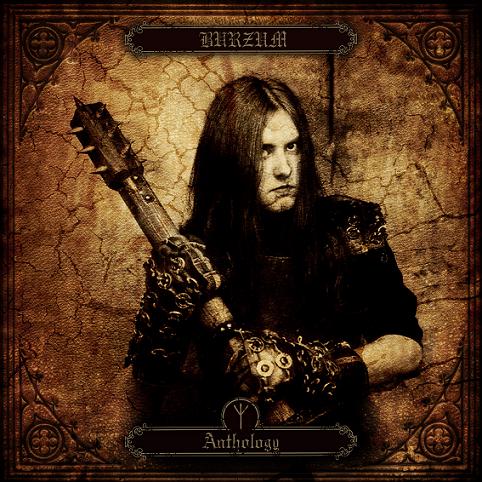
When 5-year-old Decrepitude Knudsen showed up at school with the word “Burzum” tattooed on his forehead his fellow kindergarteners thought it was cool. But administrators at the Lieutenant William J. Calley elementary school in Xenia, Ohio deemed the edgy tattoo “completely terrifying “ and “way too Thulean” and ordered him to have it removed before returning to school.
His mom, Quorthena Knudsen, said that school officials suspended her child on Tuesday because the principal and his teachers were a part of the International Zionist Conspiracy. She also claimed there were several kids walking around the school with Ludacris, Matisyahu and Lil B tattoos on their foreheads who haven’t been punished. The school, which considers itself a “wellspring of tolerance” and has taken a “zero tolerance towards individual expression” policy, vehemently denies her claims.
“They all seen his tat and was like ‘you must be into that Germanic neopaganism’” she told WINO-TV in Toledo. “All the kids was comin’ up to him and askin’ if he was a proto-Odinist skinhead.”
Superintendent Peter von Hagenbach says that’s why they had to send little Decrepitude home.
“Our dress and grooming policies were designed to ensure that neo-volkish black metal forehead tattoos do not cause a distraction in class,” von Hagenbach said in a statement.
The school’s handbook clearly states that “No black metal tattoos will be allowed above the shoulders” and specifies that “children should look as if they are carbon copies of one another unless afflicted by some physical condition that causes them to be not as God intended.”
“We can’t possibly expect our school to function unless every single person strives for complete conformity,” von Hagenbach confirmed to WINO, “While we respect his interest in identifying with a movement that, at its core, prizes mind-numbingly stupid adherence to order and authority over everything else, we need him to follow the appropriate social norms. There is no “I” in team, you know?”
While a suspension in kindergarten will only moderately hurt his chances at getting into a good college, many are concerned that his dismissal from the school’s R.O.T.C. program will put him on a path towards lawlessness and poor personal hygiene. “How is he expected to learn important life skills like how to stifle his creativity and how to be indistinguishable from the mob of mindless drones around him if he doesn’t get this sort of training at a young age?” said his grandmother Necromantia Rotmensen.
In 2009, a volunteer football coach at the school wore a full SS uniform to school in an attempt to motivate his team and received no reprimand. When asked about this obvious discrepancy in treatment, Superintendent von Hagenbach commented, “It was obvious that Coach Leucotomy didn’t mean to actually imply support of the Nazis. Rather, he meant to motivate the players to a higher standard of efficiency so that they could be the best they could be. Most importantly, the SS uniform did not disrupt the school day. Some teachers have actually claimed that the students did better on the standardized tests they took in 2009 because of Coach L’s brave stand for the virtues of cleanliness, respect and discipline.”
Metalheads Storm US Embassy in Cleveland; Demand End To Opeth Song
Posted by Keith Spillett in General Weirdness on September 14, 2012

Chanting “Death to King Crimson Influenced Prog Metal”, thousands of enraged metalhead protesters stormed the US Embassy in Cleveland last night burning, looting and thrashing everything in sight. The protestors, enraged by a 4-year-long performance of Opeth’s “Black Rose Immortal”, tossed copies of Opeth albums along with several mellotrons onto a burning pyre just inside of the embassy gates.
Opeth began performing the song at Cleveland’s famed Agora Ballroom back on September 12th, 2008 and have been unwilling to conclude the song in the years since. The song was meant to be the finale to a highly successful show, but it kept going on. First for hours, then days, then weeks, then years. The crowd, which was filled to capacity at the start of the song, began dwindling. By December of that year, only 7 fans were left in the building, but the band played on.
Alfredo Garcia, the head promoter for the Agora, has tried everything possible to get them off of the stage. The sound was unplugged, the lights were turned out, a court order was issued to remove them, the local police attempted to tear gas them, he even hired a gang of hooligans and disgruntled Browns fans to rough the band up, all to no avail.
The people of Cleveland had finally had enough. Groups of wild-eyed protestors camped out in front of the Agora to try to force them to stop. When that didn’t work, they marched on the US Embassy and held over three months of boisterous demonstrations imploring President Obama to call out the National Guard in order to end the song.
Frustration and anger finally boiled over when a popular local Cleveland radio station made the mistake of playing Opeth’s “The Leper Affinity”. Several metalheads began scaling the walls of the compound and a full-scale invasion took place. Miraculously, only one person was injured, a 34-year-old man whose bullet necklace exploded while he was helping to set a car on fire.
In an exclusive interview with Tyranny of Tradition, Opeth frontman Mikeal Akerfeldt claimed that the band would eventually finish the song but “hadn’t yet gotten to the bass solo or the 2-year-long piano outro.” He was stunned by the chaos the song had caused. “We have to be living in a pretty ridiculous world to have music cause this level of violence and hatred. You’d have to be a highly deluded fool to attack an embassy based on one piece of artistic expression,” lamented Akerfeldt right before he launched into an unprecedented 1467th acoustic guitar break.
Interview With A Mad Artist
Posted by Keith Spillett in People Who Were Willing To Speak To Me on December 5, 2011
Last week, I got a chance to catch up with one of my favorite artists, Michelle E. Fusco (aka Libertina Grimm). She has a unique talent for creating enchanting visions of enigmatic musicians. Her subjects in the past have included Alice Cooper, King Diamond, Jim Morrison and Dani Filth. She manages to capture the magniloquent beauty of these artists in a way that is both memorable and uncanny. Recently, she has turned her attention towards rendering the image of Michael Jackson in a respectful and deeply loving manner.

What was the moment you discovered you had artistic talent like for you?
I was about 11 or 12 & mostly I remember being happy to have made my father proud of something I did, because he was very hard to please.
Why do you choose to create art?
Once I discovered I could do it, it became my strongest mode of self-expression, and a very effective escape from troubles, stress and reality.
What artist or artists do you feel the deepest connection to?
I feel the deepest connection(s) to Mozart, Michelangelo, Rene Magritte, Michael Jackson, and Stephen King.

You have created art based on many well-known musicians over the years. What makes you settle on a certain subject to work on?
I am only truly inspired by performers that are “outside the box” and seem to have something speaking through them. Like they’re mad to create or something… I’ve explored music in search of these true artists, to whom creating their music is truly an extension of themselves and their lives. Once I find someone who seems to be REAL in that fashion, I feel I must portray them in some paintings, as if somehow to express my appreciation for their efforts in being real artists.
What about Michael Jackson, your current subject, do you most connect to?
My first thought on this one was ‘what DON’T I connect to?’ . I had a difficult childhood and this leaves one feeling like it was stolen away. I identify with Michael’s eternal child-like qualities and attempts to create his own dream world around himself, and stubbornly (needed to) live there, despite the ‘real’ world’s repeated attempts to tear it down. He had to live in his own reality because no one really understood him. I definitely connect to that. The feeling of isolation, creativity needing to be shared with the world, but yet no one truly understanding it.
Have you ever felt as if you created something that was perfect?
I have never created something perfect. I sometimes have thought I was working on a perfect drawing or painting, or at least one I would be satisfied with, but invariably, somewhere along the way, I end up feeling like I let myself down yet again, didn’t do as well as I had hoped to, & must set my sights on the next project, because apparently the next one is always the best one.
What is beauty?
To me it is some sort of otherworldly aura or essence that is shocking in it’s perfection, whether it’s Dani Filth as a flawless Gothic vampire, or Michael aspiring to the heavens, the wish to create something with a perfect effect is there and is beautiful. Like Michelangelo’s “David”. Perfection of form and grace, but also with a deeper meaning.
What environment are you most comfortable creating in?
I always work at the same old work-desk with a great stereo so I can hear my subjects. I always must create a music program to accompany each project, to create an appropriate ambience/atmosphere. I’ve been doing that since childhood and I’m pretty sure I couldn’t draw anything without the accompanying soundtrack.
If you could no longer create art, what would you do?
If things were as they are now and I could no longer create art, I would die. But if I could have any career as a replacement, like if I had a genie or something? Then I would be a dancer.
What about raising chickens appeals to you?
Chickens are great! They’re funny and sweet, and generally misunderstood. Probably my favorite thing about them is that if you raised them from babies, they’re your friends for life. I have full grown hens that still insist I’m their mother. They bond for life if treated right, which of course makes them excellent pets! I also like to rescue them from bad situations with people who don’t understand and give them proper shelter. It can be very rewarding. One of my older hens, Ivy, was left without food when her owners moved and couldn’t take chickens to their new place. They just abandoned her. I found her wandering in the road. I took her home and now she’s one of the family. Chickens need more people who understand that they are intelligent, compassionate creatures worthy of respect and love.
For a look at more of Michelle’s art, check out on her Facebook page or her website www.doors-of-perception.com.

Dissecting CARCASS’ “Heartwork” – Fourth Incision…Heartwork
Posted by Keith Spillett in Notes on Carcass Heartwork on July 29, 2011
This is the fourth in a series of articles analyzing the lyrics from the 1993 Carcass album “Heartwork”.
Heartwork
Works of art, painted black
Magniloquent, bleeding dark
Monotonous palate, murky spectrum, grimly unlimited
Food for thought, so prolific
In contrasting shades, forcedly fed
Abstraction, so choking, so provocative
A canvas to paint, to degenerate
Dark reflections – degeneration
A canvas to paint, to denigrate
Dark reflections, of dark foul light
Profound, aesthetic beauty
Or shaded, sensory corruption
Perceptions, shattered, splintered, mirroring
In deft taints, diluted, tinted
Spelt out, in impaired color
Denigrating, going to paints to pain – not a pretty picture
Works of heart bleeding dark
Black, magniloquent art
Monotonous palate, murky spectrum, grimly unlimited
Prolific food for thought
Contrasting, fed with force
Abstraction, so choking, so provocative
Bleeding works of art
Seething work so dark
Searing words from the heart
Heartwork is a statement of purpose. Its story belongs not only to Jeff Walker and Carcass but also to anyone who has ever spent a significant stretch of time staring into the abyss. Why do we gaze into the darkness? What are we looking for? What is it that makes some people gravitate toward existential questions that are presented in extreme music? Heavy metal, for all intents and purposes, is a death factory. Trying to find ten songs on your hard drive that don’t deal with some form of horrific strife, violent rage or terrible suffering is a nearly absurd task for those who are obsessed with The Sound. Even power metal, with all of its uplift and ecstatic jubilance, often contains elements of profound sadness and pain. To spend your life pondering terror, strife and human suffering hardly seems to be time well spent, but its appeal, at least for me, is undeniable.
There seems to be a popular school of thought that encourages people to “think happy thoughts”. The idea of perseverating on horror is felt by many to be a recipe for dangerous feelings of sadness and detachment from the world. On one level, there is something that seems correct about this idea. Good vibes in, good vibes out. Perfect equilibrium. Yet, no matter how much goodness and light we choose to bathe in, we still suffer and we still die. Spending life trying to fill ourselves with the beauty around us may be the best way to live for some, but it feels disingenuous to me. Death and suffering are all around us. We are, in fact, all living out a slow motion disintegration. I cannot hide from it; I cannot pretend it isn’t there. My fear of the eventual fate that awaits me is a critical element of who I am.
There is an authenticity that comes with accepting one’s fate. Beyond that, there is a strange feeling of liberation that a person can achieve by coming to terms with the worst elements of existence. Yamamoto Tsunetomo, a samurai whose insights were collected in a book the Hagakure in the early 18th century, makes a fantastic case for this sort of thinking. One of the most stirring passages of the book says, “Meditation on inevitable death should be performed daily. Every day when one’s body and mind are at peace, one should meditate upon being ripped apart by arrows, rifles, spears and swords, being carried away by surging waves, being thrown into the midst of a great fire, being struck by lightning, being shaken to death by a great earthquake, falling from thousand-foot cliffs, dying of disease or committing seppuku at the death of one’s master. And every day without fail one should consider himself as dead.”
This meditation on death seems like a morbid exercise, but how else is a person supposed to rationally process the mortal terror that comes with the recognition of one’s finiteness. We cannot change it, but we do not have to run from it.
In the song Heartwork, Walker is stating the necessity of recognizing the dim, murky reality of our being. The artist, coming to terms with this awareness, can do nothing of value but create an art that reflects the degeneration of our spirits and bodies. The goal is not to shock people, nor to frighten people, but simply to state in no uncertain terms, that everything is not okay. This type of dark art can provide the audience with the gift of catharsis. We are not alone in our terror. We may have to accept the terrible terms of our existence, but we don’t have to do so by ourselves.
Here’s the video…..
Review As Revelation: A Call To Arms
Posted by Keith Spillett in Pointless Music Reviews, Pointyheaded Highbrow Stuff, The Poetry of Death on June 27, 2011

“children guessed (but only a few and down they forgot as up they grew)”
-ee cummings
The music review has been pronounced dead in many quarters. Some say it has lost its relevance, some argue it no longer has a story worth telling. I think there is some truth to this idea. There is a formula for a standard review and it is tried and true. A few strong metaphors, a band comparison or two, a reference to earlier work and the albums place within its genre and you’ve got a review. This is not to demean much of the writing that is out there. There are some truly exceptional writers who can take the standard form and make it deeply engaging, but there are a lot of reviews out there that simply don’t make an impact on me. I don’t believe that this is the fault of the writers but rather the fact that the medium they are using has confined its creator to the narrow world of observing and reporting. I think it is fair to say the music review as pure informational medium is probably on its last legs. While I believe that its role as informer of music fans is ending, I believe that it is in the process of going in a bold, exciting new direction that can make it relevant again and even an art form of its own.
Audiences no longer want to be informed, they want to be involved. They are not just looking for information about a band; they are looking for a deeper understanding of what it is like to experience the music. Audiences want to connect to the music, not just read about it. The dramatic shift that I believe is taking place is moving the review away from being about the artist and towards about the experience the artist has created.
The star of the review is no longer the band, but the audience as voiced by the writer. The goal of the writer used to be to melt into the background and let the band be heard. Objectivity was a characteristic to be aspired towards. The idea of the writer as passive communicator no longer has a major place in the all-at-once culture of engagement that we live in. More and more, the writing I see is coming to reflect this truth. The writer, no matter how much he or she tries, is a subjective creature. This is not a liability. The experience had by the audience is, in my opinion, the single most interesting thing about music today.
Director Jean Luc-Goddard supposedly once said the only way to review a movie is to make a movie. To me, this is a near perfect description of that the type of writing that will move the review to its next level. The review itself is an act of creation. A review can exist nearly independent of the original material. It can be a story unto itself that uses its source material as a beginning step into a labyrinth of unbridled creativity. A review can mark a unique moment in time, the moment when the artist meets the audience. Inspiration transfers from musician to writer and a new world is created. This world would not exist without the musician but it has transcended the original idea and morphed into something beyond its original intent. When the writer simply describes, it short-changes the audience of the revelatory power of the music. What has the music awakened within you? What did you see? What did you find? What did it genuinely make you feel? Instead of a medium that narrows the experience, a review can be something that becomes more than what was originally intended expanding exponentially through each person it comes into contact with.
In order to achieve this the writer must shun the formula and go beyond. The review need not be constricted by anything, even words. It can be photography, painting, sculpture, and maybe even more music. It must be an original statement of experience. A confession. That is its only qualification. It may present itself in a form that may be at times incoherent, but sometimes visions are not easily explained or understood.
The label often placed upon this type of creation is self-indulgent. There is an unwritten rule that good writing must purge the self as much as possible and fit neatly the pantheon of writing that came before it. What that really means is that in order to truly create we must forget who we are. This is insane. The unedited self, allowed breaking free of the artificial covenants that chain it to the floor, is capable of bringing a new vitality to a stilted form of expression. Imagine six billion selves illuminated, simultaneously witnessed and witnessing, all expressing unique shades of humanity and learning in fullness what it is like to human from every possible angle. This is what music reviewing can be.
Dissecting CARCASS’ “Heartwork” – Third Incision…No Love Lost
Posted by Keith Spillett in Notes on Carcass Heartwork on June 13, 2011
This is the third in a series of articles analyzing the lyrics from the 1993 Carcass album “Heartwork”.

No Love Lost
Sensual awakening
Numbing feelings dead
Conceptions romanticized
Synthesized broken hearts to bled
Without emotion your heartstrings played
Strummed and severed to the tune of a tragic serenade
[A tragic chorus]
Without emotion, your heartstrings break
Snapped and severed to the tune of a tragic, sad cliche
No love lost
When all is said and done
There’s no love lost
The low cost of loving
Amorous travesty
Human frailties and weakness are easy prey
How your poor heart will bleed
The modern conception of romantic love is nothing short of vulgar. I do not mean vulgar in the sense of it being lewd or lascivious, but more so remarkably crass and repulsively commercialized. One of the more humiliating acts that exist in our culture is that of picking out a card for a loved ones birthday. The well-intentioned shopper is immediately met with all forms of syrupy sweet, ersatz garbage that pass for a genuine expression of feeling. Being told “I love you” Hallmark style is the equivalent of having some dude in a lime green leisure suit approach you and tell you that we should get rid of all the letters in the way so that “U and I can get together.” Love can seem like an ill-concieved, ham-handed con with all the charm of one of those insidious pop-ups that try to convince the barely sentient of the rich rewards that will be showered on them if only they surrender their credit card number. It is not hard to understand the disgust that would motivate Jeff Walker to write the words in “No Love Lost”.
While I am in complete agreement with the notion that love has been trivialized, I can’t climb on board with the idea that there is no such thing as love. The following admission is probably going to get my universal skeptic license suspended for the next six months, but, in all honesty, love is the one con I simply cannot renounce. I want to believe that there is a category of human experience that transcends our own personal needs and allows us, even momentarily, to exist for another. I want to think that there is more to life than survival and that we have a deeper need for connection to other humans. There must be more than just dumb, barely animate material wandering aimlessly from cradle to grave. I believe that many people share an essential longing to understand each other, to see their neighbors as beings dealing with the same existential dilemmas as themselves, struggling to find some compassion or empathy and aspiring to give that gift to another even though nothing tells them they have to. The best approximation of these feelings and desires is the word love.
Maybe this understanding reflects the cynicism expressed in “No Love Lost”. Imagine desperately wanting to feel the connection to others and being given back nothing but Hugh Grant movies and power ballads. Trying to come to terms with love in our contemporary carnival of cheap thrills and easy answers is a demoralizing task. If I am ever to really conceptualize what love means my expression of it will be minimized by the fact that the language I have to communicate it has been co-opted by a bunch of soft-sell dream peddlers who are more concerned about appealing to a demographic representation of males 25-34 than finding deeper human truths. Why not look at the Love Industry with scorn? After all, it has robbed us of our full means to relate something significant and meaningful to the world. Instead of filling us with a feeling of awe and reverence, the word fills so many seekers of reality with bitterness and irritation.
Maybe the real demonstration of the transcendent power of love is whether it can overcome the cesspool of a market in which it now resides. Occasionally there are human truths that possess so much power that they can surmount any obstacle set before them. That’s what I’d like to believe, anyway. For us to believe that love is real maybe we need to see that it can be debased in every way imaginable and still carry meaning. Or maybe those who sell it have uncovered the terrible truth; that love is simply an inducement to get the suckers to buy more of what they don’t need. Give them the fantasy of love and they’ll gladly exchange it for safety, freedom and power over their own lives. I desperately hope that this isn’t so.
(This series is being co-published by the folks over at MindOverMetal.org. Check’em out!)
Dissecting CARCASS’ “Heartwork” – First Incision…Buried Dreams
Posted by Keith Spillett in Notes on Carcass Heartwork, Pointyheaded Highbrow Stuff, The Poetry of Death on May 13, 2011

Heartwork, the 1993 release by Carcass, is easily one of the most compelling metal albums ever recorded. First and foremost, it is an explosion of monstorous guitar riffs, frenetic drumming and raging energy. The music is captivating and overwhelming. Heartwork is a remarkably powerful lyrical album that deals intelligently with issues like globalization, dehumanization and existential dread. The music has been widely praised by many music journalists. The lyrics, however, have been given scant attention. Jeff Walker, the band’s singer, bass player and chief lyricist, envisions a world that is entirely devoid of human feeling or empathy. Walker’s adept use of language, particularly double entendre, lays bare the man’s inhumanity in all of its baseness. His world is an empty one, filled only with sorrow, guilt and deep-seated hatred.
The album behaves like a book, each song a chapter examining a set of widely held beliefs and contrasting them with his vision of a world gone completely insane. Over the next few months, I will attempt to analyze the themes and ideas song by song in an attempt to convey the inventiveness of Walker’s lyrics as well as the perspicacity of his message.
Buried Dreams
Welcome, to a world of hate
A life of buried dreams
Smothered, by the soils of fate
Welcome, to a world of pain
Bitterness your only wealth
The sand of time kicked in your face
Rubbed in your face
When aspirations are squashed
When life’s chances are lost
When all hope is gone
When expectations are quashed
When self-esteem is lost
When ambition is mourned
…All you need is hate
In futility, for self-preservation
We all need someone
Someone to hate
Buried Dreams is a nightmare vision of a world completely unconnected to its humanity. It serves as an overview of the themes that are addressed in each song and is a great starting point because it contains the most unambiguous lines on the record. In Walker’s “world of hate”, humans begin their journey in life filled with hope only to see that hope slowly eroded by the fixed nature of reality. This reality is the death and pain experienced by all humanoid beings. It is immovable, unchangeable and constant. Humans search blindly in the dark for some reason, some deeper meaning that will connect the dots and make the pain they experience intelligible. We fill ourselves with illusions in order to soften the blow of this horrible truth. As the truth becomes more real, we grasp harder at the illusion but ones commitment to an illusion will never make that deception a reality. We slowly come to terms with the understanding that there is no connection, there is no one tending the fire and the center simply does not hold. Once this veneer of meaning has been stripped away there is nothing left to hold onto but pure visceral hatred.
By experiencing hatred for something, we are given the ability to overcome our basic alienation from ourselves all the while connecting to the other beings around us. Love would be another way to connect, but the drawback of love is that it is fleeting. Its initial joy is snuffed out by the understanding that our basic existential problem, death, will cause love to one day give way to sorrow and despair. If you connect with hatred you never have to feel loss because the eventual vanquishing of your foe will be greeted with a feeling of joy and accomplishment. No one mourns the death of their enemy.
On the surface, the lyrics could be read as a simplistic explanation of the rise of fascism in Europe in the 30s and 40s. A society like Germany, which was drowning in debt and filled with impoverished humans recovering from the insanity of years of mindless trench warfare, was ready for the message of hate that Hitler brought. I believe the song is meant to have much more of a timeless message with broader overtones about the human condition. The line that universalizes this song is “in futility, for self-preservation, we all need someone…someone to hate.” This is a Hobbesian view of a world of beings so frightened of death that they are willing to do anything to avoid it, even if they know that their actions are eventually pointless. We are willing to create a Leviathan that may kill us for our disobedience in order to be safe. The wall each of us run into is death and we are willing to embrace any idea that allows us to fully avoid thinking about our eventual consequence. We are willing to embrace ideas that are self-destructive in order to escape the fear of death. If this isn’t true, then how do you explain war? This horrible irony of our basic condition is that we long to avoid death, but we do so in a way that often hastens its coming.
And so our dreams are buried as we are carried kicking and screaming to our own certain demise. We mask our fears with delusions of enemies all around us. We think that we can stop the inevitable if we bomb that thing or execute this thing but with our last dying breath we are reminded of the futility of all of it. Even hate cannot save us. The final, horrible irony of our Buried Dreams is that we will eventually be buried next to them.
(I am pretty darned excited to announce that this series will also be running at MindOverMetal.org, one of my favorite metal sites. Special thanks to my homeboy Metal Matt Longo who not only agreed to run the thing, but even gave me a fantastic title for the series and some killer editing ideas. Anyway those dudes speak truth and wisdom over there, check’em out)
 The Tyranny of Tradition