Keith Spillett

I have a lot of strange debris rattling around my mind that I need to work out in a useful way.
Homepage: https://tyrannyoftradition.wordpress.com
North Korean Leader Regrets Decision To Let Metallica Producer Bob Rock Launch Rocket Into Space
Posted in Articles I Probably Shouldn't Have Bothered Writing on April 23, 2012

Former Metallica producer Bob Rock just can’t seem to stay away from trouble. Since being credited as the producer of Metallica’s St. Anger, an album which many experts believe sounds slightly worse than the noises made by a kitten being thrown into a blender, Rock has been involved in several high profile failures. The worst of these disasters came last week when the Kwangmyŏngsŏng-3, a rocket built by Rock and his team of scientists, exploded and crashed into the Yellow Sea near Gunsan, South Korea.
Rock, who has no formal training as a scientist or a satellite technician, impressed North Korean leader Kim Jong Un with his work on Motley Crue’s Billboard #1 album Dr. Feelgood along with five progressively less interesting Metallica albums. Un was amazed by Rock’s ability to take a talented band and suck the life and joy out of their work, reducing them to a tattered shell of their former selves. He initially hired Rock in 2009 to produce a record by his thrash band Gulag Face. Gulag Face’s debut record “Setting Baby Ducks On Fire With Mayonnaise” sold over 15 copies and became the top selling album in North Korean history.
Rock’s work with Gulag Face so impressed Un so that when he became the country’s leader in 2011, he was hired to run North Korea’s entire missile program. Rock immediately set out to reduce the intelligence of his team of North Korean scientists by forcing them to listen to Loverboy’s seminal 1981 record “Get Lucky” twice a day for four months. From exposure to this album, the average IQ score of these scientists dropped from 134 to 78.
Rock also tried to focus the scientists on creating a more commercial, “radio-friendly” rocket, whose technology could be understood by anyone. This led to his fateful decision to hold the missile together with rubber bands and Elmer’s glue.

Un claims that Rock’s “shenanigans” have left a permanent scar on North Korea’s image. He has distanced himself from Rock, who will no longer be able to eat for free at North Korea’s only Sizzler restaurant as punishment for his failure. In order to repair the nation’s embarrassing reputation, Un has hired Rick Rubin to take control of the program and get it back on its feet again.
Rock has had a difficult stretch since he left the Metallica camp. Before he helmed the North Korean program, Rock was hired to produce and direct Will Ferrell’s “Land of The Lost” film, which lost a near record 100 million dollars at the box office. In 2010, Rock served as the Boston Red Sox pitching coach and was cited as a major reason the team collapsed in one of the most horrendous Septembers in baseball history. He was fired immediately after the season.
Satan Suspended Indefinitely For “Soul Bounties”; Cronos Named Interim Devil
Posted in General Weirdness on April 19, 2012

On Wednesday, God suspended Satan indefinitely from his role as Devil for promising demons as much as 10,000 dollars for each soul they lured into temptation. Satan’s two head assistants, a gargoyle named Thoth and former American President Ronald Reagan, received slightly lighter suspensions of up to 5000 years, but may be reinstated earlier if they successfully complete anger management classes.
While it was well within Satan’s purview to try to encourage poor behavior on the part of human beings, offering cash incentives for their souls was going a step to far. Yesterday, the Lord released a statement highlighting examples of the many violations and stating that this sort of “encouragement towards lawlessness and immorality is outside of the bounds of what we call fair play.”
When confronted with this statement, Satan didn’t hesitate to fire back. “Wait, so I’m getting scolded about morality by the guy was responsible for the extinction of nearly the entire populations of Sodom and Gomorrah. This is the same God who, on a bet, let me destroy the life of one of his most committed servants, Job. You’ll excuse me; I have to go throw up,” sneered Satan as he spat upon the ground.
In Satan’s absence, Venom frontman Cronos has been named Interim Dark Lord until Satan’s reinstatement. Cronos is a veteran of the dark arts having served in Satan’s Army since 1981. Cronos even had brief experience running Hell back in 1986 when Satan broke five of his legs in a terrible water skiing accident.
Cronos has many exciting new plans he has considered for Hell including an open mic night, the addition of all-you-can sin brothels and building a stadium in an attempt to lure the Buffalo Bills to Hell, giving the Underworld its first pro sports team since the 1976 Oakland Raiders.
Experts believe that Cronos is a good fit for the position and could bring untold glory to Hell. However, many fans were disappointed when their first choice, former Giants and Jets coach Bill Parcells, turned the job down. While Parcells was a flashier name, those around the game respect Cronos for his undying commitment to poisoning the human race with heavy metal and believe that he will be the perfect choice to get Hell back on track.
1309 Words With Richard Vaughn and Conor Riley From Astra
Posted in People Who Were Willing To Speak To Me, Uncategorized on April 18, 2012

Every once and a while, a truly mesmerizing record comes along, drags you out of the murky depths of an afternoon and elevates your spirit to heights you forgot it could reach. The power and scope of Astra’s new record “The Black Chord” is capable of providing the listener with just such an experience. The first journey through the album connects you to a serene place within your mind where all the limitations and barriers provided by the physical world cease to be relevant. Towering, primordial rhythms hypnotize the listener into a profound stupor. It’s more than a 70’s styled progressive rock album; it’s the musical equivalent of Satori.
Hearing such an exquisite piece of music made me extremely curious as to the creative minds that brought it into being. Richard Vaughn and Conor Riley were kind enough to give Tyranny some insight into their creative process last week. They both contribute vocals on the recent album, as well using enough obscure musical equipment to keep Robert Fripp entertained for the better part of a century. Here’s a look inside their heads….
Tyranny: What does the name Astra mean to you?
Conor: It was named after an album written by a South African band named Freedom’s Children. It’s a cosmic/spacey epic that we felt described our music.
Richard: Yes, our name was originally inspired by the South African band Freedom’s Children. Their second album from 1970 entitled Astra has long been a favorite of ours. Also, the phrase “Ad Astra” is a Latin phrase meaning “to the stars” and seeing that we all find some inspiration in astronomy, science-fiction and cosmic music of all sorts, we found Astra to be a perfect fit.
Tyranny: What is the experience of playing music like for you?
Conor: It combines many different elements. When playing with the right musicians in the right frame of mind it can be transcendent, cerebral, emotional and spiritual.
Richard: For me, playing music is very rewarding on many different levels. When a song finally comes together or a new part or riff is suddenly discovered during a jam, I always a feel this great sense of accomplishment and excitement. Playing music has also been very therapeutic for me. Like many people, I’ve gone through difficult times in my life and I’ve had to deal with some dark and heavy issues. Being able to get away and play, to escape within the music, really helped me to heal. Sometimes when we play as a group, during long, instrumental jams, I find myself in an almost trance-like, meditative state where I can just drift off.
Tyranny: What is the point of creating art?
Conor: I’m not sure that there is a point. I’m not sure that there’s a point to anything really. I think as humans, art is way to try to make sense of our existence and individuality. I don’t think it’s working; it seems to be pulling us in the contrary direction.
Richard: I would think that the reason for creating art would be to get that particular voice, sound or vision out of one’s head and into the physical world, to express one’s self and to be able to see or hear their vision fully realized. For me, sometimes a melody or an idea will pop into my head or I could be listening to music and I’ll get a sudden urge of inspiration from what I’m hearing and I’ll need to stop what I’m doing, pick up my guitar and see where it goes. The thing is, the actual reason for creating art could be unique for everyone.
Tyranny: What limitations do you face in putting forth your full creative vision?
Conor: We are only limited by the biases of each other. As a whole we don’t hold anything back. Within the band we all have different views and musical tastes which doesn’t allow us to stray too far.
Richard: A great thing about our label Rise Above Records is that they allow us full creative control of our music and they have never set any limitations on what we can do. Like Conor said, the only real limitations we have are the mutual criticisms, tastes and visions each of us has for our music within the band. We work together for the good of the music and sometimes that means shooting down an idea or reigning in a particular direction. We’re very honest with each other.
Tyranny: What influences, be they musical, literary, or of any other medium, have helped you find your creative voice?
Conor: Musically, I am most influenced by bands like Aphrodite’s Child, Freedom’s Children, Genesis and Comus.
Richard: There are just too many to name! Musically, Aphrodite’s Child with their double LP 666 is still right up there towards the top of my list and has been for a long time. Everyone in the band has a special place in their heart for that album. There’s also Genesis, King Crimson, Yes, Mahavishnu Orchestra, Magma as well as a long list of early 70’s Italian prog bands, Krautrock, electronic music and even a lot of late 60’s psych rock and folk. I seriously could go on and on. What’s great is that, while we all love most of the same music, we each tend to gravitate towards our own specific favorites. The variety of all of these influences is very beneficial to our songwriting and sound.
A book I read recently was a direct influence on the last song of our album. This sci-fi novel was published in 1969 and was written by Brian Aldiss. Entitled “Barefoot in the Head” it’s a futuristic, post apocalyptic tale of a world wide “acid head war” waged with PCA(Psycho-Chemical Aerosol) bombs. The aftermath left most of the world permanently dosed on LSD. As the main character is increasingly exposed to the drug, the narration and dialog become more and more fractured by mutating words, puns and phrases. I borrowed this writing style for the lyrics and used the influence of the book as a kind of metaphor for feeling as if you’re losing your mind. I was feeling this way around the time I was writing that song. This is good example of how music can be therapeutic for me.
Tyranny: Salvador Dali once said, “Confusion is the best form of communication”. What are your thoughts on this quote?
Conor: Maybe he was trying to say that by being confused it forces you to think critically to grasp for a deeper understanding. Perhaps sometimes that is the best way to convey a point.
Richard: To me organization seems to be too simple, too linear or one dimensional and may only carry a single message. Chaos and confusion can be much more memorable by requiring a deeper thought process allowing for people to draw their own conclusions or to gather their own thoughts and meanings.
Tyranny: What do you believe would be the highest complement you could possibly receive?
Conor: Plagiarism and illegal downloads.
Richard: Knowing that our music directly inspired or influenced someone in one way or another to do something creative or important. To do something positive. That would be a great complement.
Tyranny: If you could be trapped inside one song for the rest of your life, what would it be?
Richard: That would be a living hell! Trapped inside one, single song for the rest of my life, over and over again? I think that would be enough to drive a person mad. Don’t get me wrong, of course I absolutely love music but I do need to take a break from time to time. Once in a while I won’t even listen to any music for up to a week or more. A break like that can be very refreshing and it makes me appreciate music that much more when I come back to it.
BlaK Dan Reviews Ketchup
Posted in BlaK Dan's Theatre of Cruelty on April 17, 2012
My brother-in-law, BlaK Dan, is at it again. If you’ve been following his saga here at Tyranny, you already know that he lost all his money investing in Amway products and is sleeping on my couch until he “gets on his feet again”. He was living in a cave until a park ranger kicked him and his pet ferret out and now we are stuck with him. He does nothing but parade around our house wearing a Burzum tee-shirt and eating cornflakes out of a Qwik Rabbit mug he’s had since he was 8.
The man has no dreams, no goals other than one day managing a metal message board and playing one note black metal songs “whilst alone in a forest”. In order to keep him busy, my wife has asked me to let him write an occasional metal album review for the blog. Here’s where it gets tricky…he’s now refusing to listen to any metal. He’s decided that he will only write reviews of inanimate objects, because metal music is “unworthy of his talents”. So…here’s another in the endless, intolerable and ever-changing series now known as “BlaK Dan Reviews Ordinary Household Items”.

BlaK Dan Coming Upstairs After A Late Night Cornflake Binge
People who put ketchup on food are idiots. They have no idea of what food in its purest form tastes like. They are animals. They do not have the right to exist. When I am at a diner and a see one of these “people” consuming food with ketchup on it, I know they are sub-humans unworthy of the oxygen that Odin and I provide them with.
This blood-colored ooze spews out of disgustingly shaped bottles and pollutes our food with its hideous sweetness. If you are ever curious as to which amongst you are inferior, here’s a simple test. If they have defiled a perfectly good and pure lump of meat with this syrup of sickness, then you can rest assured that they are degenerate parasites who are wasting the flesh, bone and will that they were born with.
If you use ketchup, it is because you are weak. I refuse to tolerate your weakness. If I had my way, they’d bring back the guillotine and behead each and every one of you cowards. You violate all that is decent in our world then have the temerity to call me intolerant or unclean or in violation of local health code standards or someone who can’t live within 500 yards of an elementary school. It is you that are a pox upon our world, Ketchup-eater. And it is you that should pay the ultimate price for your life of decadence.
You befoul our forests and streams with your civilized blandishments and then wonder why your world is repulsive and depraved. The essence of life is being destroyed by an endless flow of ketchup. Ketchup in the mountains. Ketchup in the valleys. Ketchup in our seas. Ketchup in our forests. Ketchup in our oceans. Ketchup everywhere you look. Ketchup in the name of progress. You have contaminated the world and destroyed all that is sacred.
You think you are so clever. You eat your ketchup and you laugh and laugh and laugh. Ha, Ha, Ha….look at civilized me with my ketchup and my Italian leather shoes. Aren’t I something else? Look at my fancy ketchup eating wife and my two well-dressed ketchup-eating children. Aren’t I unique?
You think because you eat ketchup you have the right to judge me. I am above your judgments. You are slime. Like Zarathustra, I am surrounded by fools and idiots spewing a ridiculous ketchup-soaked morality that is meaningless. MEANINGLESS! I hear your snickers, I see your scorn, but it is you that are vile and you that are impure. If you hadn’t allowed ketchup to taint your world, you would know me and understand that you are unworthy to be in my presence. Instead, I am stuck here in moron hell watching you wallow in ketchup and despising every minute of it. I hate all of you.

FILTH!!!!!!
1504 Words With Gogog Bloodthroat From A Band Of Orcs
Posted in People Who Were Willing To Speak To Me on April 16, 2012
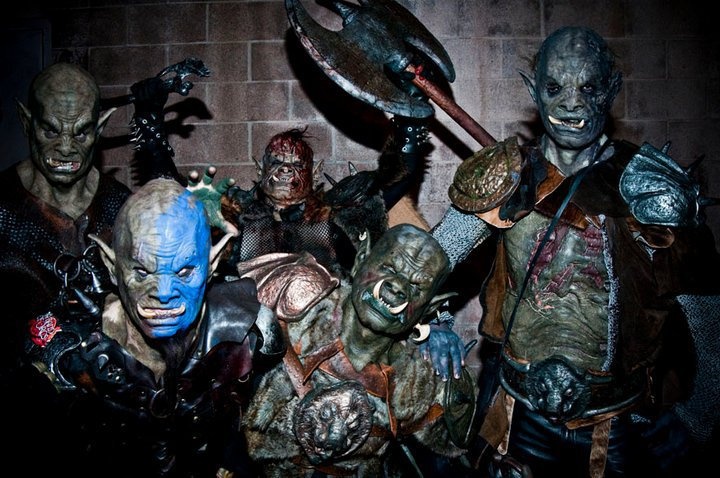
A few weeks back, I sent an email to A Band of Orcs, a death metal band of beasts who traveled to Earth from another realm. I was hoping to get an exclusive interview, but when I received no reply, I went about my life and forgot about it. Suddenly, on Saturday morning at 5 AM, I was awakened by a terrible howling noise followed by a frightening crash.
Gogog Bloodthroat, the singer from A Band Of Orcs, had broken down my front door and was climbing my stairs with a giant knife between his teeth. I tried desperately to run away, but Gogog grabbed me and pinned me against the wall. He was raving about a magic album they were recording that was coming out in June or July that was going to destroy all human eardrums. According to Gogog, the cover art was going to be done by a brilliant slave named Chuck Lukacs. I was able to ask him some questions before I blacked out from the beating I received.
Gogog: I was out in the stalls abusing the warhorses abusing calling them humans when you sent email. If you want to abuse something in your life or your realm, I found calling them human seals the deal. They are ready to throw some metal your way. Yes. YESSSSSS!!!!!

Tyranny: So let me ask you, I’ve never been an Orc before and I’m really curious…. What is a typical day in the life of an Orc like?
Gogog: Gogog never wake up too early. He make grunts do most work in mornings. But when Gogog wake up he smell, take deep breath, smell death, destruction and fire. That is Gogog’s breakfast. Wake up in morning, go out, abuse warhorses. Then, we go out, dominate, play heavy metal for all the pathetic humans that are out there in your realm. They are sooooooo….pathetic…..I love that word. Patheeeetic. I use that word from the Waterdog….he tell me “pathetic”. He tell me “your thought patterns are pathetic”. I love it! Everything pathetic!
Tyranny: You have an excellent vocabulary for a flesh-eating beast….
Gogog: Pathetic!!! Ahmmmmmmmmm….(incoherent growling)
Tyranny: If they had a monster SAT that could end up on it. Great word.
Gogog: It helps having a Shaman who teaches you vocabulary so you can speak to the stinky flesh piles such as yourself.
Tyranny: Well, thank you!
Gogog: It is a complement!!!! (more incoherent growling followed by horrifying laughter)
Tyranny: What possesses an Orc to start playing music? It doesn’t seem like a natural thing for you to do. Why did you start a heavy metal band?
Gogog: Well………SLAYER!!!!! REIGN IN BLOOD!!!!! We hear as Orcs, need to know, what is this magic? We hear this we feel like destroying. Jed! The one human that lives. That is all I must say.
Tyranny: Okay.
Gogog: He teach us this magic you call metal. Grrrrrrrrrrrrr. We must play constantly. Metal hurt. Metal don’t hurt, humans hurt. You scratch our back, we destroy yours.
Tyranny: Is it hard to play instruments with Orcfingers?
Gogog: Not at all. Orcs play everything with their fingers. You should hear the noise when we pick our ears. We have very thick ear hair to keep elves and berries out of our ears. Nobody hears the music that comes out of our ears when we pick them. Just Orc. It’s almost as beautiful as heavy metal! Everyday we learn more. We learn more. Hail Gzoroth!
(My 3 year-old daughter walked into the room at this point totally oblivious to the giant Orc holding me by the throat against the wall.)
My daughter: (excitedly) Daddy, my rash is better.
Tyranny: That’s great, sweetie. I’m talking to an Orc right now. Why don’t you go downstairs?
Gogog: Does the little princess want to ask a question?
Tyranny: No…No….She’s fine. (Thankfully, she left at this point and didn’t become Orcfood) Now, I keep hearing you talk about The Maelstrom. What is…(overly dramatic pause)….The Maelstrom?
Gogog: Maelstrom! Vortex of a lot of power magic. Destruction. Destroys everything around it. Bottom line…it brings the tribe.
Tyranny: I heard a story from your manager, Mr. Grimp….
Gogog: (laughing hysterically) YEEEEEEEEES! Mr. Grimp!!!! YEEEEESSSSSS! Know your place! YEEEEESSSSSSS!!!
Tyranny: How did you arrive on earth?
Gogog: That’s where humans get confused. We are not aliens. We not come from a different planet, we came from different realm. We come through Vortex, Maelstrom, that is the difference. We are not Martians! HeheahaaaaaaaaHeahahhahahahahahhahahahhaha………Martians! That is really funny. We come from a different REALM! REALM!! REALM!!!!!!
Tyranny: You came here through the Vortex???
Gogog: Kids playing Dungeons and Dragons, of course. Rolling dice. Gruesom Grimp is big jokester. He bring us through. (unintelligible shouting) He bring us through Vortex. Bring Orcs to Santa Cruz, California. Not knowing what’s going on. We destroyed everybody right there. Then, we hear magic in the tower above. We run upstairs and we hear SLAYER….REIGN IN BLOOD!!! Most amazing magic. Vortex. Maelstrom. I can’t say more.
Tyranny: That’s a beautiful story….
Gogog: People travel to Santa Cruz mountains now not only to find Bigfoot, now to find Orc. People everywhere we see! When Orc Tower appear, Bigfoot scared! We see Groongrich all the time. Humans say “See the Groongrich!” We the Groongrich!
Tyranny: Goongrich?!?!
Gogog: Groongrich!!!! GROONGRICH!!!! It’s something big in distance that oogs. You know your life is in danger, but yet you not know what it is. GROONGRICH!!!!
Tyranny: Groongridge??? Groongrich???
Gogog: (becoming hostile) GROOOOOOOOOOOOOOONGRICH!!!!!!!!! Must I spell?!?!?
Tyranny: I got it! As you may know, There is a lot of anti-Orc propaganda out there. What could you say to help convince the readers that Orcs are actually charming, lovable and benevolent creatures?
Gogog: Anti-Orc Propaganda!!!!!!!!
Tyranny: Yeah, people say they eat human flesh, they smell, they don’t clean up after themselves and are pretty anti-social.
Gogog: Yes….yes….all of the above. Humans are very good at destroying what they don’t understand. That’s why Orc still here. Humans understand Orc. We smelly, we mean, we don’t have love for anything on the planet. That’s us!
Tyranny: Let’s talk about your eating of human flesh. Now, you do eat human flesh, correct?
Gogog: NO!!!!! Gogog wear human flesh. Human taste like….meh…..it stink. Almost like Orc, but worse. We have human over. Eat brain. Leave drums for Oog. Oog make cymbals out of all kinds of human stuff. Then, we take the flesh and we wear it, we put it on. We wear it at war. I only wear the ugliest humans. The fur you see on Gogog is not animal fur, but hairy human.
Tyranny: You are kind to animals???
Gogog: NO!!!!! Not at all! We hope they take over your realm and destroy you guys. That’s why we call them all human. Like taking a Groongrich, sticking it with stink and calling it dumb and human. They take over EARTH!!! EARTH!!!! EARTH!! Hahahahahahahhahahahaaaaaa….
Tyranny: What have been some of your most successful human hunting strategies?
Gogog: To take a human down!?!?!? We play metal. You not see this on your Youtube, your Twitterface. You see human scum. We take the camera, post it on Youtube, DRUMS, CYMBALS, so on and so on.

Tyranny: You have some pretty imposing tusks. Are there Orc dentists who help you maintain proper dental hygiene? How often do Orcs need to brush and floss?
Gogog: Hairy humans! We bite into hairy humans with tusks, clean tusks, we ready to go. We show everything, we no hide. You see everything. Humans in your realm hide everything. We show you everything. Therefore, you think we lie. We no lie, we tell you the truth.
Tyranny: That was actually pretty deep.
Gogog: YES! You struggle with your words, Gogog speak truth now. Pick up jaw off ground.
Tyranny: A lot of my readers are interested to know what they can do to be spared when the Orcpocalypse comes. What’s your advice for them?
Gogog: Hail Gzoroth!!!! Buy our merch. Buy tee-shirt. Make armor out of it.
Tyranny: So, if they buy your merch or the new album that your working on, will they be spared.
Gogog: Most definitely. You buy CD, new album, tee-shirt, you spared. We see bumper sticker on car. Leave spared! We see! We travel in cage on back of tour bus. We see through holes for air. We see bumper sticker say “Band of Orcs”. They are the chosen ones, because they choose. You see! You choose, you get! Nothing for free. Well, sometimes. Gronk! Throw stuff out in crowd for free. We argue, but Gronk! always right. We think he magic. Like what you humans call Jedi Mind Trick.

At that point, the pain of being hit repeatedly in the skull with an elephant femur became too much to bear and I passed out. I awoke in a bed at Grady Hospital in downtown Atlanta a day later with multiple concussions and a missing ear. Hopefully, Gogog will be pleased with this interview and will leave me alone. Hail Gzoroth!
Honest Validation of Unfair Cheese: Slayer and The Perils Of Free-Market Fanaticism
Posted in Articles I Probably Shouldn't Have Bothered Writing on April 12, 2012
In Slayer’s song Blood Red, singer Tom Araya bellows forth a challenging and powerful lyric that cuts to the core of today’s debate between a managed, centralized economy and a free market system where the “invisible hand” balances the wants and needs of the consumer against the production capabilities of the market. When he shrieks “Honest validation of unfair cheese” at the 41 second mark of the song, it is clear that he is undercutting a basic free-market premise posited by thinkers the likes of Milton Friedman and Frederick Hayek. The words are enlightening and deeply meaningful, particularly for an electorate on the cusp of deciding what sort of financial decisions it plans to make as it marches forward into a new millennium.
In order to understand the meaning behind Araya’s lyric, it is first critical that we understand the meaning of “unfair cheese”. Nothing is more disappointing to a lover of cheese than when, upon returning from the supermarket, a shopper finds moldy, poorly preserved cheese in their bag. Who is supposed to ensure the consumer is safe from a flood of this “unfair cheese”? If the supermarket is left to its own devices, it might well sell all the out of date cheese it could possibly get away with. After all, as Buddy Holly said in his 1981 hit song “Who is watching the detectives?” In this case, maybe we need someone to even watch the people who are watching the detectives. Or, it is possible we may need to hire detectives to watch the detectives who are watching the detectives.
Back to the cheese thing. If it weren’t for the Better Food and Cheese Act of 1938, under the esteemed and underappreciated Presidency of Franklin D. Roosevelt, humans would be consuming pounds upon pounds of rotting, vile cheese. The Act empowered the police to arrest and jail any store clerk found selling “unfair cheese” for a period no less than five years in prison. Higher quality cheeses began to appear. Productivity flourished. It was during this period that Gorgonzola cheese was first produced in a laboratory. It was originally meant to be used as a weapon against the Soviet Union, but later it became appreciated for its velvety texture and tangy flavor. In the preceding two hundred years, America’s cheese growers had not produced as much as a single new breed of cheese.
So, when Araya asks for “honest validation of unfair cheese”, he’s really questioning whether a purely free market can produce the quality goods needed in a modern economy. Sure, it’d be nice to believe that the market is such a perfect force that can correct itself and keep the desires of its members in line, but it’s this sort of utopian thinking that caused the Great Wall of China to fall in 1990.
We cannot simply rely on market forces to purify the market. Human nature tells us that humans, in a perfect state of nature, will do some really unnatural things. In short, only a neutral arbitrator with no stake in the outcome can possibly make decisions that protect the consumer.
Only when the positions of these regulators are depoliticized and not influenced by corporations or individuals with expensive cars will we truly see an “honest validation of unfair cheese”. Only then will children of all races and all creeds, of all nationalities and all socio-economic backgrounds, of all hair styles and all blood types be able to sit down at the table of friendship together and eat the same safe and healthy cheese. Only then will we truly be free.
Dennis Rodman’s Million Dollar A Month Heavy Metal Habit
Posted in General Weirdness on April 11, 2012

As rumors of NBA Hall of Famer Dennis Rodman’s possible bankruptcy fill the news, recent court documents have revealed that his collection of heavy metal albums may be a major factor in his current financial crisis. Rodman, who is believed to owe hundreds of thousands of dollars to his ex-wife, apparently averaged spending 1.3 million dollars a month purchasing metal records over the past three years.
Rodman’s mind-boggling collection takes up two-thirds of his Malibu estate. It features a mountain of great metal treasures from original vinyl pressings of Iron Maiden’s “The Soundhouse Tapes” to numbered collectors editions of the first ten Judas Priest albums.
Some experts claim that he overvalued many items and paid ridiculous sums for them. For example, Rodman spent 40,000 dollars on two copies of the recent Morbid Angel IIud Divinum Insanus Wooden Box Set. The set, which included a red 180 gram copy of the record, a leather bound CD edition and two red candles, was valued at 199 dollars. He also spent 130,000 dollars to purchase all six hundred and sixty six copies of the Marduk-Panzer Division Set, valued at 40 dollars per copy.
Rodman was duped into purchasing many “autographed” albums that were fraudulent. For example, Rodman paid 10,000 dollars for a vinyl copy of Anthrax “Among The Living” that was signed by Johnny Belladonna, clearly not the singer from Anthrax. He also paid 30,000 dollars for a copy of Danzig III: How The Gods Kill. The album was autographed by Glen Danzig, a misspelled version of the singer’s name (which has two n’s).
Rodman even purchased European versions of albums that did not actually exist. He paid 800,000 for one of the supposed 12 copies of Dimmu Borgir’s “Morbid Fascist Iconoclast”, a demo that the band was believed to have recorded in 1989 (four years before they were actually formed).
In spite of the problems, Rodman’s collection is still a sight to behold. Imagine a record store with everything from Anacrusis to Znowhite. Rodman has entire rooms dedicated to genres and sub-genres. His NWOBH metal room, complete with life-sized photos of Steve Harris and Rob Halford, is located right down the hallway from his thrash room, which features a stuffed and mounted fake heads of Chuck Billy, Steve “Zetro” Souza, and Nuclear Assault’s John Connelly on the wall.
For a brief stretch, he even had the real Paulo Jr. from Sepultura living in a caged room in near the garage. Paulo was kidnapped by a group of Hamas agents and sold to Rodman for 150,000 dollars. He managed to escape Rodman’s collection by gnawing through the bars when Rodman was on a weekend vacation in the Bahamas.
Rodman did, for a brief moment, consider selling his collection. It is, after all, valued at over 8.7 million dollars and would set him up securely for the rest of his life. But Rodman believed that selling his collection might make him a poser, so he quickly shelved the idea. He has instead, considered selling one or both of his kidneys in order to get himself back on firm financial footing.
Researchers Link “Slayer Obsession” To Food Allergies
Posted in Health Tips for An Early Death on April 9, 2012

John Murphy At A Slayer Concert After Consuming 12 Jars of Pickle Juice
In a surprising study done by Johns Hopkins University, a direct connection has been found between being obsessed with the heavy metal band Slayer and consumption of certain classes of food. Slayer Obsession, known in medical parlance as Human Epiglottal Lymphogranuloma Lychosis or HELL, has been known to effect two in every three Slayer fans at least one time in their lives. In more serious cases of Slayer Obsession, a diet rich in certain classes of carbohydrates and proteins has been linked to symptoms as serious as the need to carve the band’s name into a person’s arm, the desire to write “SLAYER” on random Facebook message threads or even the overwhelming need to write the lyrics to “Dead Skin Mask” and other Slayer songs on inappropriate places such as church pews or children’s foreheads.
One food, unsurprisingly, that can cause Slayer addiction is barley, commonly found in beer. As many as 4 in 10 beer drinkers find themselves with mild to serious cases of HELL.
What is shocking are the other types of food that can lead to this disorder. The researchers found that people who consume more than 12 ounces of butter per day were found to frequently listen to the album “Seasons in the Abyss” for between 6 and 8 hours in an evening. Consumption of cucumbers or cottage cheese can lead to the desire to lock oneself in a room and listen to nothing but “South of Heaven” for entire weekends at a time.
The real stunner was that pickle juice is a major contributor to the disorder. Apparently pryotophan, an amino acid found in pickle juice will, in almost all cases, lead to immediate bouts of HELL and a nearly mindless sense of euphoria. Many fans at fans Slayer shows, who have recently been seen consuming entire containers of the water in pickle jars, have found themselves running wildly around in circles and running into one an other in a symptom that doctors refer to as “moshing”. Some Slayer fans have even taken to smoking and free basing pickles before shows in order to get the desired effect.
While doctors for years have believed that only the love of Jesus Christ or a good woman could help HELL sufferers, the Johns Hopkins research team believes that eating certain things can help cure the disorder. One such food is potting soil. According to their study, eating 9 ounces of mineral rich potting soil per day can lead a sharp decrease in the need to listen to Slayer. They also recommend eating at least 3 servings of donkey spleen per week.
For sufferers of this disorder, the future may seem bleak. They may feel powerless over their obsessions and symptoms. However, a diet rich in dirt and donkey parts can ensure that, in fact, HELL does not await.

On An Easter Egg Hunt With The Cancer Bats
Posted in Articles I Probably Shouldn't Have Bothered Writing on April 8, 2012

So there I was, participating in that most shameful American rituals, the Easter Egg Hunt. Swarms of children knocking each other over, screeching at the tops of their lungs in the desperate hopes of laying their greedy little mitts on as many plastic eggs as they possibly can. The whole exercise functions as a wonderful metaphor for American style consumer capitalism. A bunch of wild-eyed humans released upon an uneven field with the goal of filling their baskets with as much stuff as possible. Sure, everybody gets something, but those who are bigger, stronger, faster and, most importantly, start at the front of the line tend to get more. All the while, this being a function of one of the local mega-churches, crackpot religious explanations are given for nearly everything.
“You know who really put these eggs out here, son? Jesus Christ. See, he works through us. Remember that when you are eating those Skittles,” muttered a used car salesman looking church elder with game show host hair.

It was around that moment that I realized that if I didn’t put my headphones on immediately and listen to something angry I was going to tear my shirt off and run around howling like Lon Chaney. These were the exact conditions under which I came into contact with the new Cancer Bats album “Dead Set On Living”.
I should admit up front that this hardcore punk metal hybrid thing never really did much for me. Around the time Hatebreed and Converge were coming out I was busy trying to prove to the world that I was so metal that unless it came out in Europe, was from a band that had been around since Carter was President or had been approved by at least six members of the Central Committee that I couldn’t be bothered it. It is really a shame, because I missed some pretty intense music and probably would have been easier to be around had I been a tad more open-minded.
Listening to the driving groove of the opening track “R.A.T.S” while watching a husky five-year-old girl rip an egg out of the hands of some pigtailed three year old seemed particularly fitting. The whole scene was menacing. The tone of the album helped me imagine the children turning into brain-thirsty zombies. Somehow, instead of the eggs being filled with the sugar-laced, sunshine of God’s love, they were contaminated with some CIA tested drug that morphs children into predatory beasts.
The Cancer Bats singer Liam Cormier takes some getting used to. He’s of the high pitched death wail school, which usually makes me a bit edgy. It gets better as the album goes on, particularly because he offsets it from time to time with an almost David Lee Rothian snarl. The guitars are what really what grab you. They tend to create short, punchy, memorable riffs that carry you endlessly forward and flow from a nearly bottomless pit of energy. About three listens to this record are all you need to be thirsting for it every second of the day.
Meanwhile, the kids began to get this panicked look around the time they realized the eggs were nearly gone. Something like the expression they’ll have in twenty years when they are sitting in their car waiting to get gas for three hours. I cranked the music louder steeling myself for some sort of toddler riot. I knew I could handle a few of them, but if the whole group turned on me they’d tear me to ribbons. Finally, mercifully, the eggs had all been collected and the mob was redirected with little violence towards a sea of bouncy castles in the church parking lot.
The whole experience was perplexing for me. Here I was, surrounded by all that is supposedly good and right with the world. Except every bit of it felt dirty and degrading. The only thing that seemed remotely moral to me was the driving rhythm of the music in my headphones. I sunk into a moment of genuine despair as I realized that I might never be able to reconcile my values with those of my culture. Maybe I was an alien. Maybe I was simply wired wrong. Would I ever be able to understand how people could find joy in moments like this? Then, out of nowhere, my beautiful three-year-old daughter took my hand, looked at me and smiled. And everything was okay.
Lemmy Has Surgery To Remove Both Livers; Plays Concert That Night
Posted in General Weirdness on April 5, 2012

Lemmy On Stage Hours After Liver Removal Surgery
For most people, having one liver removed is a torturous affair that leaves them with months of painful recovery. Yesterday afternoon, Lemmy Kilmister became the first man to ever have both livers removed at the same time. The marathon 6-hour surgery was followed by a half hour of recovery, dinner at a local bar and a 2-hour set of classic Motorhead tunes at The Rock Center, a metal club in downtown Pocatello, Idaho.
Doctors advised Lemmy to take at least three months off from performing, but his commitment to playing heavy metal was too great to hold him back. “I didn’t want to let the fans in Idaho down. After all, what do they really have to live for beyond the occasional concert?” said Lemmy this morning during his 3-hour weightlifting session.
Lemmy is no stranger to overcoming medical emergencies and soldiering on. Everyone is, of course, familiar with the time that in 1983 in Antwerp, Belgium he was mauled on stage by 15 pit bulls and continued to play his bass in spite of missing 9 fingers.
Who could forget the time the Chinese government accidentally detonated a nuclear bomb at a test facility 1,000 meters away from a Motorhead concert in Shanghai in 1988? Everyone within a radius of 12 miles was killed except Lemmy, who went on to play the entire Orgasmatron album from beginning to end to an arena filled with annihilated corpses.
However, because of Lemmy’s advanced age, going on stage after a surgery of this type may be his greatest feat.
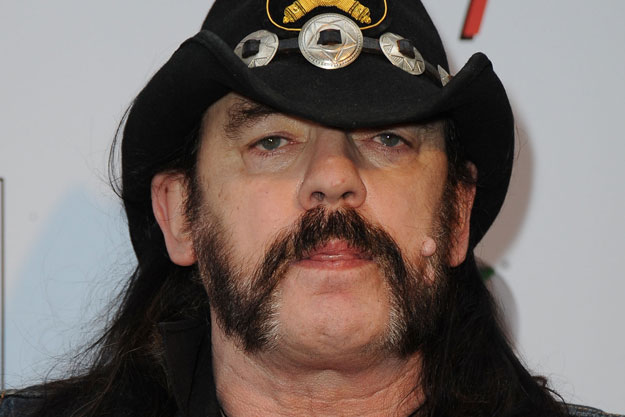
Doctors are baffled as to how a man who has done so much damage to his body continues to exist. There were rumors as recently as 2003 that he was killed and replaced by a Lemmy-like robot, but several doctors have done independent tests to prove that he is a human. There was also rampant speculation that Lemmy has regularly been shooting the DNA of famed Russian monk Rasputin directly into his arm in the hopes of becoming indestructible, but this also has not been confirmed.
Some researchers have reasoned that it is possible that consuming the amount of Jack Daniels that he has ingested over his lifetime has actually made his body impervious to harm of any kind. Regardless of what his secret is, it is very possible that Lemmy cannot be destroyed by traditional means and will live on well into the next millennium.
 The Tyranny of Tradition