Posts Tagged United States
National News Coverage of Sarah Palin and Oystergate!!!
Posted by Keith Spillett in The Sarah Palin Fiasco on January 14, 2011
I am amazed at what has happened. The Sarah Palin “Oystergate” scandal is becoming a major national news story!!! I just pulled this off of the wire 10 minutes ago. (If you are just finding out about this story here are links to the original article and Palin’s reply)
Click here for up to the minute coverage of Sarah Palin and the Oystergate scandal!!!

Angry Swedish Protestors In Front of The Ikea in Bloomington, Minnesota
Bloomington, MN (API)-In a bizarre scandal that is being called “Oystergate”, Sarah Palin is being accused of having a deep hatred of Swedish people. This story began when Palin agreed to write a music interview on a small website called “The Tyranny of Tradition”. Palin’s review, in which she shared her feelings about music including a love for the rock group The Blue Oyster Cult, started off as a simple discussion of heavy metal and quickly turned into an anti-Swedish diatribe where she claimed to be concerned about “slick talking Swedish terrorists” and referred to the government of Sweden as being “brutal and oppressive”. In a follow-up email, Palin added fuel to the fire by misquoting William Shakespeare and saying that there was “something rotten in the state of Sweden”.
The Swedish Embassy officially condemned Palin’s remarks. Swedish spokesman Per Gustafson said, “The Swedish people are deeply offended by Palin’s statement. Anti-Swedism has no place in the world of mature political communication.”
Late in the afternoon, things took a decided turn for the worse for the Palin camp. Helen Blomquist, the personal housekeeper for the Palins from 2006 until 2008, dropped a bombshell when she accused Palin of using anti-Swedish language around their Wasilla home. According to Blomquist, during a heated meeting with one of her top advisors, Palin shouted “Grow up! Stop acting like such a Swede!”
Blomquist also claims that, as a sick joke, she was regularly pelted with Swedish fish and subjected to mocking anti-Swede insults by Mrs. Palin and her husband Todd.
In the wake of the growing scandal, the Palin camp has issued a statement saying, “Sarah has nothing but love and appreciation for the Swedish people. The comments of Mrs. Blomquist are entirely untrue. Any accusations of Anti-Swedism are purely a creation of the left-wing media.”
However, growing tension has clearly plagued Palin’s staff. Hilda Erickson, Palin’s Chief of Swedish Relations, resigned this afternoon citing “personal, family related reasons.”
Swedish-Americans have taken to the streets to voice their outrage at Palin’s comments. A group of nearly 500 angry Swedes stood in front of the IKEA in Bloomington, Minnesota today carrying protest signs, shouting “Palin hates Swedes” and proudly singing the Swedish National Anthem. Hilmar Lindquist, head of the Swedes For America group, has demanded an apology. Until Palin apologizes, Lindquist and several of his followers have begun a 40 day lingonberry-only fast.
Oystergate!?!?! Sarah Palin Responds Angrily
Posted by Keith Spillett in The Sarah Palin Fiasco on January 14, 2011
Click here for up to the minute coverage of Sarah Palin and the Oystergate scandal!!!

Swede Revenge!!!
This was in my inbox about a half an hour ago. In case you missed how this whole thing started, here’s a link to the original article. I’m really not sure what to think about anything anymore. Things have gotten simply too weird.
Anyway, here’s Sarah…
Keith,
I want to clear up some misconceptions that came up in my review of Ghost’s “Opus Eponymous”. I have received a good amount of angry emails from people who felt that I made remarks that were demeaning towards Swedish people. I even received an angry message from the Swedish embassy. I want to go on the record as saying I have nothing but respect and admiration for the Swedish people. Some of the most significant Americans of the last 100 years have been Swedes. John W. Nordstrom, founder of the Nordstrom’s retail chain, was born in Sweden. Astronaut and American hero Buzz Aldrin is part Swedish. Even wonderful entertainers like Julia Roberts and Tippi Hedren claim Sweden part of their great ancestry.
Just so you know, I was one of the first shoppers at IKEA when it opened in Anchorage. They have all of those sturdy pieces of furniture with the silly names. I think we bought a Flarn for Piper’s room that day. Every Sunday, Todd and I drive an hour to treat the family to breakfast at the closest IHOP over in the town of Chuloonawick. Every week without fail I order the Swedish pancakes. Surprisingly enough, both my and Todd’s favorite candy are Swedish fish. I ask you, do I sound like someone who hates Swedish people?
The point I was trying to make was not that we should hate all Swedes or the country of Sweden. Sweden is clearly an up and coming country. They have their own embassy, which tells you a lot about them. IKEA has a business model all Americans can be proud of. Once they grow out of their socialist phase like Russia did, they could easily rejoin the great nations that have refuted socialism and embraced values we can all stand for. The point I was trying to make in the article really had nothing to do with Swedes. It was more the idea that we should naturally be aware that some foreigners are against what we stand for and are dangerous. Since we can never be quite sure which ones are the bad ones, we must naturally be aware of all of them and treat them with appropriate caution. There is nothing wrong with a little bit of vigilance when our safety and well-being is at stake. When we are dealing from refuges from a socialist country like Sweden we must be even more prepared for the threat of potential anti-Americanism or worse. Even a writer and poet as great as Shakespeare understood this. He put it brilliantly when he wrote those now famous words “something is rotten in the state of Sweden.” I am clearly not the only one with these sorts of concerns.
I was very upset by your comments last night on MSNBC. After reading your article about the Beatles, I was sure you were someone I had a good deal in common with. How wrong I was! The statement you made about “condoning my metalheadedness but not my blockheadedness” was simply unfair. First of all, metalheadedness is not a word. Secondly, it upset me to no end to hear you give ammunition to an arm of the liberal media empire like MSNBC. They are clearly out to destroy me. In a week where I’ve experienced such awful attacks and personal suffering I would think you could have been a bit nicer. I simply will not write anything else for your stupid little blog.
Sarah
The Most Amazing Thing That Has Ever Happened To Me….THANK YOU SARAH PALIN!!!!
Posted by Keith Spillett in Pointless Music Reviews, The Sarah Palin Fiasco on January 12, 2011

A Real Iron Maiden!!!
Some of you may have heard the big news today, but if you haven’t, I will tell you that today is easily the biggest day in the history of The Tyranny of Tradition blog. I have spent most of the last 24 hours dealing with calls from CNN, Fox News, MSNBC and even the 700 Club. In order to understand what is about to happen I need to give you some back-story. About 3 months ago, a good friend of mine told me that he remembered at an early Sarah Palin speech during the 2008 campaign she came out to speak to the opening riff from Godzilla by the Blue Oyster Cult. I assumed he was kidding, but he was pretty insistent about it so I decided to look it up. Sure enough, I found the footage along with an interview with her talking about music and she mentioned listening to the Blue Oyster Cult when she was in high school. Being a die-hard Blue Oyster Cult fan, this utterly blew my mind. I wanted to find out if she was still a fan so I emailed her people again and again but never got a response. I figured that she had just blown it off as a series of bizarre emails and forgot about the whole thing. Then, about a week ago…I got an email FROM HER. I was astonished. She wrote me this lengthy letter thanking me for writing to her telling me all about her love for the Blue Oyster Cult. This was too much for me. I nearly had a heart attack. I decided to push things a step further and sent her a request to write a short piece for my blog. I had been listening nonstop to a record by a band called Ghost. The album, “Opus Eponymous”, is absolutely fantastic. On a whim, I decided to ask her to listen to it and write a review. Again, I was certain that I would never in a million years get a reply, but as I opened my inbox this morning I found the following email…
Keith,
Thanks for offering me a chance to write a review for your blog. I have been quite busy recently but I took a few moments to put something together for you. Hope you like it.
Yours truly,
Sarah

A Review of Ghost “Opus Eponymous”
By Sarah Palin
Over the last few years, many of you have gotten to know me as Sarah the candidate, or Sarah the Governor, or Sarah the Mother, but I want to take this opportunity to show you another side of me. Today, I want to introduce you to Sarah the Metalhead. A lot of people think of me as some kind of stuffed shirt who doesn’t know how to rock out. Nothing could be further from the truth. Todd and I are both huge fans of heavy metal. On one of our first dates, Todd took me to the nicest restaurant in Wasilla, a wonderful little Mexican place called El Taco that is owned by our close family friend Jerry O’Malley. To impress me, he hired the mariachi band to play the Blue Oyster Cult song “Astronomy”. At that moment, I knew I was in love. Of all metal and hard rock bands, I have always had a special place in my heart for the Blue Oyster Cult. I love them so much that I even tried to get Bristol and Piper’s Jazzercise instructor to use “Burnin’ For You” as part of their warm-up activities. When we were working on Sarah Palin’s America for TLC, we tried to film a sequence where we shot a moose with a rocket launcher from a moving chopper. To get ready to use this fine piece of military machinery, I listened to the Blue Oyster Cult’s song “Vengeance: The Pact”. Unfortunately, I missed the moose and the segment had to be cut, but that song really got me ready to go.
I recently picked up a copy of a CD by a band named Ghost called “Opus Eponymous” that reminded me a lot of what’s great about the Blue Oyster Cult. The album is filled with great solos, sweeping choruses and driving riffs. When I first heard the song, “Ritual” I knew I was going to enjoy their sound. There are definitely other influences on this album as well. I noticed a lot of moments that reminded me of some of the work done by the great King Diamond on the early records by Mercyful Fate, particularly the song “Elizabeth”.
At first, I really loved the album but then I found out some things about Ghost that troubled me greatly. First of all, they make reference to Satan on several occasions on this album. There are also a lot of violent lyrics. As you know, I am strongly against young people listening to violent music. This is not the sort of thing that impressionable children should be listening to. The thing that disturbed even more was the fact that Ghost is Swedish. They seemed to speak English very well so I, of course, assumed that they were American. It makes you think that a Swede could pretend to be an American an easily get away with it. A slick talking Swedish terrorist could easily get past one of those TSA government workers and bring weapons of mass destruction into our country. I don’t want to paint all Swedes with the same brush. There are probably some good Swedes out there, but it is a fact that the government of Sweden is socialist. Ghost may not be a socialist band. They may have fled Sweden to escape their brutal and oppressive government, but they have grown up living the socialist life and these things can change a person. They probably would come here expecting some sort of government hand out if they didn’t sell enough records. We have to at least consider the possibility that their music is meant as a Trojan horse to lead our young people to violence, Satanism and the belief that the government is going to solve all of their problems.
I would advise you to not buy this album in spite of the excellent quality of the music. There are plenty of good old fashion, red-blooded American metal bands that are struggling to sell records. Why give good hard earned, American money to a group of people who are just going to give it away to people who don’t share our values?
Read Sarah Palin’s response to the “Oystergate” controversy caused by this article.
H.L. Is Not Other People
Posted by Keith Spillett in Existential Rambings, The Politics Of Catastrophe on January 3, 2011
Mencken's Favorite Target At Work
If H.L. Mencken is not the greatest American writer, he is certainly its most cruel. With a few strokes of the pen, this one-man wrecking crew was able to annihilate ideas, beliefs and people. He had little love for misconceptions that paraded as truth. He was at his best when he was demolishing strongly held beliefs that wilt under the light of reason.
Mencken had a special place in his dark heart for mauling politicians who he believed to be demagogues. He seemed to particularly enjoy berating William Jennings Bryan. Bryan, the renowned Congressman, three time Presidential candidate and Secretary of State under Woodrow Wilson, was best known for his vehement attack on the teaching of evolution in public schools during the Scopes Monkey Trial. The trial was an embarrassing end to Bryan’s career and he died soon after.
Upon Bryan’s death, Mencken wrote a truly intriguing column. It was one of the most vicious, malevolent pieces of writing ever published and it was an OBITUARY. Usually, death is something that would make even the most cynical of writers call off the dogs, but not Mencken. He proceeded to desecrate the corpse of Bryan with a stream of invective that is legendary for it’s sheer mercilessness.
Upon reading the piece, many readers are left with two feelings. The first is that Mencken’s writing is incredible. His epic prose shows the pure buffoonery exhibited by Bryan in a way that is both frightening and hysterical. The second is a feeling of disgust. Should Mencken really have been attacking a dead man in this way? Obituaries are often read by friends and family who are mourning the passing of someone dear to them. A reader could easily walk away with the feeling that the world is better without Bryan and that his passing is something to be reveled in. Mencken was stating what he believed to be true. He was being honest in a way that is almost brave. He is not only attacking Bryan, but also the social custom of allowing the recently dead to be exonerated for the way they lived their lives. However, his words could easily have led to untold suffering and misery.
The question of what sort of limit should be set on the amount of pernicious rage that a writer should exhibit is not an easy one to answer. Sometimes it feels like saying the worst possible thing is the correct action. Language can be a weapon that teaches ignorant people to keep their mouths shut. There is a certain beauty in that. There is also a liberating feeling in calling the thing what it is with no restraint. This sort of rage can also be a weapon that causes irreparable harm. We are all humans who, at times, can say and do highly unenlightened things. Should we be ruthlessly punished for each mistake we make? Should we be tormented for living ridiculous lives based on senseless beliefs? Will this sort of brutality teach us to be better people? I’m not sure, but I think the Mencken piece allows us to ask this question and for that reason it is a highly valuable thing. Plus, it’s really, really funny.
Originally published in The Baltimore Evening Sun July 25, 1925
William Jennings Bryan
It was plain to everyone, when Bryan came to Dayton, that his great days were behind him — that he was now definitely an old man, and headed at last for silence. There was a vague, unpleasant manginess about his appearance; he somehow seemed dirty, though a close glance showed him carefully shaved, and clad in immaculate linen. All the hair was gone from the dome of his head, and it had begun to fall out, too, behind his ears, like that of the late Samuel Gompers. The old resonance had departed from his voice: what was once a bugle blast had become reedy and quavering. Who knows that, like Demosthenes, he had a lisp? In his prime, under the magic of his eloquence, no one noticed it. But when he spoke at Dayton it was always audible.

When I first encountered him, on the sidewalk in front of the Hicks brothers law office, the trial was yet to begin, and so he was still expansive and amiable. I had printed in the Nation, a week or so before, an article arguing that the anti-evolution law, whatever its unwisdom, was at least constitutional — that policing school teachers was certainly not putting down free speech. The old boy professed to be delighted with the argument, and gave the gaping bystanders to understand that I was a talented publicist. In turn I admired the curious shirt he wore — sleeveless and with the neck cut very low. We parted in the manner of two Spanish ambassadors.
But that was the last touch of affability that I was destined to see in Bryan. The next day the battle joined and his face became hard. By the end of the first week he was simply a walking malignancy. Hour by hour he grew more bitter. What the Christian Scientists call malicious animal magnetism seemed to radiate from him like heat from a stove. From my place in the court-room, standing upon a table, I looked directly down upon him, sweating horribly and pumping his palm-leaf fan. His eyes fascinated me: I watched them all day long. They were blazing points of hatred. They glittered like occult and sinister gems. Now and then they wandered to me, and I got my share. It was like coming under fire.
II What was behind that consuming hatred? At first I thought that it was mere evangelical passion. Evangelical Christianity, as everyone knows, is founded upon hate, as the Christianity of Christ was founded upon love. But even evangelical Christians occasionally loose their belts and belch amicably; I have known some who, off duty, were very benignant. In that very courtroom, indeed, were some of them — for example, old Ben McKenzie, Nestor of the Dayton bar, who sat beside Bryan. Ben was full of good humor. He made jokes with Darrow. But Bryan only glared.
One day it dawned on me that Bryan, after all, was an evangelical Christian only by sort of afterthought — that his career in this world, and the glories thereof, had actually come to an end before he ever began whooping for Genesis. So I came to this conclusion: that what really moved him was a lust for revenge. The men of the cities had destroyed him and made a mock of him; now he would lead the yokels against them. Various facts clicked into the theory, and I hold it still. The hatred in the old man’s burning eyes was not for the enemies of God; it was for the enemies of Bryan.
Thus he fought his last fight, eager only for blood. It quickly became frenzied and preposterous, and after that pathetic. All sense departed from him. He bit right and left, like a dog with rabies. He descended to demagogy so dreadful that his very associates blushed. His one yearning was to keep his yokels heated up — to lead his forlorn mob against the foe. That foe, alas, refused to be alarmed. It insisted upon seeing the battle as a comedy. Even Darrow, who knew better, occasionally yielded to the prevailing spirit. Finally, he lured poor Bryan into a folly almost incredible.
I allude to his astounding argument against the notion that man is a mammal. I am glad I heard it, for otherwise I’d never believe it. There stood the man who had been thrice a candidate for the Presidency of the Republic — and once, I believe, elected — there he stood in the glare of the world, uttering stuff that a boy of eight would laugh at! The artful Darrow led him on: he repeated it, ranted for it, bellowed it in his cracked voice. A tragedy, indeed! He came into life a hero, a Galahad, in bright and shining armor. Now he was passing out a pathetic fool.
III Worse, I believe that he somehow sensed the fact — that he realized his personal failure, whatever the success of the grotesque cause he spoke for. I had left Dayton before Darrow’s cross-examination brought him to his final absurdity, but I heard his long speech against the admission of expert testimony, and I saw how it fell flat and how Bryan himself was conscious of the fact. When he sat down he was done for, and he knew it. The old magic had failed to work; there was applause but there was no exultant shouts. When, half an hour later, Dudley Field Malone delivered his terrific philippic, the very yokels gave him five times the clapper-clawing that they had given to Bryan.
This combat was the old leader’s last, and it symbolized in more than one way his passing. Two women sat through it, the one old and crippled, the other young and in the full flush of beauty. The first was Mrs. Bryan; the second was Mrs. Malone. When Malone finished his speech the crowd stormed his wife with felicitations, and she glowed as only a woman can who has seen her man fight a hard fight and win gloriously. But no one congratulated Mrs. Bryan. She sat hunched in her chair near the judge, apparently very uneasy. I thought then that she was ill — she has been making the round of sanitariums for years, and was lately in the hands of a faith-healer — but now I think that some appalling prescience was upon her, and that she saw in Bryan’s eyes a hint of the collapse that was so near.
He sank into his seat a wreck, and was presently forgotten in the blast of Malone’s titanic rhetoric. His speech had been maundering feeble and often downright idiotic. Presumably, he was speaking to a point of law, but it was quickly apparent that he knew no more law than the bailiff at the door. So he launched into mere violet garrulity. He dragged in snatches of ancient chautauqua addresses; he wandered up hill and down dale. Finally, Darrow lured him into that fabulous imbecility about man as a mammal. He sat down one of the most tragic asses in American history.
IV It is the national custom to sentimentalize the dead, as it is to sentimentalize men about to be hanged. Perhaps I fall into that weakness here. The Bryan I shall remember is the Bryan of his last weeks on earth — broken, furious, and infinitely pathetic. It was impossible to meet his hatred with hatred to match it. He was winning a battle that would make him forever infamous wherever enlightened men remembered it and him. Even his old enemy, Darrow, was gentle with him at the end. That cross-examination might have been ten times as devastating. It was plain to everyone that the old Berseker Bryan was gone — that all that remained of him was a pair of glaring and horrible eyes.
But what of his life? Did he accomplish any useful thing? Was he, in his day, of any dignity as a man, and of any value to his fellow-men? I doubt it. Bryan, at his best, was simply a magnificent job-seeker. The issues that he bawled about usually meant nothing to him. He was ready to abandon them whenever he could make votes by doing so, and to take up new ones at a moment’s notice. For years he evaded Prohibition as dangerous; then he embraced it as profitable. At the Democratic National Convention last year he was on both sides, and distrusted by both. In his last great battle there was only a baleful and ridiculous malignancy. If he was pathetic, he was also disgusting.
Bryan was a vulgar and common man, a cad undiluted. He was ignorant, bigoted, self-seeking, blatant and dishonest. His career brought him into contact with the first men of his time; he preferred the company of rustic ignoramuses. It was hard to believe, watching him at Dayton, that he had traveled, that he had been received in civilized societies, that he had been a high officer of state. He seemed only a poor clod like those around him, deluded by a childish theology, full of an almost pathological hatred of all learning, all human dignity, all beauty, all fine and noble things. He was a peasant come home to the dung-pile. Imagine a gentleman, and you have imagined everything that he was not.
The job before democracy is to get rid of such canaille. If it fails, they will devour it.
An Open Letter to the Beatles
Posted by Keith Spillett in Totally Useless Information on December 28, 2010
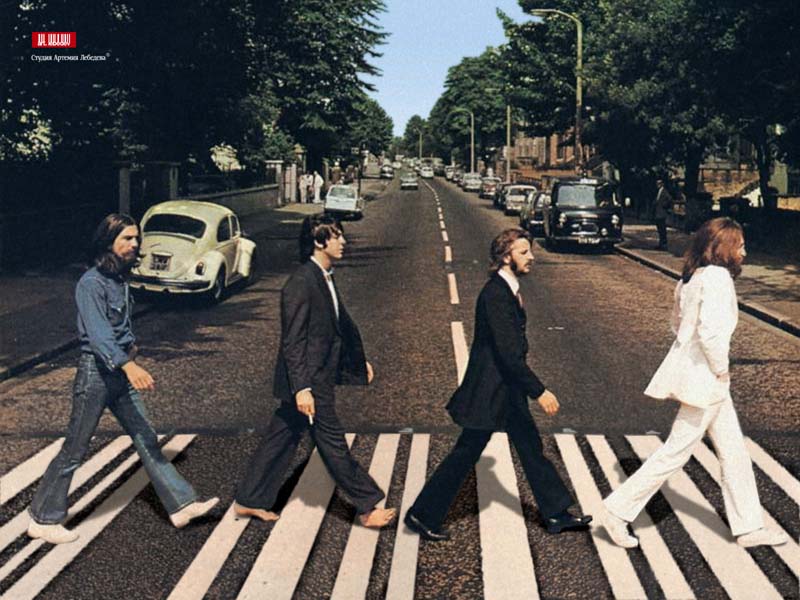
Crossing the street…or CROSSING THE LINE?!?!
Dear Paul, Ringo, John and The Other Guy,
I was driving my children to swimming lessons yesterday and your song “All You Need Is Love” came on the radio. I had never really listened to the words in this song, but as a concerned parent, I decided to try to listen to the words that my children were hearing. What I heard was truly shocking! I find the message in this song to be deeply troubling and, as a concerned parent, I beg you to do what you can to stop radio stations from playing this song.
I’m sure that you thought that you were just writing another silly love song and, I mean, what’s wrong with that? But, if you really think about the message in the song, I think you’ll come to understand why it disturbed me so much. Imagine for a second, that an impressionable child heard this song and took it seriously. Clearly, human beings need a good deal more than love to survive. They need food, shelter, clothes (preferably from a decent designer), and air. What if an impressionable child heard this song and decided to stop eating completely? His concerned parents would beg him to eat but he would not. What if, as he widdled away to the size of a twig, slowly starving to death and his concerned parents, now grief-stricken, asked him why he was doing this and he replied “Because the Beatles told me all I need is love”? Could you live with your selves?
What if, even worse, he just decided to stop breathing? He could die within a moment or two giving the concerned parents only a few seconds to react. What if his friends saw him stop breathing and thought that it was the “cool” thing to do? What if hundreds, thousands of children stopped breathing just to not be “square”? It could be an epidemic of epidemic proportions! Children, falling over dead in classrooms across America, with the words “All You Need Is Love” passing though their blue lips as they meet their maker. Is that what you want?
Music has a major effect on the ideas of young people. Do you know what Jeffrey Dahmer, Adolf Hitler, and Ted Bundy have in common? As young men, they all listened to music. And look what suffering they caused!
I demand that you stop allowing this song to be played on radio stations everywhere. I also ask that you never fill our children’s souls with such blasphemous, anti-social ideas by playing this live. Until you agree to stop this madness, I and a group of like-minded concerned parents, plan to boycott love. We will not express love in words or actions. We even plan on starting all tennis games at 15 so that no person ever has love.
Yours truly,
A Concerned Parent
In Defense of Stupidity
Posted by Keith Spillett in Blithering Sports Fan Prattle, Totally Useless Information on December 11, 2010
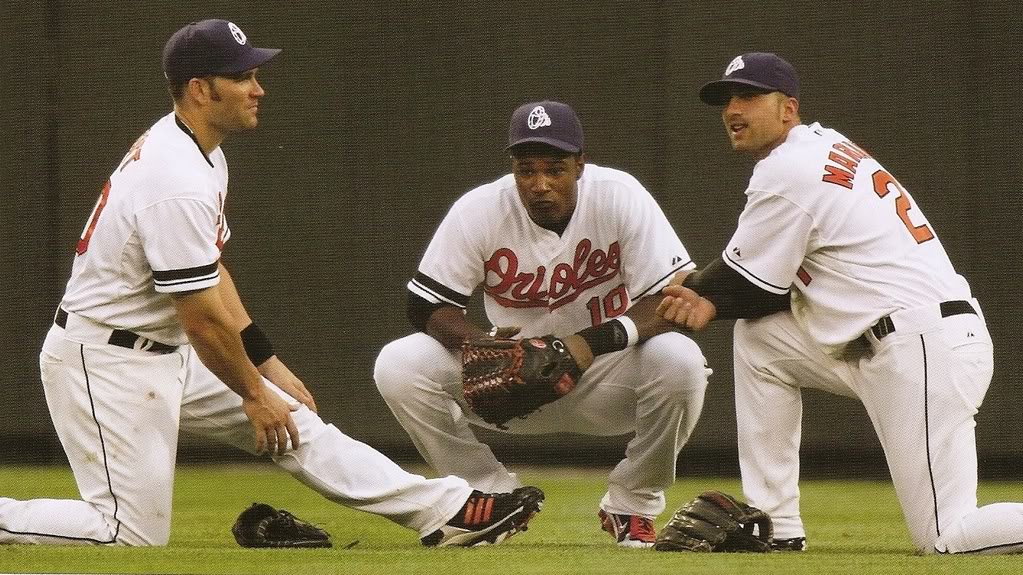
Luke Scott Casually Discussing John Doe Number 2 and the role of the Lizardpeople in creating the Federal Reserve (borrowed from http://i393.photobucket.com/albums/pp13/cammielc)
A popular expression that tends to get used when people make asinine comments to a member of the media is “What were you thinking?” It is a common retort used to illustrate when someone has said something so utterly without merit that the reporter doesn’t feel the urge to mount a counter reply. Recently, Luke Scott, a muscle-headed, mouth-breathing Baltimore Oriole baseball player, who clearly cut many a history class in order to spend an additional hour in his school’s Chik Fil-A sponsored batting cage, made some monumentally dumb off the cuff remark about Barack Obama not being an American citizen. This sort of remark has faded a bit from its mid-2009 health care hysteria peak, but you still hear the occasional Manchurian candidate nonsense rearing its jingoistic head. I don’t expect Luke Scott to say anything worth listening to. What passes for discourse between athletes and reporters is the general ever flowing stream of “I’m going to go out there and do the best I can and, God willing, my teammates and I will get a win” type truisms that are taught to these folks in six hour cram session classes run by slime bucket agents who are looking to make their commodities more marketable to the slab of the American public that loves to hear the same thing over and over again.
I really could care less what Luke Scott has to say. What annoyed me was the glib, dismissive way that Yahoo writer Steve Henson rejected his remark in his recent free agency winners and losers column. Obviously Steve, we know what he was thinking. He was very clear about that in his statement. He was thinking that Obama was born in another country and, therefore, is an “illegitimate” President. The question seems to not be geared to mock what he was thinking, but his inability to know that when a reporter is around it is your job as an athlete to spout nothing but inoffensive, meaningless, Hallmark card style platitudes. Henson was really asking, “How could he not know that saying this would make him look ignorant? Doesn’t he know that it is his station in life to carry on this endless tradition of banal player interviews that we so love and revere? Why didn’t he just say something like “Obama will be fine if he gives this whole being born in the United States thing 110 percent”?
One of the unnamed right of passage exams that an athlete goes through on the way to householdnamedom is the “Can you say absolutely nothing of substance every time you are within 50 feet of a microphone” test. This is why listening to most athletes being interviewed is a highly painful endeavor. It’s as if the interviewer and the player a conspiring to cover up any human characteristics the athlete could possibly have. Occasionally, we are treated to colorful dimwits like Charles Barkley or Curt Schilling who say embarrassing “what the average guy is thinking” sorts of things, but mostly it’s just more of the “It was my childhood dream” sort of garbage. The Barkley/Schilling type stuff is awful for other reasons, but at least when I listen to it I know that their is a human being in there instead of a piece of equipment that runs a 4.3 40.
There is an upside to athletes feeling they have the ability to express themselves with some degree of freedom. For one, I now know that Luke Scott, once only known to me as the guy I might pick instead of Edwin Encarnacion in the 14th round of my AL keeper league draft, is a raving lunatic. Luke Scott has gone from 27 homeruns and 72 RBIs to a real human with definable features. I can like him or dislike him based on his ideas. Maybe there are a few Bill “Spaceman” Lee, Dock Ellis or Jim Bouton types who really have something unique to say. There is a real loss sports fans experience when athletes do not speak their minds. It is the loss of the chance to meet these players as human beings with real ideas and emotions. The ideas they have may be shameful, obnoxious, or ill informed but they remind us that we are living in a world of humans who feel, think and dream just like we do.
The Invisible Man Strikes Again: A Review of Bob Woodward’s Book Obama’s Wars
Posted by Keith Spillett in The Politics Of Catastrophe on November 26, 2010

"There is no fighting in the war room!!!"
If Bob Woodward were a superhero, his special power would be invisibility. No modern writer better understands how to get out of the way of a good story and let the events unfold like Woodward. His new book, Obama’s Wars, is an attempt to inform the reader about what it was like to be part of the decision making process for a President during wartime. He has a genuine love for detailing the way that decisions get made and it shines through in all of his work. Woodward disappears into the fabric of the story leaving us in the fascinating position seeing the story unfold before our eyes.
Obama’s Wars is a story about process. The book details Barack Obama’s system of decision making during the ongoing Afghan War. Obama is surrounded by human beings with differing agendas, egos and belief systems, all of which have an impact on the course of the war. Obama himself is presented in a very human way. The reader is given a first hand account of a person making critical decisions that may well affect the fate of the nation. If you didn’t like him before you read the book you don’t like him after, if you liked him before you read it you probably still do. It’s not a book about judgment; it is a book about explanation. You get to be a fly on the wall for a major event in history.
Obama’s Wars is not a political book in the modern sense. The writing is devoid of any clear political, social or economic agenda. The audience is never clear on how Woodward feels about the war. Woodward’s commitment seems to be only to the art of journalism. He wants to get the story as correct as possible based on the insights and beliefs of the people who were there. Woodward has access to all the major players and gives them room to tell their story. They confess their mistakes, laud their own triumphs, admit their petty dislikes and acknowledge their most base desires in a shockingly candid way. At the end of the book, the reader is left with the distinct impression that they are being governed by real, imperfect people who struggle to make planet altering decisions in a way that best serves their picture of reality.
The Locke-Hobbes Complex: Free the Goose, Locke up the Gander
Posted by Keith Spillett in Existential Rambings, The Politics Of Catastrophe on November 7, 2010

The American Leviathan rises up to clobber all of the “bad” people who dare threaten to take our stuff and use our hospitals
The ideas of John Locke and Thomas Hobbes lay at the root of the American governmental experience at many levels. Locke was a social-contract theorist who believed that all humans were born with rights and surrendered them in order to procure the advantages of civilized society. He thought that if there was no government things might not run as smoothly, but people could get by. Locke had a notion that people are rational creatures that are capable of making decisions that are in the best interests not just of themselves, but of the group. Thomas Hobbes also bought into the idea of the social contract, but that is one of the few things the two agreed on. Hobbes thought that human beings were essentially machines that functioned to protect themselves from injury and death and to get what gave them pleasure. Government was meant to act as a check on the base and violent desires of the masses. He thought that without government life (like Napoleon) would be “nasty, brutish and short”. Hobbes thought that you had one basic right, to be protected from the other maniacal machines around you. Any other right could be taken away freely by the government in order to keep the people safe from themselves.
The progenators of the American governmental system were highly influenced by Locke and Hobbes. Thomas Jefferson spent most of his political career doing a fair John Locke impression. He turned Locke’s “life, liberty and property” into “life, liberty and the pursuit of happiness” and parroted Locke’s controversial belief in the right of people to revolt against an unjust government. James Madison (writing as Publius in The Federalist Papers) was clearly channeling Hobbes when he wrote in Federalist #51 that “if men were angels, no government would be necessary” and “ambition must be made to counteract ambition”. Our constitution is a marvel of balancing Locke’s democratic intentions (the House of Representatives, the Bill of Rights) with Hobbes’ fear of the great unwashed hordes (the Senate prior to the 17th Amendment, the Electoral College).
Locke and Hobbes are still very much with us today, but in another more bizarre, irrational form. The Locke-Hobbes complex can most clearly be seen in the Tea Party Movement, although it is certainly not exclusive to them. Here’s how it looks: The inward view of many Americans seems to be that Locke was correct. The individual should be controlled by the government as little as possible. Americans should be freed from many of the burdens of taxation or regulation. What’s mine is mine and should not be taken, the government should not restrict the development of business, I should be able to say what I want to say and not be bound by political correctness, and the government should stay out of my private affairs. At first glance, it seems as if Locke would be entirely comfortable at Rand Paul campaign headquarters dressed up like Patrick Henry with a NoBama tattoo on his or her forehead.
However, Locke’s ideas seem to appear in the rhetoric of both major American political parties (and quite a few smaller ones). Some candidates rail against the idea of “big government” that doesn’t seem to get that “the government that governs best governs least”. Others loudly protest a government that restricts reproductive rights or the rights of individuals to choose to live life the way they want to. Whether it be keeping the government’s hands off my money or their laws off my body, the cries of individual liberty seem to echo from every corner of the American political landscape.
It would seem that a people so committed to the idea of the freedom and thriving of the individual would have no place for Hobbes’ principles…and yet they are very much alive in our culture. A person can’t go five minutes without baring witness to a political diatribe on the importance of freedom and yet thanks to ever more strict sentencing laws the Washington Post reported in 2008 that 1 in 100 adults in the United States is in jail or prison. The United States is the world’s leader in incarcerated adults both in percentage and in number. In order to really understand the perversity of this statistic one must realize that China, a nation that our leaders have regularly excoriated for their unconscionable human rights record, has an estimated population of over 1.3 billion people, while the United States, the world’s beacon for freedom and liberty, has around 303 million people. In spite of nearly a billion more people, China has less prisoners than the United States. According to a Bureau of Justice Statistics study, non-violent crimes made up nearly half of the state prison populations in 2006. On the federal level, non-violent crimes take up an even higher percentage of reasons for incarcerations. Large numbers of Americans are in prison for non-violent crimes that run the gamut from drug abuse to public intoxication. Clearly, much of the imprisonment in the United States does not even serve the purpose of public safety.
It would seem that a nation with such a highly advanced, Lockean conception of liberty would be able to come up with a solution that involved a bit more creativity than building more prisons, but that seems to be the solution we continue to come up with. At the root of our problem lies an incredibly Hobbesean conception of the role of the state. But, maybe we are just talking about the “bad” people here. A common refrain is that criminals (often defined as the amorphous mass of people out to harm us and take our stuff) are not deserving of the same rights as the rest of us. Even though the Bill of Rights spends nearly half of it’s time dealing with the issue of criminal justice, many believe that the rights of individuals should be obliterated upon the commission of a crime. One would think that this current wave of liberty based hysteria would have brought more politicians into power who opposed the federal government tearing rights away from citizens and yet, Russ Feingold, the one Senator who opposed the 2001 passing of the Patriot Act, the largest broadening of federal investigatory power in the last 50 years, was voted out of office. Is the message more liberty for the “good people”, less protection for “the bad”? How are we able to tell them apart?
There are some things to be feared and some things to be appreciated about each philosophy. Locke’s social contract was so loose that some would get away with crimes that could severely harm their neighbors, but he believed strongly enough in people’s judgements to believe that this problem could be overcome. Hobbes argued for a system that strangled human growth and potential on the altar of safety, but he also realized that there are characteristics that needed to be monitored in human beings in order to allow them to be protected from the loss of their most important right, the right to continue to stay alive. It’s as if our culture has picked out the most base, selfish characteristics of both philosophies and melded them into a giant Leviathan that attacks the liberties of the “bad” with one hand while cherishing the rights of the “good” with the other. What we fail to recognize is that we can easily be mistaken for either. Hell may be other people, but after a while it becomes us.
 The Tyranny of Tradition