Sympathy for Il Divo
Posted by Keith Spillett in Mr. Spillett's Academy Of Film Study For The Mentally Tormented on December 20, 2010
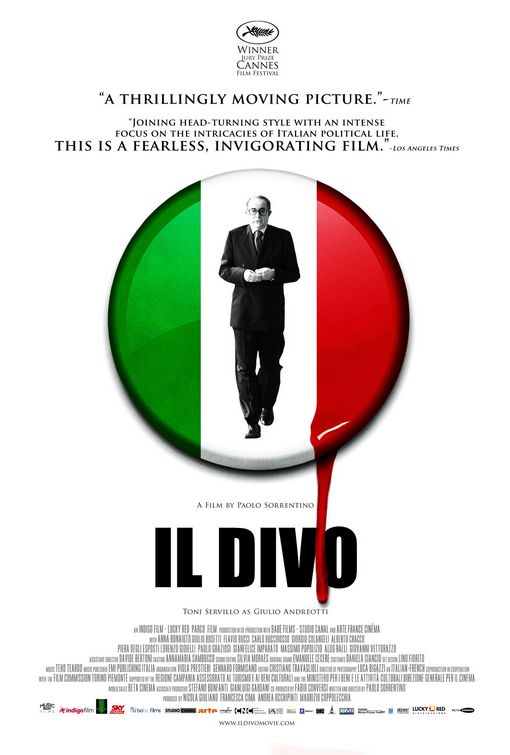
Official Movie Poster
Paolo Sorrentino‘s 2008 film Il Divo might well be the best movie about politics I have ever seen. After reading a great write-up of the film in Dr. Matthew Ashton’s Political Blog and seeing the Roger Ebert‘s it’s “Nixon meets the Godfather” blurb I knew this was one I had to get my hands on. The minute the opening credits flashed on my computer screen I was hooked. The film, quite literally, takes you by the throat and never lets go. It is the story of Guilio Andreotti, Italy’s seven-time Prime Minister, might be the most polarizing Italian politician since Benito Mussolini. Andreotti has earned more nicknames than Apollo Creed and is known as everything from “The Hunchback”, to “Beelzebub”, to “The Divine Julius”, to “The Black Pope”. Andreotti, who once said, “aside from the Punic Wars, which I was too young for, I have been blamed for everything,” has long been alleged to have significant Mafia ties and has been linked to all forms of malfeasance up to and including assassinations. He has the Clintonian ability to survive every political disaster and emerge with his fingernails firmly lodged in the cliff of political power. Andreotti is a walking advertisement for the ability of an intelligent but thoroughly unprincipled politician to overcome all obstacles in his quest for continued political power.
Il Divo is two hours of mind-blowing scene after mind-blowing scene. Sorrentino has a style that borrows heavily from some of the great masters of the craft, yet he manages to take those ideas in a unique and bold new direction. The film starts with a startling opening sequence, a modern, bass-driven update of the baptism scene from The Godfather. It is followed soon after by a slow motion introduction to Andreotti’s gang that feels like something out of a Leone Western. Then, there is the drum laden post victory celebration dance number featuring one of the most awe-inspiring tracking shots since Kalatazov’s pool scene in “I Am Cuba“. And all that is just in the first twenty minutes. Watching this film is like wandering through the Louvre; everywhere you look there is another classic moment of artistic expression.
About two-thirds of the way through the film, there is an absolutely jaw-dropping soliloquy where Andreotti (played to perfection by Toni Servillo) explains his internal contradictions and motivations. This two-minute section is the film’s crowning achievement. The short speech is an appalling vision of what it means to wield power. It is a statement of pure, unbridled cynicism. In it, Andreotti seems to justify every possible act of iniquity that he has committed as being in the public interest. What is really horrifying about this scene is how convincing his words are. Is the price of power the complete betrayal of all human values? Is this what a person must do to rule? Andreotti’s charisma almost makes you believe that anything is justified in the name of power.
Another element that contributes to the majestic feel of this film is the pulsing, resounding soundtrack. The film’s composer, Teho Teardo, provides one of the most compelling scores in recent memory. He seems to have a preternatural ability to frame the tone and character of a moment with blasts of inspired auditory brilliance. If Sorrentino’s camera is the film’s heart and soul, Teardo’s music is the blood that pumps through its veins.
Il Divo succeeds both as a sprawling masterpiece of epic dimension and a simple allegory of human frailty and weakness. The film never allows you to hate Andreotti but instead presents him as an acutely flawed leader with a deteriorated moral compass that seems to always point south. Sorrentino allows the audience to see Andreotti as not only a powerful man, but also a prisoner of his own power. It is a horrible cage he lives in and we are its bars.
Buggin’ Out: The Paranoid Style in American Motel Rooms
Posted by Keith Spillett in Existential Rambings, Mr. Spillett's Academy Of Film Study For The Mentally Tormented on December 15, 2010
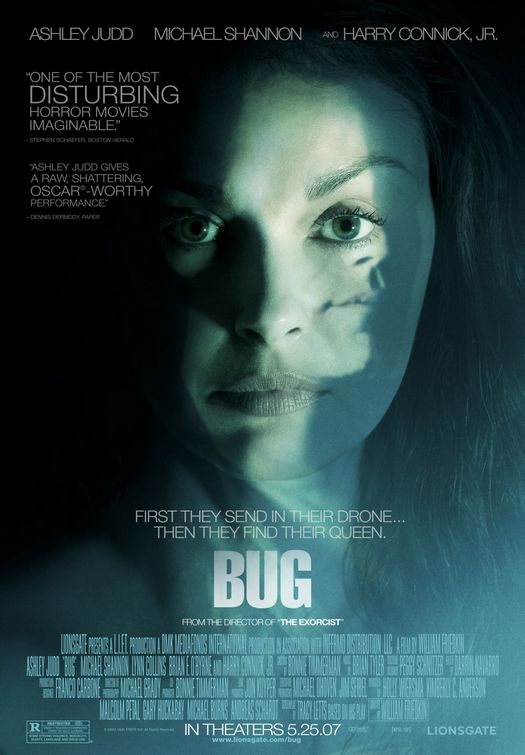
Few films capture the spirit of modern American paranoia better than William Friedkin‘s 2006 film “Bug“. It is a bleak, disturbing picture of two people consumed by sadness and connected through a shared feeling of conspiratorial persecution. Peter Evans (Michael Shannon) is a drifter who wanders into the life of Agnes White (Ashley Judd). They quickly find themselves embroiled in one of the more unhealthy relationships in recent film history. Agnes has barely survived a horrifically abusive marriage and the kidnapping of her young son. Peter has just finished a stretch some sort of shadowy psychiatric hospital where, depending on who you believe, he was either a severely disturbed escaped patient or a survivor of a series of Operation MK-Ultra meets The Manchurian Candidate type experiments. Together, they become the proverbial Bogey and Bacall of the Black Helicopter set. It would be easy to dismiss their ideas as the demented imaginings of two troubled people, but the narrative they construct about the meaning of lives and their relationship to the world is a powerful statement about modern mass hysteria.
Peter gets the paranoia party started by insisting that a mysterious THEY have put bugs in his blood. He is deeply committed to this idea, to the point of yanking some of his own teeth out in order to remove the egg sacs that are in his mouth. Quickly, things spiral out of control. They cover the walls of the room in tin foil, buy up half the bug zappers in Oklahoma and embark on a wild spree of shared psychosis and Dionysian self destruction that eventually annihilates them. The logic that gets them to this point is nothing short of amazing. They come to believe that everything that is happening to them is somehow connected to a greater plan. Peter connects his own experience to sixty years of back room schemes created by a mysterious unnamed cabal bent on completely enslaving the entire human race. In an amazing monologue, Peter manages to link the bugs he believes to be carrying to The People’s Temple in Jonestown, the Bilderberg Group and their secret meetings from 1954 until the present and even Timothy McVeigh (who was apparently the other lab rat who was given these bugs). Agnes soon links her own experiences to his and comes to realize that her abusive ex-husband and missing child are also products of the exact same treachery. It is the “everything happens for a reason” philosophy writ larger than life. All of these random, non-intersecting parts mean something. Each person’s life is a giant puzzle where all the pieces fit. It’s just a matter of collecting them all together and putting them in the correct places and then it will all make sense. This is the sort of thinking that Kurt Vonnegut lays bare in his book “The Sirens of Titan“. In that book, the entire arc of human history has been measured and calibrated in order create a replacement part for an alien space ship which will one day have the important task of placing a “greeting” message on a far away planet. We all have a purpose and that purpose happens to be completely absurd.
“Bug” takes this theme and runs wild with it. The characters have created meaning for their lives out of a mess of half-baked theories. Peter and Agnes really believe that this crazy composite of events was created for them. They see themselves as the protagonists of human history. They don’t simply pick one story as their narrative; they pick every single one that they have ever heard. The world really does revolve around them.
As I was watching this film I began to wonder if this was an accurate portrayal of the condition of the paranoia that exists in the minds of most Americans? Since I have never been in the minds of most Americans, I am not really able to say for sure. However, things are getting pretty weird out here in the real world and I have to wonder whether some of this isn’t the product of the same ideas that drove Peter and Agnes into mental oblivion. After all, there are a good number of people who will tell you that our President was born in Kenya, the National Security Council masterminded the 9/11 attacks, or the Federal Reserve killed John F. Kennedy. I’m not really interested in debating the validity of the ideas, I personally don’t believe them, but if you do that is really fine with me. I have a few pretty bizarre ideas about human history myself. What I find interesting about these theories is that how they illustrate the Woodward and Bernstein fantasy that some people are living. We are the investigators of some great cosmic puzzle whose pieces are scattered willy-nilly through a series of cultural and political markers. We are Sherlock Holmes turning our collective magnifying glass on everything. Media events are not things unto themselves; they are clues that connect us all to a larger picture.
Marshall McLuhan argued in his book “Understanding Media: The Extensions of Man” that modern technology had “extended our central nervous system itself in a global embrace”. In “Bug”, Peter and Agnes disappear as individuals and instead try to take on the narrative of the human race as their new identity. McLuhan saw this loss of identity as a dangerous thing. He ominously noted that “the loss of individual and personal meaning via the electronic media ensures a corresponding and reciprocal violence from those so deprived of their identities; for violence, whether spiritual or physical, is a quest for identity and the meaningful” (Canadian Forum, 1976) This quote is “Bug” in a nutshell. Two beings entirely destroyed (first as individuals, next as physical beings) by the electric connection to the rest of the world. If violence is a necessary and eventual component of this search for identity then maybe we do have a great deal to be paranoid of.
In Defense of Stupidity
Posted by Keith Spillett in Blithering Sports Fan Prattle, Totally Useless Information on December 11, 2010
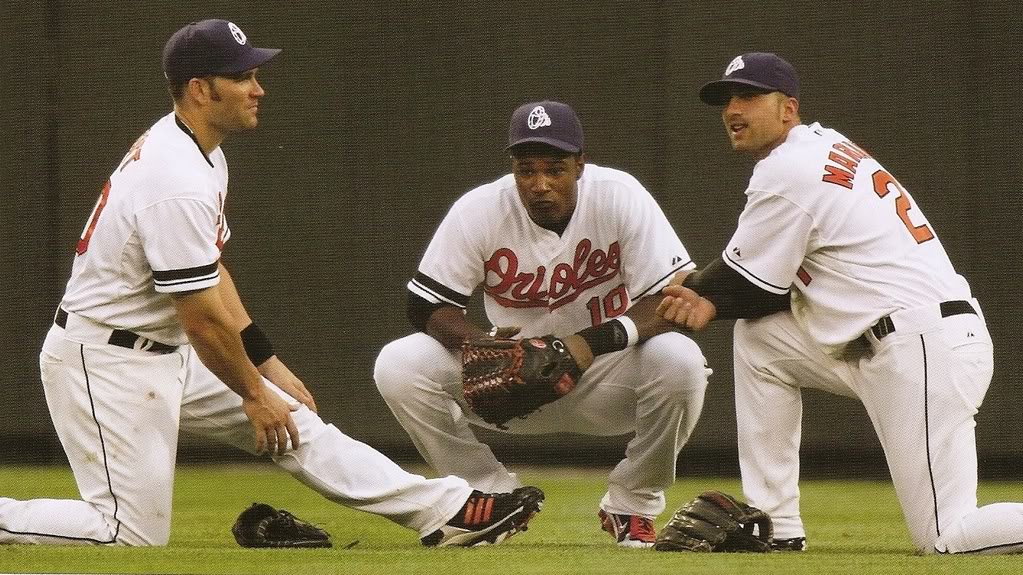
Luke Scott Casually Discussing John Doe Number 2 and the role of the Lizardpeople in creating the Federal Reserve (borrowed from http://i393.photobucket.com/albums/pp13/cammielc)
A popular expression that tends to get used when people make asinine comments to a member of the media is “What were you thinking?” It is a common retort used to illustrate when someone has said something so utterly without merit that the reporter doesn’t feel the urge to mount a counter reply. Recently, Luke Scott, a muscle-headed, mouth-breathing Baltimore Oriole baseball player, who clearly cut many a history class in order to spend an additional hour in his school’s Chik Fil-A sponsored batting cage, made some monumentally dumb off the cuff remark about Barack Obama not being an American citizen. This sort of remark has faded a bit from its mid-2009 health care hysteria peak, but you still hear the occasional Manchurian candidate nonsense rearing its jingoistic head. I don’t expect Luke Scott to say anything worth listening to. What passes for discourse between athletes and reporters is the general ever flowing stream of “I’m going to go out there and do the best I can and, God willing, my teammates and I will get a win” type truisms that are taught to these folks in six hour cram session classes run by slime bucket agents who are looking to make their commodities more marketable to the slab of the American public that loves to hear the same thing over and over again.
I really could care less what Luke Scott has to say. What annoyed me was the glib, dismissive way that Yahoo writer Steve Henson rejected his remark in his recent free agency winners and losers column. Obviously Steve, we know what he was thinking. He was very clear about that in his statement. He was thinking that Obama was born in another country and, therefore, is an “illegitimate” President. The question seems to not be geared to mock what he was thinking, but his inability to know that when a reporter is around it is your job as an athlete to spout nothing but inoffensive, meaningless, Hallmark card style platitudes. Henson was really asking, “How could he not know that saying this would make him look ignorant? Doesn’t he know that it is his station in life to carry on this endless tradition of banal player interviews that we so love and revere? Why didn’t he just say something like “Obama will be fine if he gives this whole being born in the United States thing 110 percent”?
One of the unnamed right of passage exams that an athlete goes through on the way to householdnamedom is the “Can you say absolutely nothing of substance every time you are within 50 feet of a microphone” test. This is why listening to most athletes being interviewed is a highly painful endeavor. It’s as if the interviewer and the player a conspiring to cover up any human characteristics the athlete could possibly have. Occasionally, we are treated to colorful dimwits like Charles Barkley or Curt Schilling who say embarrassing “what the average guy is thinking” sorts of things, but mostly it’s just more of the “It was my childhood dream” sort of garbage. The Barkley/Schilling type stuff is awful for other reasons, but at least when I listen to it I know that their is a human being in there instead of a piece of equipment that runs a 4.3 40.
There is an upside to athletes feeling they have the ability to express themselves with some degree of freedom. For one, I now know that Luke Scott, once only known to me as the guy I might pick instead of Edwin Encarnacion in the 14th round of my AL keeper league draft, is a raving lunatic. Luke Scott has gone from 27 homeruns and 72 RBIs to a real human with definable features. I can like him or dislike him based on his ideas. Maybe there are a few Bill “Spaceman” Lee, Dock Ellis or Jim Bouton types who really have something unique to say. There is a real loss sports fans experience when athletes do not speak their minds. It is the loss of the chance to meet these players as human beings with real ideas and emotions. The ideas they have may be shameful, obnoxious, or ill informed but they remind us that we are living in a world of humans who feel, think and dream just like we do.
Robitussin Turns Me Into a Vengeful Idiot and Other Unpleasant 3 AM Realities
Posted by Keith Spillett in Existential Rambings, Totally Useless Information on December 10, 2010

A Pretty Accurate Representation of My Mood on Sunday Night/Monday Morning (borrowed from popartmachine.com)
I ain’t feelin’ no sweet mystery of life nonsense this evening. I have a miserable cold. My throat hurts, I’m tired and I feel like I fought a 50-foot killer sea urchin all day. I have nothing to add to your life but complaints; I am going to blog anyway. Being sick is awful.
The other night I tried to get rid of this thing by sucking down some Robitussin. How on earth the FDA approved this substance is beyond me. The stuff never makes me feel better, but it does always fill me with angst and white-hot rage. I took the recommended dosage and went to bed. Immediately I fell into hours of hellish dreaming. I had one dream where everything was normal except everyone I saw had tremendous goiters protruding from their necks. Just an average Saturday, I went to the supermarket….goiters everywhere…..I went to the bank….GOITERS….I got home….GOITERS on everyone. Nobody noticed except me. It was basically what would have happened if Ken Kesey wrote a Twilight Zone episode. You have been transported to a strange land where everything is the same, except everyone has goiters.
I woke up from that one sweating. It was 2:58 in the morning and I was staring at the ceiling. Being a basketball coach, I am familiar with this drill. Usually I lay there muttering to myself about how I should have gone to a 1-3-1 zone in the second half of a game from 5 years ago. This evening was different. I kept thinking about orange juice. For some reason, the idea of oranges being squeezed and put in bottles was making me insanely angry. Why do they do it? Who came up with the idea? Usually, I can distance myself from this sort of thing and laugh a bit, but I was full on committed to the grave injustice that was orange juice. Then, I started thinking about raisins. Ridiculous little things! Absurd!
I bolted upright in bed. My wife is familiar with these sorts of moments and has learned to not engage me at 3 AM. Nothing I say makes any sense at that time, but with a head full of Robitussin I was bound to start yelling at her because she didn’t know the two Senators from the state of Nebraska. I started pacing around the room looking for something to read. I found the most boring thing I could lay my hands; a nightmarish volume I found in the quarter bin years back on how the commodities market works. The plan was to bore the demons out of my body. The next thing I know I am sitting out in my car waiting for the thing to heat up with the first Suffocation album, a wonderful piece of music known as “Effigy of the Forgotten”, blaring as loud as my blown out Saturn speakers could blast it. (A side note…I am convinced that there cannot be a more bizarre vision then watching a 35 year old father of two sitting alone in a beat up car at 3 AM on a Monday morning blaring death metal and singing along at the top of his lungs)
Suddenly, I’m in a Dunkin’ Donuts. The guy behind the counter has that “please don’t hassle me” look that any rational person would have working a nightshift would have when a wild-eyed lunatic walked in with malice in his eyes.
“Boston Creme donut,” I mumbled.
“We’re out.”
Wrong answer. “What do you mean!!!!? How are you out!!!! What are you talking about? This is a donut shop, man!”
“We don’t put those out until 4 AM.”
“Really?!?!!? really?!??!!? REALLY!!!!!!”
The poor guy was clearly feeling under the counter for the shotgun at that point.
“We have old fashions.”
“No!”
“Bear claws.”
“No!”
“Blueberry”
“NO! NO! NO!!!!”
“Sour cream”
“Ehhhhhh. Give me two.”
I slunked away a defeated man. I sat there for an hour reading the same three pages on soybean futures over and over not understanding a word. The book might as well have been upside down. Every five minutes or so I got up and looked at the section of the rack where Boston Cream donuts were usually kept and there was nothing. I didn’t even want one anymore, I just felt like there should be some sense of completion, some end to this absurd journey.
I went home. I lay there for a while longer staring at the ceiling fan. It got light. It goes on.
On Losing
Posted by Keith Spillett in Basketball Coaching Nonsense on December 3, 2010

My basketball team got beat by 31 points last night and I am still alive. It was a long, cold night, we got the bus back at nearly 10 o’clock and we committed 15 fouls in the first quarter, which must be a record in the state of Georgia. I have a vague fear that people watching might think that the team is losing because I am a bad coach and I have no clue what I am doing. I worry that there is something I am missing, some vital piece of information that could allow me to dramatically change our fortunes. Losing games has the painful side effect of bringing to the surface dormant feelings of inadequacy and self-doubt. These are hard things to avoid.
In spite of this, I really don’t feel that bad about the whole thing. Losing is not something I am proud of, but it is something that I have become less afraid of over the years. What I am about to say is heretical in the world of coaching and probably will elicit eye rolls from folks who worship at the altar of the “Church of the Winner”, but losing is really not all that bad. I’ll even go one step further into the nether reaches of coaching apostasy…I had a great time at the game last night and my players did as well! How is this possible?
A good deal of the culture of sport is built on the mistaken belief that winning actually means something beyond the basic fact that Team A scored more points that Team B. I have often been told that character wins basketball games. This is absurd. If a team has character and scores less points than the other team, they still lose. You could put together a team of sociopathic axe murderers and put them against a team of people who have run into burning buildings to save the lives of children and if the axe murderers put the ball in the basket more often they are going to win.
I have been told that winning is a product of hard work and determination. Another patently ridiculous statement. I have coached players who were extraordinarily committed to every aspect of the game but cannot keep up with disinterested natural athletes. Working hard may make you a better player but it can only close the gap so much. Hard work and determination are great character traits to have and will serve one well in life, but once the players step on the court it can only carry you so far. In order to get at the heart of how insane this idea is imagine for a second two basketball teams. One is a highly talented team who wins many of their games, some by embarrassingly high totals, and another is a minimally talented team who gets beat soundly on a regular basis.
Which team really shows the most determination? The team that often loses has to deal with the hopelessness and sadness that losing can create. Sometimes people are angry with them because they have not performed well. Sometimes they feel embarrassed or ashamed because they lost. Yet they keep coming back game after game. During the 2007-08 season, the New Jersey Institute of Technology Highlanders men’s basketball team went 0-29. Can you imagine how much determination they must have shown to keep playing and working hard day after day?
The all time weakest sports cliché is the one where people think winning is a product of discipline. Bobby Bowden perfectly summed up the problem with this statement when he was asked if discipline was the key to winning. He responded by saying “if it was, Army and Navy would be playing for the National Championship every year.”
Maybe all of these positive attributes can be put together to create a culture of winning. They may help you, but when your team walks out of the tunnel and the other team has a significant advantage “height, speed, natural strength, etc.” there is only so much you can do. We don’t remember the story of David and Goliath because it is a regular occurrence; we remember it because it is the exception to the rule.
I once heard a football coach asked what he liked most about his star running back. He replied, “The kid makes me look like I know what I am doing.” I have stolen that quote and used it repeatedly over the years because I believe that it is instructive in understanding what I actually do for four months of the year. I try to teach skills and technique, but some players are able to get it and some are not. The great players often pick things up after a few repetitions and the ones with less ability may spend their entire time in high school working on one skill that another player could pick up in a half hour. Those with a set of attributes that gear them for success in the game will make them me seem as if I am a brilliant coach, those without the winning attributes will make me appear like I don’t have a clue about how to teach the game. If winning is the goal and my self worth as a coach is derived from it how on earth can I feel anything but anger towards those who don’t perform well and favor those who are successful?
Last night, while we were driving down to the game the girls on my team had a blast. They sang along to pop songs on the radio, they told hysterical jokes, wore funny hats and laughed uncontrollably. We showed up at the gym and were baffled by the bizarre conditions. The locker room looked vaguely like something out of the Saw films. The gym had no heat in it and it was a balmy 40 degrees at game time. We got on the court and the other team scored the first 17 points. None of the players put their head down and no one was angry. Our center hit a jump shot to get us on the board and the bench went crazy. My point guard picked up her third foul in the first quarter because of a bit of ill-advised gambling on my part. She came over to ask me to keep her in the game and I informed her that she had three fouls. She looked over at me and said “But I get five!”
We laughed about that one the whole bus ride home. Another girl on the team asked me if she could coach the next game. I told her she couldn’t and she looked at me without a hint of irony and said, “Coach…let me shine!” Great line! We laughed about that for a while, too.
We stopped for gas and snacks and two of the girls bought matching day-glow hats that made them look like a pack of tropical Skittles. Sitting on the bench with me was a young man who is the assistant coach of the boy’s team. He played for me when he was in high school and he loves the game so much he has decided to try coaching. He is a great person and is a tremendous coach one day. I have been lucky enough to get a chance to coach with several athletes that played for me in high school and it is an unbelievably wonderful feeling.
I guess I should have been acting dejected after the game. Smiling while your team is losing seems like an act of betrayal, but it isn’t. It is an act of love for the game and your players and an act appreciation and reverence for how much fun a game can be. I have never been one for oft repeated bromides about how winning isn’t what’s important, but I have to wonder what type of person I would be to be surrounded by all that joy and life while sadly brooding about not winning a basketball game. Think of what I could have missed.
Vince Lombardi once said, “Show me a good loser and I’ll show you a loser.” Well Vince, I don’t want to teach my players to be good losers, I want them to be the best losers that ever stepped on the court. I want them to experience elation every time they play basketball. I want them to look back with an incurable fondness and veneration for every moment of the season. If I could choose one thing to teach every player who puts on a uniform it’s to love the game without reserve and to play like that everyday.
The Invisible Man Strikes Again: A Review of Bob Woodward’s Book Obama’s Wars
Posted by Keith Spillett in The Politics Of Catastrophe on November 26, 2010

"There is no fighting in the war room!!!"
If Bob Woodward were a superhero, his special power would be invisibility. No modern writer better understands how to get out of the way of a good story and let the events unfold like Woodward. His new book, Obama’s Wars, is an attempt to inform the reader about what it was like to be part of the decision making process for a President during wartime. He has a genuine love for detailing the way that decisions get made and it shines through in all of his work. Woodward disappears into the fabric of the story leaving us in the fascinating position seeing the story unfold before our eyes.
Obama’s Wars is a story about process. The book details Barack Obama’s system of decision making during the ongoing Afghan War. Obama is surrounded by human beings with differing agendas, egos and belief systems, all of which have an impact on the course of the war. Obama himself is presented in a very human way. The reader is given a first hand account of a person making critical decisions that may well affect the fate of the nation. If you didn’t like him before you read the book you don’t like him after, if you liked him before you read it you probably still do. It’s not a book about judgment; it is a book about explanation. You get to be a fly on the wall for a major event in history.
Obama’s Wars is not a political book in the modern sense. The writing is devoid of any clear political, social or economic agenda. The audience is never clear on how Woodward feels about the war. Woodward’s commitment seems to be only to the art of journalism. He wants to get the story as correct as possible based on the insights and beliefs of the people who were there. Woodward has access to all the major players and gives them room to tell their story. They confess their mistakes, laud their own triumphs, admit their petty dislikes and acknowledge their most base desires in a shockingly candid way. At the end of the book, the reader is left with the distinct impression that they are being governed by real, imperfect people who struggle to make planet altering decisions in a way that best serves their picture of reality.
Resolving Standards of Decency
Posted by Keith Spillett in Existential Rambings, The Politics Of Catastrophe on November 24, 2010

Words are powerful and elusive things. We are given words as a method of conveying experience to other humans. They are not perfect tools. They give some insight to the human experience, but they often fail to capture the vivid, richness of emotion and feeling that encapsulates one’s humanity. TS Eliot perfectly captures this idea in Sweeney Agonistes when his protagonist exclaims in frustration “I’ve got to use words when I talk to you!” We tend to believe that we have shared definitions of words so that when we make a statement the listener can have some idea as to what we are experiencing. However, there are words in our language that I believe have such a different definition from person to person that it is nearly impossible to discern what on earth they mean.
One word that would fall into this category would be the word cruelty. I can honestly say that after years of trying to understand it, I still have no clue what this word means. This is troubling because the word cruelty has a remarkable power in our culture. It is a word that can define whether another human or animal is worthy of the ability to continue to live. The word can save one creature from inhuman punishment while sentencing another to horrific torment. But what does it really mean?
When trying to understand the moral dimensions of a word the law can be a good guide. The Eighth Amendment to the Constitution includes this word when it says that “excessive bail shall not be required, nor excessive fines imposed, nor cruel and unusual punishments inflicted.”
The Supreme Court has interpreted the part about “cruel and unusual punishment” in countless ways. For our purposes, we are not going to discuss the “unusual” part of the phrase because that simply means it is uncommon or rare. If any cruel punishment happens often, it is no longer unusual. If every murderer were punished by being covered in honey and attacked by bees it could still be outlawed by the court as being a cruel punishment even though it was happening all the time. The key to understanding the Amendment is the word cruel. The Court seems to be trying to distinguish cruelty from non-cruelty in its rulings in this matter.
The Court dispensed with several “cruel” punishments back in 1878 in Wilkerson vs. Utah when Justice Nathan Clifford wrote in his majority opinion that beheading, disemboweling, dissection, burning someone to death and other barbaric methods of torture were not acceptable. It would be hard to find many people who would make the case that those things were not cruel. However, Clifford’s holding was that being executed by firing squad for a crime was not cruel and unusual and, therefore, was Constitutionally permitted. This holding is extremely confusing. Being ripped apart by bullets is not cruel, but being beheaded is cruel. It is quite possible to be shot and to not die immediately, but to linger in pain for hours before perishing. What is the distinction?
In 1951, the Court has begun to move away from other types of punishments. In the Trop vs. Dulles case, a non-death penalty case focusing on the government’s ability to take away a person’s citizenship for deserting while in the army, the ruled that taking someone’s citizenship away was, in fact, cruel and unusual punishment. This is a monumentally significant ruling that called into question many punishments that were being used throughout the country. Justice Earl Warren wrote in his majority opinion that the Eighth Amendment “must draw it’s meaning from the evolving standards of decency that mark the progress of a maturing society.”
This phrase is particularly important because Warren seems to be making the point that as our society evolves it is becoming less cruel and the Court should reflect that. These words have pushed the law away from certain punishments that were once accepted. Death by firing squad, once a relatively common punishment, has been eliminated. The Court ruled in Coker v. Georgia (1977) that the death penalty was not acceptable for rape. The Court has stated that executing someone with an extremely low IQ is not permissible (Atkins v. Virginia 2002). The Court has also mandated that those under the age of 18 cannot be murdered for committing a capital crime (Roper v. Simmons, 2005). All of these punishments are considered cruel.
The fascinating part about Trop v. Dulles is that while it holds that taking away someone’s citizenship is cruel and unusual, executing someone is not. This is inconsistency is nothing short of bizarre. Justice Felix Frankfurter pointed out the absurdity of this idea in his dissent when he asked whether the words of the Constitution were “so empty of reason that it can be seriously urged that the loss of citizenship is a fate worse than death?”
Unfortunately, this absurd inconsistency does not only reside in the halls of the Supreme Court. It is everywhere you look. In the early days of the War on Terror, we were regularly subjected to surreal debates over why beating someone was cruel while water boarding someone was not. Is it cruel only if the punishment leaves lasting physical scars? Do our standards of cruelty change based on where someone was born?
The American news media brought horrific pictures of the tortures taking place at the Abu Ghraib Prison but has paid scant attention to the thousands of Iraqis (civilian and military) who have been killed during the war. Being threatened by dogs and placed in stress positions is cruel but being killed by an advancing army trying to take control of a city is not?
During the trial of Michael Vick, many stunned Americans stood aghast that a man would injure and punish animals in such a cruel way.
Yet our culture is so committed to the idea of murdering animals for food that we have holidays based around consumption of animals. According to a USDA study from 2000, the average American consumes nearly 200 pounds of meat per year. Killing animals for food is so widely excepted in our culture that one is not astonished to see pictures or statues of smiling, dancing pigs on the wall of a barbeque restaurant. Americans often seem completely blind to the pain and suffering inflicted on animals, until a football player decides to torment dogs for fun. Is it cruelty because the intent was solely to harm animals? Had he eaten his dogs after killing them would it have not been cruel?
Watching news reports about the horrendous cruelty of dog fighting followed by a Wendy’s commercial for a hamburger that features enough bacon on it to clog the arteries of the Mississippi River is enough to confuse anyone who is paying attention. How could one person’s massacre become another person’s feast?
I don’t propose to know how to make the world any less cruel. Human behavior has always mystified me and I certainly have no clue how to change it. However, the poorly defined nature of the word cruel allows people to stand on a moral high ground that is not deserved. We are a society that has laws against forms of cruelty while tacitly accepting other forms as normal behavior.
How can we distinguish what is and isn’t cruelty? I believe that the first step is coming up with a definition for the word that is clear so we can honestly distinguish it. Granted, definitions are never perfect, but when one is defined in a way that is so completely unclear it can warp the sensibilities of a culture to the point of absurdity.
A simple but effective definition of cruelty would be any act that causes harm or suffering to any living creature. This removes the artificial boundaries that have been created and allow us to call things what they are. When the word is defined this way we are not able to make abstract distinctions between who is worthy of cruelty and how much pain they should be allowed to endure. It simply is what it is and we must then cope with it for what it is.
This definition no longer allows us to display cruelty while hiding from behind a moral facade. If we choose to claim we don’t know any better we are not exonerated because in the eyes of the person or animal that is suffering that distinction is meaningless. Cruelty need not be a willful act, it must only be something that causes suffering or harms another. I am not naive enough to believe a revised definition of a word can end human cruelty, but there should be a price for the pain that we inflict or allow on other living things and that cost should be the truth of what we have participated in.
Notes and Existential Ramblings from a Basketball Coaching Clinic in Tunica, Mississippi
Posted by Keith Spillett in Basketball Coaching Nonsense, Existential Rambings on November 20, 2010
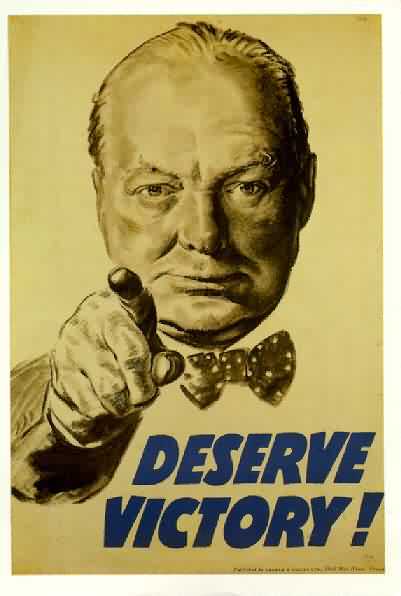
Coach Churchill and the War on Loserdom
Back in May I got the opportunity to attend a basketball coaching clinic at the Harrah’s Casino in Tunica. The clinic featured some of the top college coaches in America including George Mason’s Jim Larranaga, LSU’s Trent Johnson, Virginia Tech’s Seth Greenberg and the one and only Robert Montgomery Knight (his friends call him Bobby). Myself and about 1,000 other coaches were herded into an auditorium converted into a gym for three days in order to find out the secrets of how to lead young men and women towards becoming championship caliber athletes. Anyone who has ever been to one of these clinics before knows the drill…coachspeak followed by coachspeak followed by the occasional substantial and interesting point followed by more coachspeak and more coachspeak. By coachspeak, I mean the repeated uses of expressions like “the short corner” or “attacking the elbow” which are meaningful to most coaches but come across like some mysterious hybrid of Swahili and Mandarin Chinese to the uninitiated. The one astute point in the midst of the coachspeak is often fantastic, which is why I highly recommend these clinics to other coaches, but the hours upon hours of coachspeak can take it’s toll on even the most fervent hoops junkie.
I am not a very good note taker, but I decided I was going to try to get down as much of what was meaningful as possible. This worked for the first 5 or so hours. I have lovely, detailed sketches of out of bounds plays and wonderful points about how to properly position my post players when they are down on the block. After a certain point, I began to drift away from the land of normal coaching thought. Too many things that were not basketball began to assert themselves into the clinic. The words character and discipline began to rear their ugly heads. Coaching has developed an odd fixation with these ideas over the years. They are somehow indicative of the deeper meaning of sports. If you are a good coach, your team wins. If you are a great coach, your teams win and develop discipline and character. You cannot win without discipline or character. You will be tested; under these circumstances discipline and character will show. The pantheon of great athletes all had discipline and character. Blah, blah, blah. My problem with this formulation is that there is very little discussion over what these terms actually mean. We are just supposed to know.
My mind was spiraling out of control. I had been reading a ton of Descartes and had recently listened to an incredible online course on Death by Yale Professor Shelly Kagan. These thoughts were ping ponging around my mind. They had begun to merge with my notes. Here is the mental chaos that ensued:
(For the sake of time and not boring the noncoaches out there, I have removed all of the traditional basketball and have all left the weirdo philosophical stuff basically untouched)
1. What is character and discipline but the denial of the self? Why must the self be removed or fought for someone to play the game well? Is the self such an albatross that it must be obliterated in order to achieve “greatness”?
2. Does the self even exist? How is it possible for the self to exist as something different from the body? Are there two of us in here? Am I the Ghost in the Machine and if so, who is that in here who keeps telling me to not do the things I want to do? Why am I so committed to not letting the Ghost play?
3. So…does the self exist? It must because we are asked to deny it. Discipline asks us to deny the self, so something must be asking us to deny the self. It must be the self. It is a similar formulation to Descartes’ “I think therefore I am”. There must be a self otherwise what is there to deny the self. The question then becomes, why on earth would the self ask to deny itself? That is a bizarre idea that must lead to a good amount of confusion when someone first enters the “Church of the Winner”.
4. What is discipline? The self wants, the self says no. Why would it deny what it wants? Denial of short-term gratification for deeper long-term fulfillment. Losing the self in the team. But why would we want to lose the self?
5. Why does the self imagine? What set of circumstances would make it want to wish for more or different?
6. Here is a list of the things that have been labeled acceptable by coaches at today’s clinic:
Career gain
Victory over other selves
Destruction of other selves in other uniforms on the path to victory
War
Self-defense
Adulation of other selves if the correct function has been performed correctly
Greed as long as it stays unadmitted
Here are the things that have been labeled unacceptable by coaches at today’s clinic:
Rest
Comfort
Gluttony (in terms of food or comfort, but not in terms of success)
Destruction of other selves wearing the same uniform as you
Adulation of other selves when the correct task has been performed incorrectly
Adulation of other selves when the wrong task has been performed correctly
Obvious greed for the wrong things (cars, status among the wrong people, “bling”)
7. Here are the rules when attempting to gain victory over other selves:
A. Winning at athletic contests can show the superiority of the self that denies the self (but doesn’t admit it)
B. Cheating is wrong because it skews the game, thus defeating the illusion of the level playing field. How can we determine which self is better if we haven’t deluded ourselves into thinking that we have triumphed over another self in a fair set of circumstances?
C. Hard work represents a self more able to deny the wants of the self. Pope Jordan the Ascetic.
D. In work matters, the self that can deny some of the wants of the self (rest, gluttony for the wrong things, comfort) and can nurture other wants of the self (the unspoken enjoyment of adulation, greed for money or status, appearance of a lack of the self) will get almost none of what the self wants, but more than the self that doesn’t.
E. Terminology is the coin of the realm. Terminology is a tiki mask of legitimacy. It is the short cut to proof that one is the self that can deny the self. If I understand these absurd terms, I must have spent hour upon hour of self-denial in learning these hollow metaphors that make very little sense. My commitment to irrational details shows how willing I am to obliterate the self for “greatness”. The more the metaphor rings hollow, the greater the proof of the self that has given up more immediate opportunities for gratification in order to learn them. The sheer absurdity of the basketball cliché has a normative function.
F. Emotional and physical discomfort are goals to be aspired towards. The more we pretend we are experiencing them, the more we will be ready when they show up. A champion is one who has vowed to spend his or her entire life mired in this sort of discomfort so that when the moment of real discomfort arises, they will have a lifetime of awful experience to draw on…and then they can put the round ball in the round hole one or two more times than the self in another uniform who hasn’t put him or herself through as much pain.
G. Creativity is something that is both an expectation and a curse. One is expected to think thoughts that fit into a neat box, but in a slightly different way than the other selves. When a self creates something that doesn’t fit in that box and loves it enough to share it with others, the self will be ridiculed or snickered at for the heinous crime of self-indulgence.
8. The self that denies the self (and claims not to) feigns praise for the creator but really respects and admires the editor, the salesman and the promoter. Creativity requires a complete exposure of the unfettered self. The self that denies the self (and claims not to) is appalled by pure creativity because it is a reminder of the dull rituals it is shackled to in the hopes of further denying the self.
9. “Deny! Deny! Deny!” -a coach stressing the importance of defense.
10. If the self that denies the self (and claims not to) conquers other selves, it feels a momentary sense of relief and the joy of not being conquered and being exposed as a self that doesn’t deny itself. This is followed by a horrific realization of the more than 6 billion predatory selves that may be lying in wait; hunting for the same moment of relief and joy.
11. How does the conquering self know the difference between itself and the conquered self? The self needs an Arbiter in order to know it’s worth. Without the Arbiter, the self cannot tell the difference between Pyrrhic victory and a miserable defeat. So, an Arbiter is created. The Arbiter (a scoreboard, an official) is declared real in our minds (except for most of the time). We often declare the Arbiter wrong (the refs hosed us, the final score doesn’t reflect how the game went, etc.). Who even knows who conquered whom?
12. Many of us long for a time (long ago) when “the rules meant something” and could give us a longer period of relief when we conquered the other selves. We think that this time existed and that somewhere along the line the losers rose up through the sleight of hand of a group of morally relative sycophants who took our comfort in winning away. We no longer even feel like we can enjoy the illusion we have created.
13. The odd thing about this belief is that I’m not sure that this magical time of the primacy of rules ever really existed. Maybe all there ever was were a group of selves pointing backwards trying to find new a clever ways to conquer other selves.
14. Consume in the name of the past, in the name of progress, in the name of protection, in the name of peace, in the name of whatever allows us to remember to forget or forget to remember what we are.
15. “Why do we think of offense and defense as different things?” Great point, coach! Better than you even know.
The Locke-Hobbes Complex: Free the Goose, Locke up the Gander
Posted by Keith Spillett in Existential Rambings, The Politics Of Catastrophe on November 7, 2010

The American Leviathan rises up to clobber all of the “bad” people who dare threaten to take our stuff and use our hospitals
The ideas of John Locke and Thomas Hobbes lay at the root of the American governmental experience at many levels. Locke was a social-contract theorist who believed that all humans were born with rights and surrendered them in order to procure the advantages of civilized society. He thought that if there was no government things might not run as smoothly, but people could get by. Locke had a notion that people are rational creatures that are capable of making decisions that are in the best interests not just of themselves, but of the group. Thomas Hobbes also bought into the idea of the social contract, but that is one of the few things the two agreed on. Hobbes thought that human beings were essentially machines that functioned to protect themselves from injury and death and to get what gave them pleasure. Government was meant to act as a check on the base and violent desires of the masses. He thought that without government life (like Napoleon) would be “nasty, brutish and short”. Hobbes thought that you had one basic right, to be protected from the other maniacal machines around you. Any other right could be taken away freely by the government in order to keep the people safe from themselves.
The progenators of the American governmental system were highly influenced by Locke and Hobbes. Thomas Jefferson spent most of his political career doing a fair John Locke impression. He turned Locke’s “life, liberty and property” into “life, liberty and the pursuit of happiness” and parroted Locke’s controversial belief in the right of people to revolt against an unjust government. James Madison (writing as Publius in The Federalist Papers) was clearly channeling Hobbes when he wrote in Federalist #51 that “if men were angels, no government would be necessary” and “ambition must be made to counteract ambition”. Our constitution is a marvel of balancing Locke’s democratic intentions (the House of Representatives, the Bill of Rights) with Hobbes’ fear of the great unwashed hordes (the Senate prior to the 17th Amendment, the Electoral College).
Locke and Hobbes are still very much with us today, but in another more bizarre, irrational form. The Locke-Hobbes complex can most clearly be seen in the Tea Party Movement, although it is certainly not exclusive to them. Here’s how it looks: The inward view of many Americans seems to be that Locke was correct. The individual should be controlled by the government as little as possible. Americans should be freed from many of the burdens of taxation or regulation. What’s mine is mine and should not be taken, the government should not restrict the development of business, I should be able to say what I want to say and not be bound by political correctness, and the government should stay out of my private affairs. At first glance, it seems as if Locke would be entirely comfortable at Rand Paul campaign headquarters dressed up like Patrick Henry with a NoBama tattoo on his or her forehead.
However, Locke’s ideas seem to appear in the rhetoric of both major American political parties (and quite a few smaller ones). Some candidates rail against the idea of “big government” that doesn’t seem to get that “the government that governs best governs least”. Others loudly protest a government that restricts reproductive rights or the rights of individuals to choose to live life the way they want to. Whether it be keeping the government’s hands off my money or their laws off my body, the cries of individual liberty seem to echo from every corner of the American political landscape.
It would seem that a people so committed to the idea of the freedom and thriving of the individual would have no place for Hobbes’ principles…and yet they are very much alive in our culture. A person can’t go five minutes without baring witness to a political diatribe on the importance of freedom and yet thanks to ever more strict sentencing laws the Washington Post reported in 2008 that 1 in 100 adults in the United States is in jail or prison. The United States is the world’s leader in incarcerated adults both in percentage and in number. In order to really understand the perversity of this statistic one must realize that China, a nation that our leaders have regularly excoriated for their unconscionable human rights record, has an estimated population of over 1.3 billion people, while the United States, the world’s beacon for freedom and liberty, has around 303 million people. In spite of nearly a billion more people, China has less prisoners than the United States. According to a Bureau of Justice Statistics study, non-violent crimes made up nearly half of the state prison populations in 2006. On the federal level, non-violent crimes take up an even higher percentage of reasons for incarcerations. Large numbers of Americans are in prison for non-violent crimes that run the gamut from drug abuse to public intoxication. Clearly, much of the imprisonment in the United States does not even serve the purpose of public safety.
It would seem that a nation with such a highly advanced, Lockean conception of liberty would be able to come up with a solution that involved a bit more creativity than building more prisons, but that seems to be the solution we continue to come up with. At the root of our problem lies an incredibly Hobbesean conception of the role of the state. But, maybe we are just talking about the “bad” people here. A common refrain is that criminals (often defined as the amorphous mass of people out to harm us and take our stuff) are not deserving of the same rights as the rest of us. Even though the Bill of Rights spends nearly half of it’s time dealing with the issue of criminal justice, many believe that the rights of individuals should be obliterated upon the commission of a crime. One would think that this current wave of liberty based hysteria would have brought more politicians into power who opposed the federal government tearing rights away from citizens and yet, Russ Feingold, the one Senator who opposed the 2001 passing of the Patriot Act, the largest broadening of federal investigatory power in the last 50 years, was voted out of office. Is the message more liberty for the “good people”, less protection for “the bad”? How are we able to tell them apart?
There are some things to be feared and some things to be appreciated about each philosophy. Locke’s social contract was so loose that some would get away with crimes that could severely harm their neighbors, but he believed strongly enough in people’s judgements to believe that this problem could be overcome. Hobbes argued for a system that strangled human growth and potential on the altar of safety, but he also realized that there are characteristics that needed to be monitored in human beings in order to allow them to be protected from the loss of their most important right, the right to continue to stay alive. It’s as if our culture has picked out the most base, selfish characteristics of both philosophies and melded them into a giant Leviathan that attacks the liberties of the “bad” with one hand while cherishing the rights of the “good” with the other. What we fail to recognize is that we can easily be mistaken for either. Hell may be other people, but after a while it becomes us.
 The Tyranny of Tradition