Playing Telephone On Our Dime
Posted by Keith Spillett in The Politics Of Catastrophe on June 25, 2011
We, at The Tyranny of Tradition, are proud to present today’s guest writer, Jonathan Winthrop. Winthrop is a conservative columnist, syndicated talk radio host, and all-around great American. He is the President and Co-founder of Americans Against Taxation and Other Forms of Persecution. He is the author of several New York Times best-sellers including “Jesus Didn’t Pay Taxes, Why Should You?” and “How The Obama Administration, The IRS, The Teamsters, Al-Queda, The Communist Party, Women Who Won’t Return Your Phone Calls and The Obama Administration Are Conspiring To Steal Your Money And Force You Into Re-education Camps…and How To Fight Back”.

This week, the corruption in Washington reached a new low. Many of you missed the now famous “Obama Lets Kid Use Limo Phone” (aka LimoPhoneGate) clip that’s been all over the news but, in case you have managed to find away to ignore the ever-present 24-hour-a-day liberal media machine, here it is….
The Kenyan-In-Chief is at it again, showing wanton disregard for a nation in financial crisis because of the failed liberal experiments that have been eating away at the greatness of America for the last 2,000 years. This time, he’s spending our money to let some kid make a phone call from his, you guessed it, limousine. I know what your thinking, how much could one phone call actually cost? That’s what THEY want you to think.
The whole letting kids use the President’s phone thing is a slippery slope. Maybe one phone call only costs 25-cents, but imagine for a second that the President allowed 100 kids a day use his phone? Imagine if he allowed thousands!?!?! What if some of those kids happened to be undocumented, illegal aliens? The cost would be crippling to this great nation. What if he didn’t let them just leave messages, what if the kids started using the phone to make personal calls to their friends or even started “text-messaging”? After all, he believes in change and equal rights for all and other radical ideas from the old Saul Alinsky/Red Diaper Baby Playbook. Why shouldn’t all American kids get to use his phone, not just a privileged elite? Once the genie of Liberalism is out of Pandora’s Box, it’s not so easy to get it back in.
This sorry episode of Limousine Telephone Liberalism illustrates a deeper, more troubling problem. Sources in Washington have told me that those kids are, in fact, not taxpayers. As a matter of fact, most American children get over on this great nation without paying taxes. Millions of these little parasites skate by carefree without the burdens of responsibility that are heaped unfairly upon the Good People. Sure, they’ll use our valuable resources and consume water and air that is provided to them free-of-charge by good taxpaying American suckers but when it comes time to pay the bill, they disappear into their tree houses and Holly Hobbie fake kitchens. If they don’t have to pay taxes, why should good, hardworking folks like me have to?
Doesn’t the President have better things to do then spend 30 seconds of OUR time indulging the sick fantasies of these tax cheats? In those wasted 30 seconds, he could have created thousands of new jobs. Instead, he chose to play telephone with some “children”. Those jobs aren’t coming back, Mr. President. Not today, not tomorrow, not next week, not next year, not next century, not next epoch. These are the times that try men’s souls! We DEMAND answers, Barack Hussein Obama!
Bowling For Danzigs
Posted by Keith Spillett in General Weirdness on June 23, 2011

Ceci n’est pas une Danzig
On some level, we are all Glenn Danzig. I’m not really sure what on earth that means, but it seems like a fair enough way to start this weird monstrosity I’m about to write. Spending a good amount of time on social media sites tends to warp one’s mind a bit. Ideas that would have made Howard Hughes blush start to seem quite normal. All right, enough with this intro….I’m just going to come out and write it…I have spent the last three days of my life trying to become friends with every single person on Facebook who claims to be Glenn Danzig.
I’ll admit, this is a bit strange. I want to be clear that I am not cyber-stalking Danzig himself, simply people who claim to be him. The Internet allows for the human identity to be hidden or warped in many unique ways. How many of us are completely who we claim to be? However, claiming to be Glenn Danzig is a whole other thing. Why would hundreds of people claim to be Glenn Danzig online? Hundreds! I need to know! According to the Tyranny of Tradition Research Department, there are now fake Danzigs on four continents. The spread of fake Danzigism is reaching nearly epidemic proportions.
A terrible thought runs through the back of my mind every time I see a fake Danzig on Facebook. I worry that they may not, in fact, be fakes. Is there some sort of virus spreading throughout the world that converts normal citizens to bloodthirsty Danzig clones? What if these are people who died while listening to Her Black Wings and, somehow, the spirit of Danzig leaped into their bodies turning them into Danzig Zombies? Is there some Boys From Brazil type mad scientist who does nothing all day but take Danzig DNA off of fishnet he wore on the Blackaciddevil Tour in the hopes of creating an army of Clone Danzigs with X-Men type powers? What if these Danzigs have already been created and are marshaling their forces for a full-scale assault on Western Civilization? Indeed, with technology all things are possible.
Another unique aspect of the Internet is that weird people are able to communicate with other weird people that they might have never met. My internet friend Kelly from Canada and I have parlayed our mutual fake Danzig obsessions into a once in a lifetime event….DANZIG BOWL I.
Basically, we are competing to see who can collect the most fake Danzigs by Sunday July 17th at 7:00 PM. I’m not really sure what we plan to do with them. I am all for the idea of putting them in a Thunderdome style cage and having them fight for faux-Danzig superiority. Maybe the real Danzig would let the winner come up on stage and sing London Dungeon or something cool like that. Maybe the real Danzig will read this and get an immediate restraining order against me. I’m going to bet the second is more likely.
One of the great aspects of this event is the preparation. We have actually discussed whether Glenn Anzalone Danzigs should be counted. Anzalone is, as most deeply committed fans know, his proper birth name. This is a critical structural matter because it means that an additional 12 Danzigs are then in play. Then, there is the issue of poorly committed Danzigs. Should a person who uses their personal picture of themselves or no picture at all but still uses the Danzig name count in the final tally? I believe in a pluralistic approach to fake Danzig stalking. It doesn’t matter if you use your picture or no picture or a picture of a Christmas ham, if you use the name, you are a Danzig at heart. Even that fake Danzig with no picture whose entire profile simply says “Glenn Danzig, Indiana State University” can be included. Just in case you are curious, I am currently trailing Kelly 5 to 4. I had a 5th Danzig but I think I may have scared him off.
I have some pretty major plans after Danzig Bowl, win or lose. I’ve thought of creating a Facebook account as Glenn Danzig and only being friends with other fake Danzigs. We could set up a support group for bogus Danzigs dealing with issues that might plague people who pretend to be Danzig online. We could band together and throw our support to political candidates who support Danzig worthy causes and boycott all non-Danzig friendly businesses. My big dream is that there will be a day where for one whole 24 hour period everyone on Facebook changes his or her name to Glenn Danzig. Kind of like in Spartacus. I admit, it’s a strange dream, but then so is drowning in orange juice while being laughed at by forty mutant clowns wearing Richard Nixon masks.
Borne Back Ceaselessly Into The Past: A Psychological Review Of Gentlemans Pistols “At Her Majesty’s Pleasure”
Posted by Keith Spillett in Pointless Music Reviews on June 20, 2011

I wish I could go back to 1972, listen to Gentlemans Pistols new record “At Her Majesties Pleasure” in the era it was meant to be recorded and stab Richard Nixon’s Chief of Staff H.R. “Bob” Haldeman in the skull with an ice pick. Okay, maybe not the last part. Haldeman wasn’t such a bad guy. He rocked that weird flat top hairdo that became the style in mid-90s rap music and became the best chemist Lompoc Federal Prison ever saw. He would have dug the new Gentlemans Pistols record for it’s pure grit and bile-ridden effluence. He was as malevolent a man as ever walked the earth. Supposedly, he tried to have Jim Nabors killed because he wouldn’t play Julie Nixon’s wedding. I heard that once from a guy in a sauna in Davenport, Iowa.
Gentlemans Pistols is a collection of outstanding British musicians including Mr. William Steer, who gave my life meaning by writing riffs for Carcass that would have made Ed Gein recite Walt Whitman poems to a crowd of smiling 3rd graders. Steer hasn’t lost a step. The riffs that he and James Atkinson put on this album are pure roll around-in-the-gutter filth. They buckle your knees like a 3-2 curveball and do not ask for your permission to continue.
Backwards in time to another place. Transported to all that was seedy and repugnantly gorgeous about 70’s bar room rock’n’roll. You are in a pool hall swilling cheap, half-flat beer being stared down by two menacing looking Hell’s Angels. Not the modern Sons of Anarchy watching yuppies who go cycling between trading soybean futures, but the old school Sonny Barger led head-mangling, spleen eater types. “Midnight Crawler” bellows in the background and you are completely there. Everything is in its place.
At some point the whole retrofitted 1970s rock thing is going to get old. The formula is, in fact, criminally simple. However, put in the hands of poets like these a 3-minute-song can feel like a shimmering vacation into the dark heart of all that is ugly and cruel. Something in their tone screams for your undying allegiance. You would crawl through glass just to hear “Into The Haze” once more. They are on the mainline, hooked into the Universal Generator and driving ceaselessly into the storm. This is the purpose for which rock’n’roll was intended. Not to be background music in the local Target or to be recited soullessly by an army of never-ending American Idol contestants, but to remind us of what visceral chaos lives just below the surface of our pristine, orderly world.

Bob Haldeman Would Have Understood
When Is A War Not A War?
Posted by Keith Spillett in Pointyheaded Highbrow Stuff, The Politics Of Catastrophe on June 18, 2011

This Drone Is Providing Support But Is Not Actually Involved In War. See The difference?
A helpful guidepost in understanding the recent debate over President Obama’s use of the military in Libya and the War Powers Act is Garry Wills seminal work “Bomb Power: The Modern Presidency and The National Security State”. In it, Wills makes a strong case against the misuse of Presidential power that has come from the creation and control of America’s nuclear arsenal. Wills case is a deeply convincing one that should be read in full by any one who wants to properly understand the major structural changes that have taken place in the United States government since the end of World War II. A short but powerful section of the book to explaining issues related to Congress’ 1973 passing of The War Powers Act. He makes argument that The War Powers Act itself is unconstitutional.
The Constitution seems to bear out Wills point when it clearly states in Article 1 Section 8 that “Congress shall have the Power…to declare war.” The War Powers Act implies that the President must ask for a Congressional Declaration of War within 60 days of using the military in a conflict. This appears to be illogical. If Congress has the sole power to declare war why would the President be allowed to send the military into conflict for 60 days before these powers kick in? How can Congress cede it’s right to declare war for any period of time? There is no clear provision in the Constitution that allows such a use of military power and there is certainly no provision that allows a Congressional abdication of this power.
The President does have some power over the military as outlined in Article 2 Section 2. He or she has the role of Commander-in-Chief over the military “when called into the actual service of the United States.” Clearly, the President can control the armed forces when they are at war, but nowhere does the President have the right to actually call the armed forces into service. Wills deals with this idea at length and debunks the myth that the term Commander-in-Chief means that the President has the right to use the military whenever they feel it is correct to do so.
President Obama has argued that in the case of Libya, the Executive Branch does not have to gain the approval of Congress because it is a limited military action and the United States is merely playing a supporting role. Indeed, this logic has been used to justify many incursions into foreign countries without the approval of Congress. The fact that it has been deemed acceptable in the past to skirt the separation of powers that have been outlined in the Constitution is certainly not an argument to continue doing so. Further, what properly defines a supporting role in conflict? If we commit the military to a conflict that is under NATO supervision the armed forces have still been called into service. Even if we are using them in a limited fashion, it still constitutes calling them into service. It is not hard to see how the “limited scope” of a conflict could be used repeatedly to justify the Presidents usurption of the Constitutional mandate of Congress for any reason whatsoever. It is a legal fiction that continues an alarming trend of consolidating the power of the military in the hands of the Executive Branch.
The attempt here is not to make an Originalist argument for the interpretation of the Constitution. Occasionally, there are moments where the necessity of the moment is more significant then the Constitution itself. If the United States came under attack and Congress was unable to convene, their would be a rationale for the President calling up the military. A once-in-a-lifetime national emergency could force the President to ignore the Constitution and take action to keep the American people safe. This is clearly not the situation in Libya, nor has it been the case in just about every use of the military over the nation’s history.
The problem with the War Powers Act is that it legitimizes the belief that the military is the dominion of the Commander-In-Chief. When a piece of legislation is passed to restrain someone’s power, it is an admission that they have that power in the first place. In the case of Libya, President Obama is using a power he doesn’t have and actually arguing that it cannot even be limited Congress.
Support of the Libyan rebels might well be a worthwhile cause. It is easy to understand the motivation to help support their struggle against Gaddafi’s tyrannical state. If the rationale is so righteous and the need so great, why not make the case to Congress and ask it to take seriously the plight of the Libyan people by supporting their revolution? It is true that Congress has been infested with obstructionist tactics and absurd partisan bickering, but are they so far gone that they are incapable of being trusted with any sort of worthwhile cause?
The task of using the military is a solemn one. Its improper use has led to significant suffering and a slew of seemingly never-ending problems around the world. The power was put into the hands of Congress because its use should be stridently argued and debated, not simply decided unilaterally. By legitimizing a process that shifts this power to one person instead of a legislative body drawn from the people we are continuing to feed a monster that grows ever more frightening by the day.
We Don’t Need Another Hero
Posted by Keith Spillett in Blithering Sports Fan Prattle on June 14, 2011
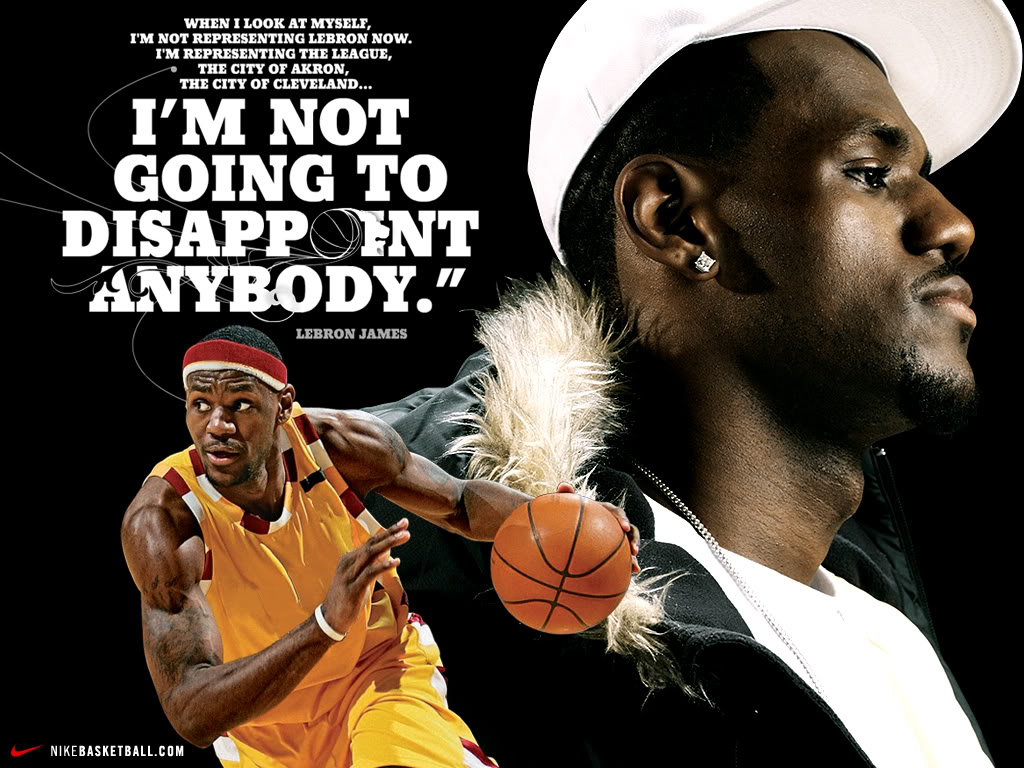
The LeBron Hate Machine has officially been cranked up to 10. Welcome to The Narrative, sir! Here’s how the next five years of your life are probably going to go. Most of the mob will hate you today, that is for certain. They’ll say you’re no Kobe, they’ll say you don’t have Nowitzki’s heart, they invoke the ever looming specter of MJ. They tell you you’ll never be as great as the ones that they remember. You’re not old school. You’re not committed enough. You’re arrogant. You called your own press conference. You left the folks in Cleveland high and dry. You think you are bigger than the game. You need to be taught a lesson.
This will go on for a little while. Then, you will win. The Narrative will shift. You’ve learned your lesson. You’ve been humbled. You went back to basics. You did things the right way. You overcame the odds. You have been redeemed. You are a champion.
Once you’ve seen the puppet show once or twice, the strings become remarkably annoying. We’ve done this dance so many times before. Remember when Kobe was an obnoxious, spoiled kid who didn’t know his place? Remember when Dirk was a soft-boiled choke artist? Heck, do you remember when Muhammad Ali was a dangerous, radical anti-American draft dodger? What did they do to rehabilitate their image? They won.
Redemption awaits anyone who can help his or her team score more points then the other team when the big spotlight is blaring. Redemption is a pretty easy formula. Time plus rings. Not exactly calculus. If you doubt the truth of what I’m saying, just watch the lovefest that is waiting just down the road if Tiger or Michael Vick get to the Promised Land. It makes you wonder what OJ could have done if he still had a good 40 time.
Maybe this time it will be different. LeBron has an opportunity to do something that has never been done. There is one trick left that they haven’t seen. They need to be introduced to the true Man in Flight. The Running Man. The person who finally takes the Narrative by the throat and squeezes. LeBron James can become the first Post-Rational Superstar.
At first, LeBron would have to follow some very well-travelled ground. He could start on the path that trailblazers like Dennis Rodman and Charles Barkley journeyed before him. He could become the zany, outspoken Bad Guy. The Heel. The difference between these guys and a Post-Rational Superstar is that they stopped there. They found their niche and they road it to the bank. What I am suggesting would be far more radical.
Next season LeBron starts the show by cursing at a few fans, hanging with some edgy celebs, coloring his hair blue, punching a reporter, whatever. Once the mob gets used to that, he flips the script. He becomes a highly pious, deeply caring man. Donates a year’s salary to charity. Gets photographed helping an old lady across the street. Donates a kidney. Whatever gets them to start loving him again. Then, when everyone is comfortable, he slams on the brakes! LeBron joins the Communist Party, starts quoting radical Islamic clerics, gets a backwards cross tattooed into his forehead, and becomes every red-blooded American sports fan’s worst nightmare.
Once there have been enough Bill O’Reilly interviews calling him a monster, he flips it again. Begs the forgiveness of the mob. Saves a child from a burning building. Donates the other kidney. Starts a mission in Peru that saves victims of toxic megacolon. Gets himself photographed with the Pope. Figures out a way to cut unemployment below 5 percent. Captures and kills an Al-Queda leader. Once they get comfortable with the New LeBron…..BAM! He joins the Church of Satan, projectile vomits on a referee and pour yaks blood over his head after each win. He keeps flipping and flipping and flipping until people want to get off the ride.
And here’s the best part, LeBron….No matter what you do, if you win, they will find it in their hearts to rationalize your actions. They don’t see you for your game or your stunning personality or your greed or your kind heart or your selfishness. They aren’t watching you at all; they are watching what you represent. Your biggest fans just love you because they want to be associated with your victories and your worst enemies just want to take some measure of credit for your defeat.
Turn the mirror on the mob. Let them see them see the carnival in all of its venal absurdity. Don’t let them rationalize you. Run The Narrative off of a cliff. When they say they’ve had enough, give them more. Make every icon equally worthless. Destroy any logical assumption that can be made about you or anyone who comes after you. Give them everything and nothing all at once. Confuse them to death. Leave nothing standing. The one thing a superstar can still provide the sports world with is an understanding of how insane its basic cultural assumptions and beliefs are. And the best part is, if you win, they’ll still love you.
Dissecting CARCASS’ “Heartwork” – Third Incision…No Love Lost
Posted by Keith Spillett in Notes on Carcass Heartwork on June 13, 2011
This is the third in a series of articles analyzing the lyrics from the 1993 Carcass album “Heartwork”.

No Love Lost
Sensual awakening
Numbing feelings dead
Conceptions romanticized
Synthesized broken hearts to bled
Without emotion your heartstrings played
Strummed and severed to the tune of a tragic serenade
[A tragic chorus]
Without emotion, your heartstrings break
Snapped and severed to the tune of a tragic, sad cliche
No love lost
When all is said and done
There’s no love lost
The low cost of loving
Amorous travesty
Human frailties and weakness are easy prey
How your poor heart will bleed
The modern conception of romantic love is nothing short of vulgar. I do not mean vulgar in the sense of it being lewd or lascivious, but more so remarkably crass and repulsively commercialized. One of the more humiliating acts that exist in our culture is that of picking out a card for a loved ones birthday. The well-intentioned shopper is immediately met with all forms of syrupy sweet, ersatz garbage that pass for a genuine expression of feeling. Being told “I love you” Hallmark style is the equivalent of having some dude in a lime green leisure suit approach you and tell you that we should get rid of all the letters in the way so that “U and I can get together.” Love can seem like an ill-concieved, ham-handed con with all the charm of one of those insidious pop-ups that try to convince the barely sentient of the rich rewards that will be showered on them if only they surrender their credit card number. It is not hard to understand the disgust that would motivate Jeff Walker to write the words in “No Love Lost”.
While I am in complete agreement with the notion that love has been trivialized, I can’t climb on board with the idea that there is no such thing as love. The following admission is probably going to get my universal skeptic license suspended for the next six months, but, in all honesty, love is the one con I simply cannot renounce. I want to believe that there is a category of human experience that transcends our own personal needs and allows us, even momentarily, to exist for another. I want to think that there is more to life than survival and that we have a deeper need for connection to other humans. There must be more than just dumb, barely animate material wandering aimlessly from cradle to grave. I believe that many people share an essential longing to understand each other, to see their neighbors as beings dealing with the same existential dilemmas as themselves, struggling to find some compassion or empathy and aspiring to give that gift to another even though nothing tells them they have to. The best approximation of these feelings and desires is the word love.
Maybe this understanding reflects the cynicism expressed in “No Love Lost”. Imagine desperately wanting to feel the connection to others and being given back nothing but Hugh Grant movies and power ballads. Trying to come to terms with love in our contemporary carnival of cheap thrills and easy answers is a demoralizing task. If I am ever to really conceptualize what love means my expression of it will be minimized by the fact that the language I have to communicate it has been co-opted by a bunch of soft-sell dream peddlers who are more concerned about appealing to a demographic representation of males 25-34 than finding deeper human truths. Why not look at the Love Industry with scorn? After all, it has robbed us of our full means to relate something significant and meaningful to the world. Instead of filling us with a feeling of awe and reverence, the word fills so many seekers of reality with bitterness and irritation.
Maybe the real demonstration of the transcendent power of love is whether it can overcome the cesspool of a market in which it now resides. Occasionally there are human truths that possess so much power that they can surmount any obstacle set before them. That’s what I’d like to believe, anyway. For us to believe that love is real maybe we need to see that it can be debased in every way imaginable and still carry meaning. Or maybe those who sell it have uncovered the terrible truth; that love is simply an inducement to get the suckers to buy more of what they don’t need. Give them the fantasy of love and they’ll gladly exchange it for safety, freedom and power over their own lives. I desperately hope that this isn’t so.
(This series is being co-published by the folks over at MindOverMetal.org. Check’em out!)
There Is No There There
Posted by Keith Spillett in The Poetry of Death on June 9, 2011

“Infinity pleased our parents, one inch looks good to us.” –ee cummings
The worst kept secret about America is that it is horribly boring up close. Terribly boring. Horrendously boring. Catastrophically boring. Worse than could ever be described justly in words.
Jack Kerouac had some ideas about how being on the road is an amazingly illuminating experience that cleanses the soul of stagnation. He saw magic around ever corner. The country Kerouac was looking at had about as much to do with the modern day Ohio Turnpike as the surface of Mars does. What would Jack have made of the Wal-Mart truck that I’ve just watched next to us for the last two hundred miles? Or seeing 100 McDonalds parking lots in eight hours? Or having his 6-year-old daughter splash a Capri Sun on to his neck while trying to outrun a truck driver who watched Duel to many times? Or the Hampton Inn billboard that shows a family so overwhelmed by happiness over seeing their 89 dollar a night room that they look like they are spontaneously going into anaphylactic shock? The America that I have been driving though for the past three days would have made Neil Cassady jam a knitting needle through his forehead.
There are no metaphors that do it justice. Every year the family and I hop in The Misery Machine (our name for the fine piece of engineering that is our 2001 Ford Windstar van) and drive and drive and drive and drive until we reach Valhalla (or Minneapolis, which ever comes first). There was a time where travel promised unbridled joy and freedom to me. Now, it promises discomfort, mind-numbing boredom and bitter, gut-wrenching sameness.

Geologist James Hutton once described the Earth as having “no vestige of a beginning, no prospect of an end.” He could have been easily describing Northern Illinois or Southern Indiana or Western New Jersey. There is no America per se. There are stores, there are signs, there are cars. If you take away the accents, there isn’t much to distinguish Alabama from Pennsylvania. The seasoned traveler can tell where they are by when the Waffle Houses stop and the Perkinses begin. Otherwise, it is one endless slog of chain restaurants, rock quarries and churches stretching on without origin or conclusion.
When you done the Death March long enough you start to become enamored of the bizarre similarities. Every rest stop in the entire state of Ohio looks exactly like the next one, right down to the distance from the “throw a quarter in and see your weight machine and lottery numbers” machine to the pile of 7 dollar and 99 cent grinning stuffed animals. All showerheads at Holiday Inns are exactly alike. The identical picture of a sailboat in the sunset has been in every hotel room I’ve been in since I was 27. A Dairy Queen Oreo Blizzard in Tupelo, Mississippi is a Dairy Queen Oreo Blizzard in Flagstaff, Arizona. There are no surprises awaiting the weary traveler.

It’s not that I’m against standardization. I know I probably shouldn’t admit to this in writing, but I find it comforting to know that I can find certain products that I like everywhere I go. My blood is probably 15 percent Diet Pepsi.
I don’t really want to tear down the strip malls and replace them with workshops run by friendly, well-mannered artisans. I really don’t need every town to look like Asheville, North Carolina. Truth be told, the Stepford Zombie Nightmare that our nation has become is probably the only world in which I’d know how to navigate.
What I am finding about myself is that the part of me that was once capable of romanticizing the American Road has long since died. I am not capable of finding beauty in this. Not anymore. It’s not America’s fault that it is so menacingly ugly; it is mine. I cannot make this anymore than what it appears to be. There is no poetry on these roads. Not once you’ve been down them a few times.
83-Year-Old Ida Mae Thrasher Reviews In Solitude “The World, The Flesh, The Devil”
Posted by Keith Spillett in Articles I Probably Shouldn't Have Bothered Writing, General Weirdness on June 5, 2011
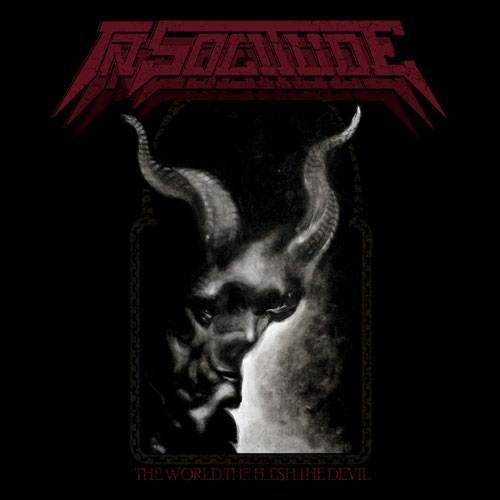 The new In Solitude album “The World. The Flesh. The Devil.” is simply remarkable. Since I first heard it, I have been on nearly a non-stop In Solitude binge. I’ve listened to it from beginning to end somewhere in the neighborhood of five times a day. Whether I’m vacuuming, making dinner, or putting all of my issues of Boys’ Life magazine in alphabetical order, the album has been my constant companion. I had a plan to review it, but I feel like I have lost all degree of journalistic objectivity. The only way to truly get a fair assessment of this album is to turn it over to a stranger and see what they think.
This was not a simple task. I live in the American South and, for the most part, strangers are to be feared. I spent all day Thursday walking around the North Dekalb Mall in Atlanta asking people to sit with me for an hour listen to the record and answer some questions but was refused over and over again. I even had a woman threaten to get her husband and have him “give me a beating”. Six hours of rejection and nothing to show for it. I needed a new plan.
Friday, I went to the park near the local Senior Center. I immediately descended on a seemingly good natured woman sitting on a park bench who looked like she needed company and, more importantly, seemed like she’d have difficulty getting away quickly. I spent 10 minutes talking to her about her life and her allergy to penicillin. Her name was Ida Mae Thrasher. It was too perfect! This had to be the one! I made the offer, but this time I had figured out how to seal the deal. I offered her a 50-dollar gift card to the local Rite Aid. All she had to do was listen to the album and answer my questions. She tentatively agreed to do it and I quickly slapped a pair of headphones on her.
Our conversation after listening to the album went like this:
Keith: Well…what did you think?
Ida Mae: It was…..ummmmmmmm…..it was good.
Keith: Good??? Okay. Can you be more specific?
Ida Mae: It was very good.
Keith: Ida, can you please give me something with a little more detail? I’m trying to write an article here.
Ida Mae: Well, I liked the first song.
Keith: If you want the gift card, you are going to have to give me something more to work with.
Ida Mae: Well, it was kind of….well….loud.
Keith: Do you mean the volume? I could have turned it down.
Ida Mae: No, it was just….you know….loud.
Keith: (sounding somewhat offended) Listen Ida, loud is a term that applies to volume. Loud is not a valid description. It tells me nothing. Tell me something about the amazing guitar solos, tell me something about the raw production style, tell me that you like the interplay between the drummer and bassist, tell me you appreciate that they have taken early 80s sounding British metal and put a fresh and unique spin on it. What the heck does “it was loud” tell me!?!?!?!
Ida Mae: (appearing nervous)It was fine.
Keith: Okay, maybe I need to be more specific. Did I remind you more of early Paul Di’Anno era Iron Maiden or Mercyful Fate?
Ida Mae: Yes.
Keith: WHICH IS IT?!?!?
Ida Mae: Both.
Keith: You are avoiding the question! I’m seriously starting to question your commitment to heavy metal!!!!!
Ida Mae: You said I’d get a gift card if I listened to the album and answered your questions. Well, I did both. Please give me my Rite Aid gift card and just leave me alone.
Keith: There is no gift card! Not for you. Not with answers like that. You just totally wasted my time.
Ida Mae: HELP!!! Someone get this maniac away from me!!!!!!!!! HELP!!!!!!!!!!
I had a lot of time to reflect on things while I was waiting for my wife to arrange bail. This experience taught me a lot. Some people just aren’t in a position to appreciate great music. I’m just going to have to live with the fact that the Ida Maes of the world will have to live their lives shrouded in a veil of musical ignorance. That doesn’t mean you have to. Buy as many copies as you can of “The World, The Flesh, The Devil”. Quit your job and do nothing but listen to it. Make your kids memorize the lyrics and if they don’t, refuse to let them watch television and send them to their rooms without dinner. It is really that good.
Check out Serpents Are Rising from “The World. The Flesh. The Devil.” here. The song is 160 percent amazing!
U.S. Supreme Court Bars Morbid Angel From Putting God-Awful “Radikult” Song On New Record
Posted by Keith Spillett in Articles I Probably Shouldn't Have Bothered Writing, General Weirdness on June 2, 2011

The Supreme Court today ruled 7 to 2 in a case forcing Morbid Angel to take that terrible Radikult song off of their soon-to-be-released Illud Divinum Insanus album. The record, whose title translates to ‘This Is Probably Going To Alienate Our Fanbase”, is anticipated to be one of the most significant releases in metal this year. The song has reportedly caused spontaneous vomiting and bleeding from the eardrums among its first listeners. In a majority decision, Chief Justice John Roberts wrote, “What the hell were they thinking? That’s gotta be the worst song I’ve ever heard. We have reason to fear for the health and sanity of anyone who hears it. I need to take a damned shower after hearing that thing.”
The case, People With Good Taste in Music Versus Morbid Angel (2011), is the first time the high court has ruled on a song that sucks. The Court decided to create a precedent in this case because they believed that Radikult was so miserably bad that it was their solemn duty to intercede. Roberts seemed to be appalled by everything about the song. “It starts off with the silly 80’s techno sounding drumbeat and you think they are going to break into a cover of Bell Biv Devoe’s ‘Poison’. Then, David Vincent starts saying ridiculous things that just don’t belong in a metal song or, really, anywhere else. When Vincent says ‘We’ve been crossing the line since 1989,’ I looked over at Justice Thomas and just started laughing. We could not believe it!” noted Roberts in the decision.
Several fellow Justices filed strong concurrences in support of the ruling. Justice Antonin Scalia’s began his with the words, “Free speech be damned! It is the right of listeners to not have to ever hear anything that bad. The First Amendment was clearly not written to protect people who write horrendous industrial metal or shady looking Floridians. “ Justice Samuel Alito chimed in writing, “Is this the same band that wrote Chapel of Ghouls? I mean, this is Morbid Angel…MORBID FREAKIN’ ANGEL! These guys were Gods!!!!! There is no place for this sort of garbage in a free society. If I had my way, we’d have banned that horrendous Destructos vs. The Earth song as well.”
In an equally vigorous dissent, Justice Ruth Bader Ginsburg replied, “I have a good deal of respect for Morbid Angel for trying something new here. Okay, yes, it is a complete train wreck, but I worry this sort of ruling will have a chilling effect on other bands trying to take a more experimental route with their music.”
The Court has ordered that Morbid Angel take all copies of the album containing the “Radikult” song and dump them in a landfill 12 miles north of Passaic, New Jersey “with all deliberate speed”. They have also ordered the National Guard to Clearwater, Florida to make sure the band complies with their ruling.
Listen to Radikult here before listening to it becomes a felony…..Living Hardcore Radikult!!!!!!
Let Them Eat Schools: An Entirely Hostile Review Of Charlie Wilson’s War
Posted by Keith Spillett in Mr. Spillett's Academy Of Film Study For The Mentally Tormented, Pointyheaded Highbrow Stuff on May 30, 2011
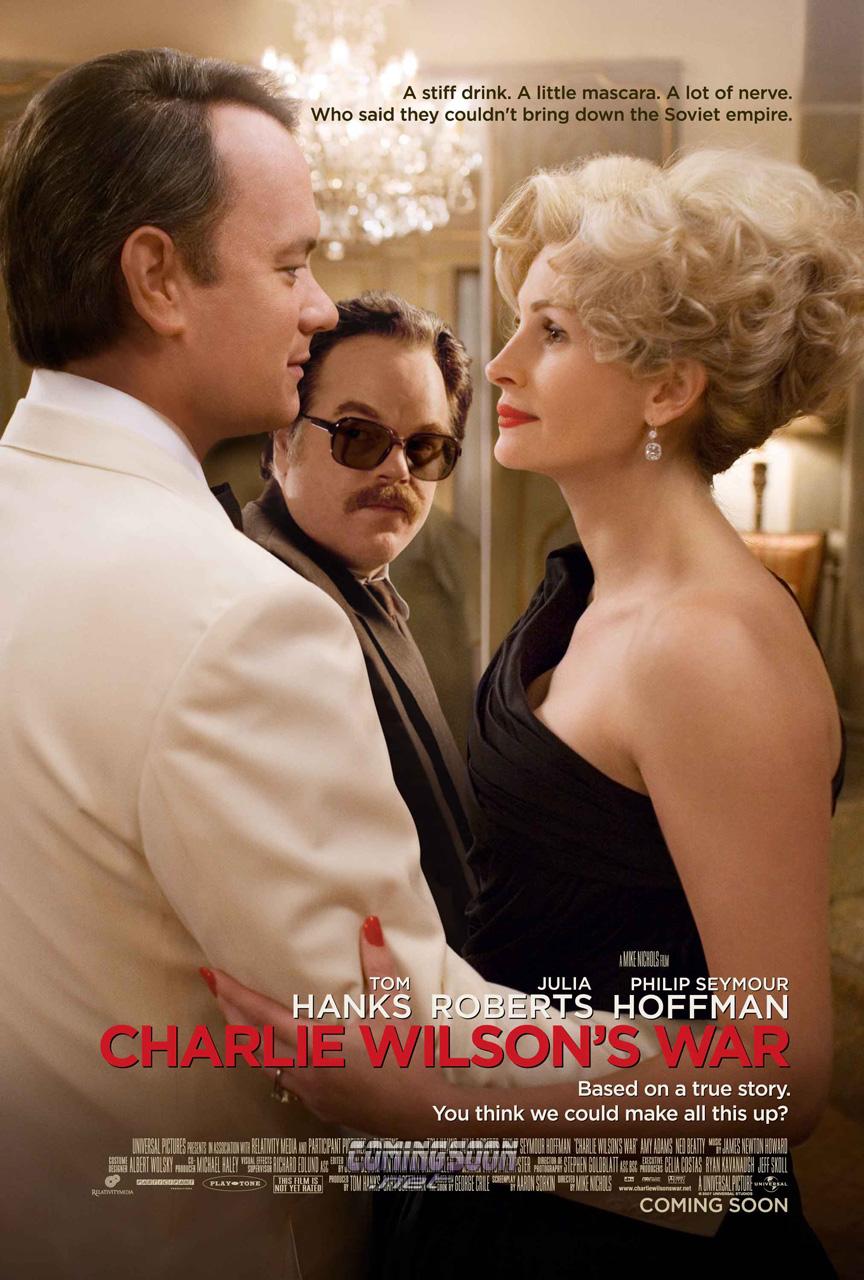
Charlie Wilson’s War is a highly entertaining film. It is funny, fast-paced and extremely well acted. Phillip Seymour Hoffman is captivating as Gust Avrakoto, the cynical, highly skilled CIA agent who helps Congressman Charlie Wilson (Tom Hanks) and Joanne Herring (Julia Roberts) finance a covert war against the Soviets in Afghanistan in the 1980s. Apparently, you can make a good-natured, romantic comedy out of nearly anything nowadays.
The film sets out to make “Good Time” Charlie Wilson, the hard drinking, womanizing Democratic politician from Texas, out to be the greatest American hero since Abe Lincoln. Sure, he’s got some character flaws, but when it comes down to it he worked hard for the cause of freedom and democracy. Blah, blah, blah. I personally could care less about his love for whiskey, his multiple girlfriends, his cocaine use or whether he was a good juggler or not. His decisions as a Congressman are what disturb me. The halo simply does not fit.
Afghanistan was not Wilson’s first crusade. He spent much of the late 1970s championing the cause of Anastasio “Tachito” Somoza Debayle, Nicaraguan dictator and serial human rights abuser. Somoza’s reign of corruption was legendary. He was best known for stealing millions of dollars that were supposed to go the victims of the devastating 1972 Managua Earthquake. To Wilson, Somoza was not the evil bucket of slime that tortured and murdered just about anyone who disagreed with him publicly while robbing his country blind. Somoza was a great representative of America in the fight against communism. The dictators big mistake was to get drunk and attempt to make a move on Wilson’s girlfriend, Tina Simons. It was only at that point that Wilson decided that Somoza was, in fact, not a great representative of truth, justice and the American Way. This is not to say that Wilson was entirely awful. He was a very complex man who made some important contributions while in office. He also gave aid and comfort to a monster. The second part was apparently not significant enough to make the final cut of the movie (the book by George Crile does cover this in detail).
The movie focuses on Wilson’s role in arming the Afghan rebels against the Soviet Union. The film uses the familiar Russians=Evil theme that was quite popular in Cold War propaganda movies. At least in Red Dawn we saw the Russians doing something beyond killing innocent people for a few frames. The only Russians in this film are the ones shooting unarmed peasants from the sky or getting shot down by American supplied Stinger missiles.
It’s easy to find fault with what the hideous actions taken by the Russians in Afghanistan. The problem with how the Russians are portrayed in this film is two-fold. First of all, it is mindlessly simplistic and creates the idea that the war was an easily understood battle between good and evil. It was not. The second problem is that it supports the widely accepted narrative that the Russians were solely at fault for the war. In fact, evidence exists to the contrary. Zbigniew Brzezinski, National Security Advisor under Jimmy Carter, has stated that the United States began arming the mujahedeen fighters, who were trying to overthrow the Soviet backed government, months before the Russian invasion. The goal, according to Brzezinski, was to “knowingly increase the probability” that the Soviets would invade. Can you imagine what the reaction of the United States would have been if the Russians were caught doing the same thing in Mexico? This is extremely significant because it clashes with the official story of how the war began. Through the lens of Brzezinski’s comments, Charlie Wilson was not simply helping out a group of people fighting to free themselves from the Soviets, but rather was continuing a pattern of expensive and wrongheaded U.S. intervention into sovereign nations that wreaked havoc across the world.
The film ends with a strange postscript. Wilson is recognized as a hero for getting weapons into the hands of the mujahedeen and helping to end Soviet dominance in the region. However, when he tries to get a million dollars in aid to the Afghans after the war he is rebuffed. A Wilson quote about us winning the war but messing up the endgame runs across the screen right before the credits. The message seems to be that it was totally justified to give over a billion of dollars to arm a group of Islamic radicals, but we should have built some schools. Are you kidding me? The largest covert war in American history is fine as long as we build a few schools at the end? As if throwing a few bucks into rebuilding the infrastructure of the country can somehow compensate for the untold damage that arming and training many future Taliban members caused.
The idea is reminiscent of some of the crackpot schemes hatched by Kennedy/Johnson advisor Walt Whitman Rostow. He was the guy who decided we could win the hearts and minds of the Vietnamese by taking them off of their land and moving them to fancy, new, isolated towns called Strategic Hamlets. The Vietnamese didn’t want our makeshift Levittowns, they just wanted us to leave. The common thread in this logic is that United States intervention is justified as long as the people get something that we deem valuable out of it. Sometimes the greatest gift we can give a country is to leave them alone. Unfortunately, this message is entirely absent from Charlie Wilson’s War. It is replaced with the twisted idea that the U.S. can plant its flag anywhere it wants as long it brings “civilization” and modernity with it.
 The Tyranny of Tradition
