Archive for category Pointyheaded Highbrow Stuff
Even A Blind Watchmaker Can Find A Nut
Posted by Keith Spillett in Existential Rambings, Pointyheaded Highbrow Stuff on May 24, 2011

Vladimir: So….you take a watch and you put it in a bag….
Estragon: What type of bag?
Vladimir: It doesn’t matter.
Estragon: Well, what type of watch is it?
Vladimir: Again…not important. You put the watch in a bag. Now, you take a hammer and you smash it.
Estragon: Wait…What?
Vladimir: Just see if you can follow me here. You smash the watch into a hundred pieces….
Estragon: Is it a digital watch or a nice one?
Vladimir: It doesn’t matter….You take the watch and you smash it into….
Estragon: Well, why are you smashing the watch?
Vladimir: Okay, that’s really not important! The important thing is…
Estragon: What kind of lunatic would break a perfectly good watch?
Vladimir: It’s a metaphor. Nobody is really breaking a watch with a hammer. The idea is to prove a point.
Estragon: But how can you prove a point using an example that is completely unrealistic.
Vladimir: I don’t know. It’s not important! Just listen.
Estragon: Well, if it is a digital watch with one of those plastic bands it’s not going to break with a hammer
Vladimir: Fine. It’s a Rolex. A really nice gold Rolex.
Estragon: A Rolex is really expensive. Why would you want to break an expensive watch? And I don’t know if a hammer will break a Rolex into a hundred pieces.
Vladimir: Fine. It is an inexpensive magical watch that magically will break into a hundred pieces. Can I get back to my point?
Estragon: Sure.
Vladimir: Okay, so you break the watch. You shake it up in the bag?
Estragon: Uh-huh.
Vladimir: Does it re-form into the same watch?
Estragon: Well, of course not!
Vladimir: SEE!!!!!
Estragon: See what? I’m not sure I follow.
Vladimir: Evolution is impossible.
Estragon: Wait…What?!?!?
Vladimir: Something has to be there to assemble the watch if it’s going to come back together, right?
Estragon: I guess.
Vladimir: And the watch has been reassembled into a perfect whole, right?
Estragon: That is what you said.
Vladimir: Well, then there has to be a watchmaker who has a plan, right?
Estragon: Uhmmm. Okay. So, who is the watchmaker?
Vladimir: GOD!
Estragon: Wait….WHAT?!?!?!
Vladimir: God is the watchmaker! Otherwise the watch would still be in pieces.
Estragon: Wait…so God reassembled the watch?
Vladimir: YES!
Estragon: Why?
Vladimir: What do you mean why? He’s God. He doesn’t need a good reason.
Estragon: So, God just goes around putting broken watches together? We’re not sure why. That’s just what he does.
Vladimir: Exactly. He loves us. Maybe he wants us to have a nice watch. Maybe he wants us to be happy. That’s for Him to know.
Estragon: If he wanted us to be happy, why didn’t he just stop us from breaking the watch in the first place?
Vladimir: Free will!
Estragon: So, wait, he loves us so much he is willing to fix the watch, but he won’t stop us from breaking it?
Vladimir: Exactly!
Estragon: That’s not a very efficient system.
Vladimir: Well, He doesn’t have to be efficient. He’s God. He doesn’t have to explain anything.
Estragon: Well, if he’s going to go around smashing watches, I think he owes somebody an explanation. That’s pretty rude. If he smashed my watch I’d be really angry!
Vladimir: Okay…forget the watch. We’ll use another example. Pick something.
Estragon: A piece of ham
Vladimir: So, you put a piece of ham in a bag…
Estragon: Ham….in a bag?
Vladimir: Yes! And you smash it into a million pieces.
Estragon: Uh-huh
Vladimir: It still tastes like ham and smells like ham and looks like ham. RIGHT?!?!?
Estragon: Yes…I think.
Vladimir: So there has to be some kind of ham designer, right?
Estragon: Yes…well….maybe…I guess….
Vladimir: Evolution couldn’t have designed ham.
Estragon: Wait…why not?
Vladimir: Because it is perfect.
Estragon: What is perfect?
Vladimir: Ham! Ham is perfect!
Estragon: Compared to what?
Vladimir: To a universe without ham.
Estragon: How can you tell?
Vladimir: God wouldn’t have created it if it weren’t perfect. Ham is in our universe. Therefore, ham is perfect.
Estragon: Okay, now I’m really confused. If God is perfect and created a world that is the most perfect possible world for us, why does he create people who smash ham and watches in bags?
Vladimir: To test us.
Estragon: Why?
Vladimir: To see how much we love him.
Estragon: Oh…so we show him we love him by not smashing things in bags?
Vladimir: Yes!
Estragon: I see. So that’s the point of the whole thing!
Vladimir: YES! That’s the point. We have the choice whether to smash ham or watches or even possums in bags. If we choose not to, we do it because we love God. And if we do that we will be rewarded.
Estragon: With a nice watch?
Vladimir: Maybe with a watch. Maybe with eternal happiness. We’re not exactly sure. We just know that the reward is going to be REALLY good.
Estragon: And if we smash things in bags?
Vladimir: Then bad things happen to us. REALLY bad things. Things like sickness or eternal suffering or boils on our face.
Estragon: Boils on our face?!?!?!
Vladimir: It won’t be a problem for you if you just do what you are supposed to.
Estragon: So these are the rules?
Vladimir: Yes.
Estragon: And if I follow them, I’ll be…………happy???
Vladimir: Unless God has another plan for you. But eventually you’ll be happy. At some point.
Estragon: Will I get a watch?
Vladimir: If that is what you desire and that is God’s plan and you follow the rules then, yes, you will get a watch.
(At this exact moment, a giant meteor hits the earth obliterating smashing it into a million pieces. The entire human race, including Estragon and Vladimir, are destroyed in a firey, horrible instant without warning)
Six Important Lessons You Should Be Teaching Your Children
Posted by Keith Spillett in Parenting Tips For Those With Children, Pointyheaded Highbrow Stuff on May 16, 2011
We, at The Tyranny of Tradition, are proud to present today’s guest writer, Jonathan Winthrop. Winthrop is a conservative columnist, syndicated talk radio host, all-around great American and a proud parent of four boys (McCarthy 12, Reagan 8, Goldwater 6, and Huckabee 2). He is the President and co-founder of Americans for Progressive Corporal Punishment, a group committed to teaching family values to bad parents. He is the author of several New York Times best-sellers including “12 Easy Steps to Teaching Your Child To Fear and Respect Authority Figures” “Attila The Huns’ Strategies To Being a Better Parent”, and “Look Mom, No Values: A Parents Guide To Living In A Fallen World”.

Good American Children At Play
I know, I know, your young children are learning lots of bad habits from television and from that Odd Future Wolfgang Kill’em All rap album you just bought them. Parenting can be a tough job. But, parenting is the most important job in the entire world. After all, without children there wouldn’t be adults. If there weren’t adults, who would be there to produce a lasting supply of inexpensive consumer goods. Without inexpensive consumer goods, what would drive our economy? As you can see, without children, our world would quickly turn into a communistic hell on earth. I’ve put together a list of six really important lessons that you should be teaching your children so that they don’t end up hooked on crack-cocaine or becoming a “community organizer”.
Don’t Talk To Strangers
It’s the oldest piece of advice in the book. Strangers are a threat under all circumstances, particularly when they dress like they are in 1970s cop films or have foreign accents. If your child doesn’t know a person, chances are that person is looking to cause them terrible harm. Strangers have done terrible things throughout history. John Hinkley was a stranger to Ronald Reagan when he tried to assassinate him back in 1981. Had Reagan died there is no doubt that an Iron Curtain would have descended on the United States stifling freedom for the next thousand years. Be a good role model for your children by ignoring anyone who asks you for help and not saying hello to anyone unless you have known them for at least three years.
Don’t Be A Sucker
Lots of people are trying to take your money from you all the time. Sometimes, they want to give you valuable things in return like toaster ovens or televisions with picture-in-picture capability. Sometimes, they are looking to take your money and use it on drugs or food. Most people on the street simply can’t be trusted. If they are behind the counter at a reputable store in a good part of town, that’s one thing, but according to a study done by the Heritage Corporation 97 percent of people who are who live in bad parts of town are either “highly dangerous”, “just can’t be trusted” or are “too lazy to go out and earn a living.” Do not give them money under any circumstances. It will contribute to a vicious cycle of poverty and Islamic radicalism.
Don’t Let Other People Blame You For Their Problems
Just because you were born in the greatest country in the history of the human race doesn’t mean you should feel bad about it. Most people are looking to blame you for their problems when their suffering is actually caused by the fact that they have made bad decisions. Everyone starts equal in this life. Don’t let their statistics about people being “born in poverty” confuse you. According to a study done by the American Freedom and Values Council For A Freer America, 96 percent of Americans who are wealthy have better morals and make better decisions than those who make less than 50,000 dollars a year. You are where you are because you worked harder than anyone making less than you. Teach your children to be proud of what they have achieved and scornful of those who haven’t achieved as much.
You’d Be Better Off If It Weren’t For Them
Social programs like affirmative action and gun restriction laws have weakened most Americans’ ability to live a happy, free and safe life. Teach your children to be active participants in government by stopping the government from taking your money and giving it to other people just because they are “hungry” or unable to provide themselves with adequate shelter. Thomas Jefferson once said something like “Government is the enemy of free people everywhere, particularly when it gives the money of hard working people to undeserving losers.” He was right. Teach your children that government and special interest groups like illegal aliens are responsible for most, if not all, of their problems. That way, when they become adults they will have absolutely no problem getting rid of government organizations that are slowly rotting America away like the Food and Drug Administration.
Without Math We Would No Longer Be Free
America has fallen behind in math test scores around the world. According to a study done by the Americans For a Freer Society With Better Test Scores, 103 percent of American 8th graders can barely count up to five. If this trend continues our children are going to become adults who are unable to figure out how much of their weekly check goes to building important tools of peace like stealth bombers and aircraft carriers. They will never be able to experience the joy and pride one feels when counting how many more nuclear missiles we have compared to the rest of the world. Then, they will never know how truly lucky they are.
Dissecting CARCASS’ “Heartwork” – First Incision…Buried Dreams
Posted by Keith Spillett in Notes on Carcass Heartwork, Pointyheaded Highbrow Stuff, The Poetry of Death on May 13, 2011

Heartwork, the 1993 release by Carcass, is easily one of the most compelling metal albums ever recorded. First and foremost, it is an explosion of monstorous guitar riffs, frenetic drumming and raging energy. The music is captivating and overwhelming. Heartwork is a remarkably powerful lyrical album that deals intelligently with issues like globalization, dehumanization and existential dread. The music has been widely praised by many music journalists. The lyrics, however, have been given scant attention. Jeff Walker, the band’s singer, bass player and chief lyricist, envisions a world that is entirely devoid of human feeling or empathy. Walker’s adept use of language, particularly double entendre, lays bare the man’s inhumanity in all of its baseness. His world is an empty one, filled only with sorrow, guilt and deep-seated hatred.
The album behaves like a book, each song a chapter examining a set of widely held beliefs and contrasting them with his vision of a world gone completely insane. Over the next few months, I will attempt to analyze the themes and ideas song by song in an attempt to convey the inventiveness of Walker’s lyrics as well as the perspicacity of his message.
Buried Dreams
Welcome, to a world of hate
A life of buried dreams
Smothered, by the soils of fate
Welcome, to a world of pain
Bitterness your only wealth
The sand of time kicked in your face
Rubbed in your face
When aspirations are squashed
When life’s chances are lost
When all hope is gone
When expectations are quashed
When self-esteem is lost
When ambition is mourned
…All you need is hate
In futility, for self-preservation
We all need someone
Someone to hate
Buried Dreams is a nightmare vision of a world completely unconnected to its humanity. It serves as an overview of the themes that are addressed in each song and is a great starting point because it contains the most unambiguous lines on the record. In Walker’s “world of hate”, humans begin their journey in life filled with hope only to see that hope slowly eroded by the fixed nature of reality. This reality is the death and pain experienced by all humanoid beings. It is immovable, unchangeable and constant. Humans search blindly in the dark for some reason, some deeper meaning that will connect the dots and make the pain they experience intelligible. We fill ourselves with illusions in order to soften the blow of this horrible truth. As the truth becomes more real, we grasp harder at the illusion but ones commitment to an illusion will never make that deception a reality. We slowly come to terms with the understanding that there is no connection, there is no one tending the fire and the center simply does not hold. Once this veneer of meaning has been stripped away there is nothing left to hold onto but pure visceral hatred.
By experiencing hatred for something, we are given the ability to overcome our basic alienation from ourselves all the while connecting to the other beings around us. Love would be another way to connect, but the drawback of love is that it is fleeting. Its initial joy is snuffed out by the understanding that our basic existential problem, death, will cause love to one day give way to sorrow and despair. If you connect with hatred you never have to feel loss because the eventual vanquishing of your foe will be greeted with a feeling of joy and accomplishment. No one mourns the death of their enemy.
On the surface, the lyrics could be read as a simplistic explanation of the rise of fascism in Europe in the 30s and 40s. A society like Germany, which was drowning in debt and filled with impoverished humans recovering from the insanity of years of mindless trench warfare, was ready for the message of hate that Hitler brought. I believe the song is meant to have much more of a timeless message with broader overtones about the human condition. The line that universalizes this song is “in futility, for self-preservation, we all need someone…someone to hate.” This is a Hobbesian view of a world of beings so frightened of death that they are willing to do anything to avoid it, even if they know that their actions are eventually pointless. We are willing to create a Leviathan that may kill us for our disobedience in order to be safe. The wall each of us run into is death and we are willing to embrace any idea that allows us to fully avoid thinking about our eventual consequence. We are willing to embrace ideas that are self-destructive in order to escape the fear of death. If this isn’t true, then how do you explain war? This horrible irony of our basic condition is that we long to avoid death, but we do so in a way that often hastens its coming.
And so our dreams are buried as we are carried kicking and screaming to our own certain demise. We mask our fears with delusions of enemies all around us. We think that we can stop the inevitable if we bomb that thing or execute this thing but with our last dying breath we are reminded of the futility of all of it. Even hate cannot save us. The final, horrible irony of our Buried Dreams is that we will eventually be buried next to them.
(I am pretty darned excited to announce that this series will also be running at MindOverMetal.org, one of my favorite metal sites. Special thanks to my homeboy Metal Matt Longo who not only agreed to run the thing, but even gave me a fantastic title for the series and some killer editing ideas. Anyway those dudes speak truth and wisdom over there, check’em out)
Metamorphosis on Main Street: A Psychological Review of Graveyard’s “Hisingen Blues”
Posted by Keith Spillett in General Weirdness, Pointless Music Reviews, Pointyheaded Highbrow Stuff, The Poetry of Death on May 5, 2011
I started off trying to review Graveyard’s new album Hisingen Blues. Things were going really well. I had a neat little intro where I talked about their 70’s retro sound and compared them to a few bands. There was a cool section where I discussed the driving intensity of their sound and compared them to a freight train. It was going really well. All that is gone now. All that is left is chaos, despair and panic. I’m sitting in my car in the parking lot of a Burger King fast food. It’s 4:47 in the morning. How did I get here?
I was writing the review at the kitchen table. My wife and kids were playing in the other room. In the distance, I heard the vaguely menacing sounds of Dora The Explorer. My ears were much more attuned to magniloquent sounds of the song Hisingen Blues by Graveyard. I’d listened to the album a few times, but kept coming back to the title track. “WHERE IS THE FUTURE?!?!?!?!”
I was grooving to the song. I closed my eyes. The next thing I knew my wife was screaming. “WHAT ARE YOU!?!!?!??!?!? GET OUT OF HERE!!?!?!?!”
I tried to say “Honey, it’s just me. Why are you screaming?” But it came out “Kjqgjgnqrwlkgnjwqrngljnwrjlgnlg?”. I sounded like the creature in the Predator movies when it tried to talk. What was happening?
My wife picked up a broom and started hitting me. “Stop it!” (“Njndgjlqwrnlgkn!”) The sounds that came out of me only made her more frightened. I ran upstairs. Suddenly, I started thinking about our cat. I have to eat the cat. I have to eat the cat. I sprinted around the bedroom looking for the cat. I thought of how good the cat would taste. I have to eat the cat. “WHERE IS THE FUTURE!?” echoed in my minds ear. I need to eat the cat. It would be so delicious. I have to eat the cat. I looked under the bed, I looked in the shower. I looked in the closet on my wife’s red sweater where it likes to sleep. All at once it occurred to me that we don’t have a cat.
I looked into the mirror. What looked back at me was horrifying. Green neck, green skin, pointy nose, scales. I was…..a lizard!!!!!!! Dear God….A LIZARD!!!!!! I ran downstairs to try to explain it to my wife. She had both of the kids in her arms and she was screaming into her cell phone. “SDGASFHAFSHERJJET!” I pleaded.
“Get away you…..BEAST! What have you done with my husband????”
My children’s eyes were filled with confusion. I was not daddy anymore. I was some “thing” that they could not possibly understand. Some “thing” they conjured up in a nightmare, but not daddy. “WHERE IS THE FUTURE!?!!?!!” My wife’s eyes gleamed with hate and fear. I was a stranger to them.
I grabbed my keys and ran out of the front door towards my car. Our neighbor was blissfully jogging up the street with her headphones on. At first, she did not notice me. All at once her face grew pale. She turned and sprinted away from me. I leaped in my car. Could I even drive? Could I get the key in the ignition? My lizard fingers clumsily pushed the key in and I was off to somewhere. But where?
Most of the last nine hours has been about staying alive. I have cat scratch marks all over me that I cannot explain. I feel the empty exhaustion of a sleepless night. I don’t remember much of what has happened, but I am here. Soon, the sun will rise. I have to stay safe. There is no room for my kind on the street. Not among the animals. Not in the daylight.
And what of my condition? How did I end up here? Something in the song brought me to this place. I have become the poetry of doom and horror. Something in the song turned me into this creature. Something inside of me, both wretched and righteous, has escaped and become my form. “WHERE IS THE FUTURE?!?!?!” I am no longer what you would call human. I wear alienation as my skin. As the moments recede backwards into the night my fate stands before me. I am lost.
Philip Morris Corporation Purchases Exclusive Naming Rights to Emphysema
Posted by Keith Spillett in Health Tips for An Early Death, Pointyheaded Highbrow Stuff on April 10, 2011

In a move to reestablish itself as a force in the cigarette industry, tobacco giant Philip Morris today purchased exclusive naming rights to emphysema. They will pay the World Health Organization (WHO) 900 million dollars over the next 10 years in order to own the right to name the disease whatever they want to. Initially, Phillip Morris simply wanted the words “Philip Morris, Official Sponsor of Emphysema” to be spoken each time the crippling illness was mentioned, but for an additional 100 million per year they have been given the ability to give the disease an entirely new name. In order to get rid of the negative connotations people have with the word “emphysema” the disease will now be referred to by doctors and health care professionals as “Skippy”. “We felt that emphysema strikes a gloomy chord with the public and that there was no harm in brightening the name up a bit,” said Philip Morris Public Relations Director Henry Haldeman.
The corporate re-naming of diseases is part of a larger privatization trend that includes selling formerly public property to corporations. It started with the privatization of water supplies and other formerly public resources, but has now moved to more abstract concepts like disease names. The bidding war has already started for the rights to name rhumetoid arthritis and diabetes, the next two ailments that will be on the block. There have been rumors that the right to name several body parts is the next frontier. Last year, The Disney Corporation offered 400 million dollars for the rights to name the human pancreas, but a serious bidding war has yet to develop.
Part of Philip Morris’ deal with the WHO is to pledge 10 million dollars a year to emphysema research. According to “We are not trying to convince people that emphysema, uh, excuse me, Skippy, is a good disease. We are just trying to remind people that Philip Morris is an important member of the global community. Therefore, we will continue to maintain our commitment to eradicating Skippy from the planet,” said Philip Morris CEO James Erlichman in a press conference to announce the deal.
We Are Bones, We Are Dust
Posted by Keith Spillett in Articles I Probably Shouldn't Have Bothered Writing, Existential Rambings, Health Tips for An Early Death, Pointyheaded Highbrow Stuff on March 6, 2011
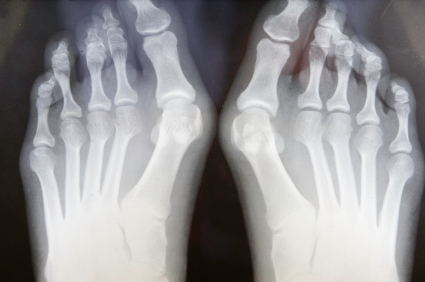
This thing that I think that I am, sometimes, I am not. Looking at an X-Ray of my right foot has twisted my mind into knots for the past few weeks. It’s not that they found anything that disturbing. My doctor discovered a bone spur, which I was pretty sure that I had. No surprise there. I am having surgery tomorrow. Again, not a surprise. The thing that got in my head was the X-ray itself. If I am what’s in that picture…what am i?
There was this picture of the bones in my foot staring at me. The doctor was pointing to things and saying a bunch of words, but I was transfixed on the picture. There I am? There I AM! There I am?!?!?!? This picture is of the inside of me. Underneath all of this skin and blood are a set of bones. These bones have been with me all of my life. They were at my high school graduation, they were there when I got married, they attended the births of my two beautiful children, they have seen me laugh, they have seen me cry, they have been there when I thought I was alone. I couldn’t process it. These bones are actually me!
The me that I think I am is the thing that experiences the world consciously. I am aware of feelings and ideas. I make plans and I remember experiences. I see, I smell, I touch, I taste, I hear. I have no problem associating these things with me. Then, there are these bones. They are in me, they are part of me, but I can’t believe that they are me. This picture wasn’t some random x-ray they keep in the back and show everybody. These were my bones! Seeing them really sucked the magic out of everything. I tend to think of myself as more than the sum of my parts, but maybe I am nothing more than my parts. Maybe, I am just bones and skin and blood with a few organs floating around.
There are parts of myself I have never seen. I don’t know what my hip bone looks like. I don’t know what my liver looks like. My heart, my brain, my lungs…all highly valuable parts, but I couldn’t tell mine from my neighbors. The me that I know seems so special, so unique. My memories seem so important, as if they are part of some great mystery that I have a lifetime to solve. My thoughts, my ideas, my identity all seem to be pieces in the great “who am I?” puzzle. They all conspire to make me believe that I am an enigmatic character whose mythology is terribly important. And then, there is this picture of the inside of my foot. It is not special. It is not unique. It is simply mineralized osseous tissue housed in a pile of skin that is called “foot”. There are somewhere in the range of 14 billion of them and they all pretty much look and act the same. Sure, there are minor subtleties and nuances, but for the most part, what is the difference?
My foot does not find itself unique. It pushes against surfaces over and over throughout a day. It works, it rests. It does not feel loneliness or claustrophobia if it is trapped in a shoe for too long. It does not become jealous that I am favoring my other foot. It does not make plans to meet with my spleen for coffee. It does not become romantically involved with my esophagus. It does not ponder the mysteries of the universe and wonder what will happen to it when it dies. It is material and material has no time for enchantment. It simply is. When it ceases to work, it will waste away along with the rest of this thing that is me.
There is a part of me that cannot imagine that this is possible. There must be something else, there must be something more. I am more than that picture. I am not just bones. I am not just flesh. I am something mystical. I am more than those parts. I am more than words on a page saying “healthy, well-developed 35 year old male suffering from Hallux rigidus“. Right? Right?!?!?!
Maybe this identity of mine that I find so fascinating is just a bunch of electrical impulses. Maybe we are just piles of material walking around among other piles of material, thinking that thoughts and memories and ideas make us more. These self-important piles of material spend much of their time avoiding damage so that they can one day be part of creating new piles of material. And on and on with no direction, no meaning and no end. Thousands of them are created each day and thousands disintegrate. It does not matter…it is only matter.
George Washington Plunkitt and the Value of Honest Graft
Posted by Keith Spillett in Pointyheaded Highbrow Stuff on February 9, 2011

Thomas Nast Cartoon Depicting the "Thought Process" Behind Tammany Hall
It is a rare person who can make being a scoundrel seem like a completely respectable way to make a living. Occasionally, this sort of scoundrel works his way into politics. Most corrupt politicians today bathe themselves in the murky oil of self-righteousness. It is quite unique to find a man completely devoid of principals and willing to make that a matter of public record. George Washington Plunkitt was such a man.
Plunkitt was a State Senator in New York during the heyday of Tammany Hall. The Tammany political machine ran New York City for over a century by offering jobs and protection for new immigrants in exchange for votes and political influence. Tammany produced some of New York’s most influential politicians (William Mallory “Boss” Tweed being the best known) and even counted a Vice President (Aaron Burr) and a Presidential candidate Al Smith among its ranks.
The organization had many outspoken, charasmatic politicians, but Plunkitt was probably the best at explaining “The Tammany Way”. Plunkitt’s book “Plunkitt of Tammany Hall: A Series of Very Plain Talks on Very Practical Politics, Delivered by Ex-Senator George Washington Plunkitt, the Tammany Philosopher, from his Rostrum—the New York County Courthouse Bootblack Stand” contains some of the most intriguing justifications for corruption that have ever been written. His distinction between honest and dishonest graft is deeply flawed but amazingly compelling.
Here is an excerpt that captures Plunkitt’s belief about how the system works…
Everybody is talkin‘ these days about Tammany men growin’ rich on graft, but nobody thinks of drawin‘ the distinction between honest graft and dishonest graft. There’s all the difference in the world between the two. Yes, many of our men have grown rich in politics. I have myself. I’ve made a big fortune out of the game, and I’m gettin’ richer every day, but I’ve not gone in for dishonest graft—blackmailin’ gamblers, saloonkeepers, disorderly people, etc.—and neither has any of the men who have made big fortunes in politics.
There’s an honest graft, and I’m an example of how it works. I might sum up the whole thing by sayin‘: “I seen my opportunities and I took ’em.”
Just let me explain by examples. My party’s in power in the city, and it’s goin’ to undertake a lot of public improvements. Well, I’m tipped off, say, that they’re going to lay out a new park at a certain place.
I see my opportunity and I take it. I go to that place and I buy up all the land I can in the neighborhood. Then the board of this or that makes its plan public, and there is a rush to get my land, which nobody cared particular for before.
Ain’t it perfectly honest to charge a good price and make a profit on my investment and foresight? Of course, it is. Well, that’s honest graft. Or supposin‘ it’s a new bridge they’re goin’ to build. I get tipped off and I buy as much property as I can that has to be taken for approaches. I sell at my own price later on and drop some more money in the bank.
Wouldn’t you? It’s just like lookin‘ ahead in Wall Street or in the coffee or cotton market. It’s honest graft, and I’m lookin’ for it every day in the year. I will tell you frankly that I’ve got a good lot of it, too.
I’ll tell you of one case. They were goin‘ to fix up a big park, no matter where. I got on to it, and went lookin’ about for land in that neighborhood.
I could get nothin’ at a bargain but a big piece of swamp, but I took it fast enough and held on to it. What turned out was just what I counted on. They couldn’t make the park complete without Plunkitt’s swamp, and they had to pay a good price for it. Anything dishonest in that?
Up in the watershed I made some money, too. I bought up several bits of land there some years ago and made a pretty good guess that they would be bought up for water purposes later by the city.
Somehow, I always guessed about right, and shouldn’t I enjoy the profit of my foresight? It was rather amusin’ when the condemnation commissioners came along and found piece after piece of the land in the name of George Plunkitt of the Fifteenth Assembly District, New York City. They wondered how I knew just what to buy. The answer is—I seen my opportunity and I took it. I haven’t confined myself to land; anything that pays is in my line.
For instance, the city is repavin’ a street and has several hundred thousand old granite blocks to sell. I am on hand to buy, and I know just what they are worth.
How? Never mind that. I had a sort of monopoly of this business for a while, but once a newspaper tried to do me. It got some outside men to come over from Brooklyn and New Jersey to bid against me.
Was I done? Not much. I went to each of the men and said: “How many of these 250,000 stones do you want?” One said 20,000, and another wanted 15,000, and other wanted 10,000. I said: “All right, let me bid for the lot, and I’ll give each of you all you want for nothin’.”
They agreed, of course. Then the auctioneer yelled: “How much am I bid for these 250,000 fine pavin’ stones?”
“Two dollars and fifty cents,” says I.
“Two dollars and fifty cents” screamed the auctioneer. “Oh, that’s a joke Give me a real bid.”
He found the bid was real enough. My rivals stood silent. I got the lot for $2.50 and gave them their share. That’s how the attempt to do Plunkitt ended, and that’s how all such attempts end.
I’ve told you how I got rich by honest graft. Now, let me tell you that most politicians who are accused of robbin’ the city get rich the same way.
They didn’t steal a dollar from the city treasury. They just seen their opportunities and took them. That is why, when a reform administration comes in and spends a half million dollars in tryin’ to find the public robberies they talked about in the campaign, they don’t find them.
The books are always all right. The money in the city treasury is all right. Everything is all right. All they can show is that the Tammany heads of departments looked after their friends, within the law, and gave them what opportunities they could to make honest graft. Now, let me tell you that’s never goin’ to hurt Tammany with the people. Every good man looks after his friends, and any man who doesn’t isn’t likely to be popular. If I have a good thing to hand out in private life, I give it to a friend. Why shouldn’t I do the same in public life?
Another kind of honest graft. Tammany has raised a good many salaries. There was an awful howl by the reformers, but don’t you know that Tammany gains ten votes for every one it lost by salary raisin’?
The Wall Street banker thinks it shameful to raise a department clerk’s salary from $1500 to $1800 a year, but every man who draws a salary himself says: “That’s all right. I wish it was me.” And he feels very much like votin’ the Tammany ticket on election day, just out of sympathy.
Tammany was beat in 1901 because the people were deceived into believin‘ that it worked dishonest graft. They didn’t draw a distinction between dishonest and honest graft, but they saw that some Tammany men grew rich, and supposed they had been robbin’ the city treasury or levyin‘ blackmail on disorderly houses, or workin’ in with the gamblers and lawbreakers.
As a matter of policy, if nothing else, why should the Tammany leaders go into such dirty business, when there is so much honest graft lyin’ around when they are in power? Did you ever consider that?
Now, in conclusion, I want to say that I don’t own a dishonest dollar. If my worst enemy was given the job of writin’ my epitaph when I’m gone, he couldn’t do more than write:
“George W. Plunkitt. He Seen His Opportunities, and He Took ‘Em.”
 The Tyranny of Tradition
