Posts Tagged silkk the shocker
The Politics of Sneezing
Posted by Keith Spillett in Articles I Probably Shouldn't Have Bothered Writing, Totally Useless Information on March 3, 2011

I sneeze and people feel obligated to reply. The more you think about that, the weirder it is. You are on an elevator with ten complete strangers, you sneeze and all ten race to beat each other to say “God Bless You”. You are on a subway, it is 3 o’clock in the morning and you are surrounded by several odd looking strangers who look like extras from The Warriors. They are taking turns leering at you with a detached sense of malice. You sneeze. A cacophonous chorus of disinterested voices mumble something that sounds remotely like “GesundheitGoblessyou”.
This pervasive but odd little social custom seems to insert itself everywhere without regard to circumstance. There are plenty of bizarre customs out there, but this one seems thoroughly inescapable. I have allergies and live in Atlanta, which means I spend a good portion of the spring testing the politeness of strangers. A sneeze never fails to draw some sort of reply. No one knows particularly why we do this. There are several old stories handed down about it. One story says that it was created during the Black Plague to ward off the spread of the virus. Another story claims that the custom began over the fear that the heart might stop during a sneeze. Yet another tale claims that it was a way of forcing the soul to return to the body after a sneeze.
Most of these stories are meant to explain the “God Bless You”, but there is less explanation for the “Gesundheit”. Why would a room full of non-German speaking Americans suddenly nearly crawl over one another to shout a German expression at someone who has just fired a blitzkrieg of germs at them? Politeness?….really?!?!?! Occasionally when one sneezes they are given a “hatchoo” by someone near them. Why on earth would someone imitate the sneezer? I find this response to be quite demeaning. To get how strange this is, imagine if a person burped and was greeted with a choir of fake burps in response?
I have only experienced this sort of weirdness in America, but apparently it is popular around the world. Most cultures have some word that means “to your health” that is thrown at the offending germ cannon. The oddest sneeze response I’ve come across are the Mongolians who say something that sounds like “burkhan urshoo”. This translates to “May God forgive you”. Not knowing much about the Mongolian culture, this leads me to believe that sneezing is serious business over there. It must be some sort of crime or something. God would be quite busy if he or she had to spend the better half of eternity forgiving sneezers. In Iceland, they say something that translates into “May God help you!” This sounds like a threat that is better suited to someone stealing your pet llama. The Tamil language has a word that translates to “may you live for one hundred years”. The sentiment of this is quite lovely, but the actual math becomes severely problematic. If I were to sneeze five times a day for one year I would have added 182,500 years to my life. Imagine the effects on the economy in many Southern Asian nations if they had to deal with taking care of scores of 2 million year old allergy sufferers?
No one particularly knows why we do it, but if your curious to see whether this custom is alive and breathing today, try sneezing in front of a room full of strangers. If you cough, people barely notice. If you blow your nose, most people simply go about their business. Sneeze and the world stands up and takes interest.
Herded Through The Grapevine
Posted by Keith Spillett in Blithering Sports Fan Prattle on January 26, 2011

Colin Cowherd
There is an oft-quoted line popularized by Mark Twain that says, “There are lies, damned lies and then there are statistics.” Twain clearly hadn’t listened to much sports talk radio. If he had, he would have said, “there are lies, damned lies, statistics and then there are sports talk show hosts with statistics.” The truth of this quote became apparent to me, as it often does, while listening to the Colin Cowherd radio show the other day.
In fairness to Cowherd (which could only be his real name in a truly cruel universe), he does a very entertaining show. He is engaging and often makes me want to argue with him, which seems to be the point of most sports talk radio shows. Louisville Coach Rick Pitino once referred to sports talk radio as “the fellowship of the miserable”, which would apply to much of what I’ve heard, but not to Cowherd’s show which is quite upbeat and enjoyable if you can ignore the nearly endless stream of commercials for hair growth products and lite beer. That being said, Cowherd is the best I’ve heard at taking a statistic and making it mean a whole bunch of things that it doesn’t. If it weren’t for sports radio I am convinced he would be making millions of dollars a year convincing people that 9 out of 10 dentists prefer Aquafresh. The ability to take numeric information and blow its significance way out of proportion to the point of near absurdity is a skill that those who are successful in the business have mastered.
Cowherd can make a number dance like few I’ve ever heard. In support of some ludicrous theory that a recently lobotomized six year old couldn’t have been conned into, I once heard the man say “if you believe that I’m right 98 percent of the time, which I am, I must be right about this as well.” Basically, what he’s saying is that if you have been duped into believing the rest of the nonsense that comes out of my mouth, don’t you think you should believe this too? What strikes me about this quote is how the number really makes the argument seem plausible. Last time I checked, there was no agency that gives scores to sports talk radio hosts based on the veracity of their ravings. He clearly was making a hyperbolic point about his acumen as an “understander of all things sports related.” I caught myself thinking, after the sixth or seventh time I heard him say this, “well…he is right 98 percent of the time. Maybe this isn’t so far-fetched.” Take a fake number, repeat it over and over to justify an absurd claim and watch the magic happen.
Where Cowherd is really at his best is when he has a real number to mess around with. The other day I listened to him take one statistic and turn it into an hour of wild speculation, conjecture and rage. Sports radio at it’s finest. He started the madness by giving a statistic that was tangentially related to Ben Roethlisberger, the quarterback for the Pittsburgh Steelers who seems destined to one-day share a prison cell with Art Schlichter. The stat showed that the Steelers record gradually improved during each month of the season when Roethlisberger was playing and not on suspension, awaiting arraignment or injured. During the first month of the season, the Steelers won half of their games and lost half, by December the Steelers significantly better than average (or .500 as is the accepted term among sports junkies). Cowherd had the audience call in and guess what this meant. By the second caller, Cowherd had found the answer he was looking for. It was obvious that this stat proved, beyond all doubt, that Roethlisberger did not prepare enough in the off-season. He went on to back his point up by referring to the fact that he had gotten into several scrapes with the law while he was away from his team. I marveled at the simple beauty of this argument. Point A: The Steelers have gotten better in terms of wins and losses as the season has gone on over the last few years Point B: Roethlisberger has gotten in trouble with the law during the off-season. Therefore, Roethlisberger is unprepared when the season begins.
There are an almost limitless supply of problems with this argument. Quarterback production is only one in a series of thousands of things that affect a football game. Maybe they had other significant injuries. Maybe they played a more challenging schedule in September. Maybe they are better in cold weather. Using one of the more ridiculous clichés in sports, maybe they are more of a “clutch” team. Maybe they are affected adversely by the position of the moon as it relates to Saturn during a certain period of the season. Maybe they are lucky. Who knows? If anyone believes quarterback play always correlates with victory or defeat I could point you to any number of examples, including Roethlisberger’s nightmarish Super Bowl XL victory performance to prove the opposite.
Another problem with the argument is that he doesn’t bother to explain what being “prepared” means. Is he implying that he doesn’t work out enough in the off-season? If so, I would argue that he would be more adversely affected at the end of a rigorous, punishing football season than at the beginning. As a basketball coach, I don’t do conditioning work with my players so they will be fast in the first two minutes of our opener, I do it so that they will be physically able to handle the long, tiring effects of a season. I’m quite sure a good number of coaches and players think this way as well. Maybe he meant Roethlisberger is not mentally prepared. Does that mean he doesn’t watch enough game film? Does it mean he doesn’t meet with his receivers after practice? Does it mean he doesn’t spend extra time in meetings with coaches? Or is Cowherd, as I suspect, simply throwing out a buzzword at an easy target to try to work his audience into a lather? He never defines it or uses anything beyond this one, lonely stat to prove his point so how can I assume anything but the final option.
The worst criticism I could ever throw at sports radio is that it should be immune to this sort of critique because it’s just a mindless time waster meant to get people riled up for no purpose other than selling people things they don’t need. That might in fact be true, but many people who enjoy sports spend a lot of time with it. There should be some expectation of something beyond “getting the audience worked up” even in the things that we accept as entertainment. As an audience member, I appreciate being treated as a thinking human being who is interested in seeing how statistics relate to reality and not as a rage-filled 35-51 year old male who will consume more products if made angry.
Ester of Wood Rosin: The Miracle Preservative that Works Miracles
Posted by Keith Spillett in Health Tips for An Early Death on January 18, 2011

An Oasis of Hope???
Today I’d like to talk to you about a preservative that has been given a bad reputation over the years. Many people believe that because ester of wood rosin is made from wood or that its chemical cousin ester gum is used in paints, lacquers and varnishes, that it is something that they should avoid drinking. People who think this couldn’t be further from the truth. I have found, through days and days of careful research, that it is, in fact, a wonderous creation that has transformative, healing powers.
I came to this discovery by accident. I was in my home working on my model airplane collection and I cut my finger. I did not have a band aid, gauze or any soy sauce handy to stop the bleeding. Not wanting to ruin my scale model reconstruction of Delta’s first DC-10 airplane, I took the can of Fresca I was drinking and poured it directly on the wound. I wasn’t sure what might happen but you can imagine my surprise when the bleeding stopped and the wound closed within about 10 seconds. This was a rather large cut that should have required stiches, but the Fresca seemed to heal it right away.
I started to wonder why this happened so I looked at the can of Fresca. The ingredients seemed rather normal (EDTA, acesulfame potassium, brominated vegetable oil, carob bean gum). I looked each of the ingredients up and found nothing that piqued my interest until I got to ester of wood rosin. With one search of the internet, my entire life changed forever. Apparently, a scientist named Dr. Arnold Kreifeld conducted a study near Harvard University back in 2003 where he tested the effects of ester of wood rosin on injuries. Kreifeld’s assistants cut the arms of 100 study participants with razor blades. They then poured water on the wounds of half the participants and Fresca or Tahitian Treat (both drinks with large amounts of ester of wood rosin) on the other half. The half that were treated with ester of wood rosin showed significant improvement compared to the other group. Kreifeld, who is currently in Leavenworth Federal Prison for sending “suspicious” packages to news broadcasters, had stumbled on to the medical discovery of the decade, perhaps the century. Kreifeld first gained a great deal of recognition as a researcher for the tobacco industry back in the late 1980s. During his time there he co-authored a monumental study that showed that long term cigarette use leads to increased IQ scores. As important as his earlier work was, it is clear that his work in the field of ester of wood rosin research could have changed much of how we view medicine today. Had he not been imprisoned on trumped up charges, he’d be viewed with the same reverence as great medical minds like Jonas Salk, Hippocrates and Dr. Oz.
Deeply impressed with Dr. Kreifeld’s work, I decided to do a few experiments of my own. For one month, I bathed my two young children exclusively in Fresca. This was quite an expensive proposition (it takes nearly 17 cans of Fresca to fill a bath tub), but it was a sacrifice I needed to make for the good of mankind. My son, who we will refer to as Mortimer for the purposes of this post, has grown 29 inches since the experiment began. Mortimer, who at 3 years old stands nearly 6 feet tall, has already gotten recruiting phone calls from The University of Kentucky, The New Jersey Nets and The Ringling Brothers Circus. Thanks to ester of wood rosin, his future is bright.
I began pouring two cans of Fresca over my head per day, one first thing in the morning, one during afternoon visitation, and I have watched my head go from looking like bowling ball to having long, flowing Fabio-esque hair. My wife, who recently suffered a broken leg in a waterskiing accident, was injected with Fresca once a night during her sleep for two weeks. The doctors said it would take 3 months for her leg to heal; it took 9 days. I took a syringe to a local senior center down the street and randomly injected an 82 year old woman. With one surprise injection of ester of wood rosin, she went from barely able to walk to turning double back flips while singing the opening song from Guys and Dolls.
Fresca is not the only soft drink with ester of wood rosin, but I prefer it because of it’s tangy flavor. There are many drinks that contain this miracle of modern science. Several government military contractors and food conglomerates are considering creating ester of wood rosin supplements which may be on the shelf at your local supermarket within the next few years. Until then, you’ll have to stick to drinking soft drinks to get the health benefits of this little wonder. When you are staring at your birthday cake and looking at 146 candles, you’ll thank me for this great bit of advice.
Op-Ed Response to the Sarah Palin Oystergate Scandal
Posted by Keith Spillett in The Sarah Palin Fiasco on January 15, 2011
If you want to find out what started this whole mess, here’s a link to the original article.
Get more coverage of Sarah Palin and Oystergate on Facebook or Twitter

There have been many scathing editorials written throughout America on the Sarah Palin Oystergate Scandal. This recent item was a column that appeared in this morning’s Fort Worth Examiner. Jonathan Winthrop, who is referred to in his bio as a “true, red blooded patriot”, writes a weekly column for the paper called “America: Love It or Leave It or Don’t”.
Even Bloodier Libel
By Jonathan Winthrop
If there’s one thing Americans have had enough of its Sarah Palin bashing. First, the liberal media machine said she was not “intellectual” enough to join their little club. Next, they said her words were causing deranged loners to turn violent. Now, they are saying that she hates Swedes. By the end of the year, they’ll be accusing her of the Kennedy assassination, breaking into the Watergate Hotel and turning Jeffery Dahmer into a cannibal. It is interesting that every time that Kenyan in the White House has his poll numbers drop or has to go to the sentencing of one of his former Chicago cronies, Sarah Palin says something that gets herself in trouble. If one looks closely, it starts to become obvious that the Obama administration, along with the wealthy Hungarian-American George Soros, are behind this latest round of Sarah bashing. Sound crazy? Let’s look at the facts.
First of all, lets clear up the comments made by Palin. We need to face the uncomfortable fact that much of what Palin said is true. Unless they started having elections recently without me noticing, Sweden is a socialist country. Tax rates for the average Swede are right around 99.3 percent. According to several studies, the average Swede works two and a half hours a week. Yet, for less than 12 hours of work a month, Swedes have full health care, a chauffeured limousine ride once a week to the local “free store” and are given up to four massages a month. And who pays for all these perks? Why the taxpayer, of course!
From a young age, Swedes are taught not to work. The most commonly used Civics Textbook in Swedish classrooms is a malignant piece of socialist propaganda called “Why Work…The Government Will Pay You Anyway”. The crime rate among Swedish teens is appalling. By the age of 15, 1 in 2 Swedes has committed a violent crime, stolen a car or missed more than 10 days of school in a year. Most young Swedes wile away their time hanging out with friends or listening to violent so-called “heavy metal music” or surfing on the Internet in these things they like to call “chat rooms”. Their government sponsored schools and socialist parents are getting them ready for a life of reading Lenin, taking government handouts and mugging senior citizens all while the US tax payer foots the bill. In this context, Palin’s point makes a good deal of sense. Do we want our young men and women forsaking their commitment to truth, justice and the American way and becoming like young Swedes? I, for one, do not.
Much of the rest of the story includes your usual cast of characters. Wildly inaccurate MSNBC stories, articles written by deranged (George Soros sponsored) bloggers and money hungry former employees and their fictitious accounts of anti-Swedish tirades by the Palin family. All the while, the Obama administration skillfully manipulates the media into anti-Sarah commentary and Swede-baiting. It is not a coincidence that several of the states with large Swedish-American populations were toss-up states during the 2008 election. Minnesota, Wisconsin and Indiana could all sway the 2012 election in favor of Obama. The Obama administration, a ruthless organization of Chicago pols bent on forcing all working people to their knees at the altar of Godless Islamic Communism, is again playing puppet master, pulling the strings of the media in order to force good people to believe bad things.
Before we join in with the legions of torch carrying former 60’s love children eager to step on the throats of hard working Americans with their collective Birkenstocks, let’s remember the lessons of 9/11. The price of freedom is eternal vigilance. The price of eternal vigilance is abiding loyalty. The price of abiding loyalty is everlasting devotion. Let us never forget the dream our forefathers struggled and died for. Let us never forget the price some have paid and others may pay and still others haven’t paid. We must defend freedom! We must defend liberty! We must defend Sarah!
Oystergate!?!?! Sarah Palin Responds Angrily
Posted by Keith Spillett in The Sarah Palin Fiasco on January 14, 2011
Click here for up to the minute coverage of Sarah Palin and the Oystergate scandal!!!

Swede Revenge!!!
This was in my inbox about a half an hour ago. In case you missed how this whole thing started, here’s a link to the original article. I’m really not sure what to think about anything anymore. Things have gotten simply too weird.
Anyway, here’s Sarah…
Keith,
I want to clear up some misconceptions that came up in my review of Ghost’s “Opus Eponymous”. I have received a good amount of angry emails from people who felt that I made remarks that were demeaning towards Swedish people. I even received an angry message from the Swedish embassy. I want to go on the record as saying I have nothing but respect and admiration for the Swedish people. Some of the most significant Americans of the last 100 years have been Swedes. John W. Nordstrom, founder of the Nordstrom’s retail chain, was born in Sweden. Astronaut and American hero Buzz Aldrin is part Swedish. Even wonderful entertainers like Julia Roberts and Tippi Hedren claim Sweden part of their great ancestry.
Just so you know, I was one of the first shoppers at IKEA when it opened in Anchorage. They have all of those sturdy pieces of furniture with the silly names. I think we bought a Flarn for Piper’s room that day. Every Sunday, Todd and I drive an hour to treat the family to breakfast at the closest IHOP over in the town of Chuloonawick. Every week without fail I order the Swedish pancakes. Surprisingly enough, both my and Todd’s favorite candy are Swedish fish. I ask you, do I sound like someone who hates Swedish people?
The point I was trying to make was not that we should hate all Swedes or the country of Sweden. Sweden is clearly an up and coming country. They have their own embassy, which tells you a lot about them. IKEA has a business model all Americans can be proud of. Once they grow out of their socialist phase like Russia did, they could easily rejoin the great nations that have refuted socialism and embraced values we can all stand for. The point I was trying to make in the article really had nothing to do with Swedes. It was more the idea that we should naturally be aware that some foreigners are against what we stand for and are dangerous. Since we can never be quite sure which ones are the bad ones, we must naturally be aware of all of them and treat them with appropriate caution. There is nothing wrong with a little bit of vigilance when our safety and well-being is at stake. When we are dealing from refuges from a socialist country like Sweden we must be even more prepared for the threat of potential anti-Americanism or worse. Even a writer and poet as great as Shakespeare understood this. He put it brilliantly when he wrote those now famous words “something is rotten in the state of Sweden.” I am clearly not the only one with these sorts of concerns.
I was very upset by your comments last night on MSNBC. After reading your article about the Beatles, I was sure you were someone I had a good deal in common with. How wrong I was! The statement you made about “condoning my metalheadedness but not my blockheadedness” was simply unfair. First of all, metalheadedness is not a word. Secondly, it upset me to no end to hear you give ammunition to an arm of the liberal media empire like MSNBC. They are clearly out to destroy me. In a week where I’ve experienced such awful attacks and personal suffering I would think you could have been a bit nicer. I simply will not write anything else for your stupid little blog.
Sarah
The Most Amazing Thing That Has Ever Happened To Me….THANK YOU SARAH PALIN!!!!
Posted by Keith Spillett in Pointless Music Reviews, The Sarah Palin Fiasco on January 12, 2011

A Real Iron Maiden!!!
Some of you may have heard the big news today, but if you haven’t, I will tell you that today is easily the biggest day in the history of The Tyranny of Tradition blog. I have spent most of the last 24 hours dealing with calls from CNN, Fox News, MSNBC and even the 700 Club. In order to understand what is about to happen I need to give you some back-story. About 3 months ago, a good friend of mine told me that he remembered at an early Sarah Palin speech during the 2008 campaign she came out to speak to the opening riff from Godzilla by the Blue Oyster Cult. I assumed he was kidding, but he was pretty insistent about it so I decided to look it up. Sure enough, I found the footage along with an interview with her talking about music and she mentioned listening to the Blue Oyster Cult when she was in high school. Being a die-hard Blue Oyster Cult fan, this utterly blew my mind. I wanted to find out if she was still a fan so I emailed her people again and again but never got a response. I figured that she had just blown it off as a series of bizarre emails and forgot about the whole thing. Then, about a week ago…I got an email FROM HER. I was astonished. She wrote me this lengthy letter thanking me for writing to her telling me all about her love for the Blue Oyster Cult. This was too much for me. I nearly had a heart attack. I decided to push things a step further and sent her a request to write a short piece for my blog. I had been listening nonstop to a record by a band called Ghost. The album, “Opus Eponymous”, is absolutely fantastic. On a whim, I decided to ask her to listen to it and write a review. Again, I was certain that I would never in a million years get a reply, but as I opened my inbox this morning I found the following email…
Keith,
Thanks for offering me a chance to write a review for your blog. I have been quite busy recently but I took a few moments to put something together for you. Hope you like it.
Yours truly,
Sarah

A Review of Ghost “Opus Eponymous”
By Sarah Palin
Over the last few years, many of you have gotten to know me as Sarah the candidate, or Sarah the Governor, or Sarah the Mother, but I want to take this opportunity to show you another side of me. Today, I want to introduce you to Sarah the Metalhead. A lot of people think of me as some kind of stuffed shirt who doesn’t know how to rock out. Nothing could be further from the truth. Todd and I are both huge fans of heavy metal. On one of our first dates, Todd took me to the nicest restaurant in Wasilla, a wonderful little Mexican place called El Taco that is owned by our close family friend Jerry O’Malley. To impress me, he hired the mariachi band to play the Blue Oyster Cult song “Astronomy”. At that moment, I knew I was in love. Of all metal and hard rock bands, I have always had a special place in my heart for the Blue Oyster Cult. I love them so much that I even tried to get Bristol and Piper’s Jazzercise instructor to use “Burnin’ For You” as part of their warm-up activities. When we were working on Sarah Palin’s America for TLC, we tried to film a sequence where we shot a moose with a rocket launcher from a moving chopper. To get ready to use this fine piece of military machinery, I listened to the Blue Oyster Cult’s song “Vengeance: The Pact”. Unfortunately, I missed the moose and the segment had to be cut, but that song really got me ready to go.
I recently picked up a copy of a CD by a band named Ghost called “Opus Eponymous” that reminded me a lot of what’s great about the Blue Oyster Cult. The album is filled with great solos, sweeping choruses and driving riffs. When I first heard the song, “Ritual” I knew I was going to enjoy their sound. There are definitely other influences on this album as well. I noticed a lot of moments that reminded me of some of the work done by the great King Diamond on the early records by Mercyful Fate, particularly the song “Elizabeth”.
At first, I really loved the album but then I found out some things about Ghost that troubled me greatly. First of all, they make reference to Satan on several occasions on this album. There are also a lot of violent lyrics. As you know, I am strongly against young people listening to violent music. This is not the sort of thing that impressionable children should be listening to. The thing that disturbed even more was the fact that Ghost is Swedish. They seemed to speak English very well so I, of course, assumed that they were American. It makes you think that a Swede could pretend to be an American an easily get away with it. A slick talking Swedish terrorist could easily get past one of those TSA government workers and bring weapons of mass destruction into our country. I don’t want to paint all Swedes with the same brush. There are probably some good Swedes out there, but it is a fact that the government of Sweden is socialist. Ghost may not be a socialist band. They may have fled Sweden to escape their brutal and oppressive government, but they have grown up living the socialist life and these things can change a person. They probably would come here expecting some sort of government hand out if they didn’t sell enough records. We have to at least consider the possibility that their music is meant as a Trojan horse to lead our young people to violence, Satanism and the belief that the government is going to solve all of their problems.
I would advise you to not buy this album in spite of the excellent quality of the music. There are plenty of good old fashion, red-blooded American metal bands that are struggling to sell records. Why give good hard earned, American money to a group of people who are just going to give it away to people who don’t share our values?
Read Sarah Palin’s response to the “Oystergate” controversy caused by this article.
Reflections of a Wayward Blogger
Posted by Keith Spillett in Articles I Probably Shouldn't Have Bothered Writing on January 10, 2011
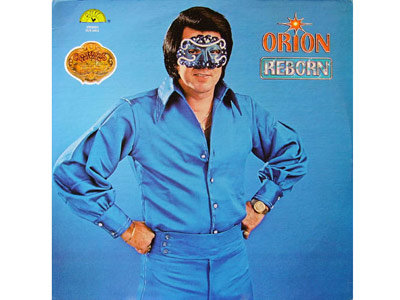
Get to know the man behind the mask!
I’ve been doing this for three months and I decided, since the point of this blog for me is to better understand the mess in between my ears, to do a quick inventory of what I have learned in doing this. Personally, I’m not a big fan of this sort of exercise, but I figure I can indulge my narcissistic tendencies for a few lines. If you are not one for eavesdropping on the self-reflections of a stranger, this is probably the column to skip. In fact, this column is probably of no practical purpose to anyone except me. I’m sure I could think of something to say where it could make it seem like I’m trying to present something of value to the human race and how we’re all the same in some ways and all of that, but it would be highly disingenuous and I haven’t the time or interest to bother. If you can find something worthwhile in the next 900 or so words, more power to you. Away we go:
1. I really enjoy talking to strangers. I get a genuine buzz out of the reply part of the column. I am really excited to see what people think of what I wrote and I like trying to synthesize their ideas with mine. I’m like a 17 year old waiting for the limo to show up on prom night every time I see one of those “Please Moderate Comment” messages in my email inbox. Getting a reply never fails to make my day.
2. I’m a heck of a lot meaner than I thought. For a good number of years, I have functioned under the assumption that I was over the whole “being evil to people” thing. I spent a good portion of my teen years and some of my twenties being downright cruel to others because I liked how the words I was saying sounded. I had a notion that this was gone, but I have had a few moments where I felt bad blood boiling up to the surface again. Sometimes, I get hooked into the rhythm of how things sound and forget that I am talking about another human being. There are moments where I think I would probably throw my grandmother off a speeding train just to see if she’d bounce. I’m not particularly proud of this aspect of my character, but it’s real.
3. Sarcasm reads different than it sounds. I check in with a few of my friends who know me off of here to get a sense of how things came across on the page. What is astonishing is that points I make that I think are obviously sarcastic do not always translate how I think they do. How it sounds in my head is not always how it sounds in other people’s minds.
4. I have no idea what the reader is thinking. This could really be 3B, but I felt like it deserved its own number. There is a weird calculus that must be considered when writing to an audience. You aren’t just thinking of the idea, but also what people will think when they read the idea. Throw in the fact that I don’t really know a lot of the people who are reading my stuff and I get a sense that I am never really going to understand how things are going to be perceived, but I can’t help but to try to figure out what the reader is going to see in my words. The stuff I’ve written that I liked the best is usually way different than the stuff other people have said they liked. It’s a heck of a mystery. What makes it somewhat frustrating for me is that in person, I’m halfway decent at reading a persons response and flowing off of that. In writing, I really am not sure how to do that yet and I’m not sure I’ll ever know or if it is even possible.
5. I am terrified of repeating myself or writing a boring column. There are several things of written that I read and thought, “Wow! This is horrendously bad.” Mercifully, I have not included most of them on the blog (but there have been a few that made it). The worst thing I feel like I could ever do to a reader is bore them. I also worry that I am going forget that I used a line and repeat it in another column. The second one is an odd thing to be worried about, but it wakes me up sometimes in a sweat.
6. Speaking of blinding fear and panic…I am frightened I will run out of ideas. I don’t even want to write about this one because I’m afraid that the god of ideas will decide that to punish me for some earlier, unnamed transgression and the part of my brain that produces creative ideas will seize up like the engine in most any Ford that gets over 125,000 miles. I now have even more respect for people who do this for a living on deadline. I try to imagine doing this and attempting to be interesting for 300 or so days during the year. The thought terrifies me. I think I would sleep about 20 minutes a night and would probably end up in a padded cell scrawling the lyrics from some Beach Boys song in mustard on the wall. Grantland Rice wrote constantly for over 50 years and barely ever wasted anyone’s time. Isaac Asimov managed to knock out over 400 books. I’m only three months in and I’m already doing the hackneyed “talk about myself and what I’ve learned” column.
7. Commas are infuriating. I never know when to use them and they always seem like they are in the wrong place.
8. Spell check will not catch sentences that are just plain awful. It only manages to catch spelling and grammar mistakes. I have snuck some genuine garbage past its watchful eye without a hint of a squiggly green line.
9. I am even more obsessive about this than I thought I’d be. I stayed away from doing this for a while because I have the type of personality where I get very, very into things. I knew this would be an issue going in, but wow. If my wife has to endure another dinner table discussion about potential blog ideas, I’ll shoot me for her.
Enough of this already. I’ll try to get back to something interesting next time. Maybe I can write about what I did on my summer vacation or an exciting tell-all piece about my favorite flavor of ice cream.
How Could Hell Be Any Worse?
Posted by Keith Spillett in Existential Rambings on January 7, 2011

From a distance, it really looks like Cleveland
Lately, I have found myself more and more interested in the Christian idea of hell. Maybe it’s the awful chill of winter. Maybe I’ve been listening to a bit too much black metal. I’m not quite clear what has put me on this mental course, but I have spent a good amount of time thinking about what it would actually be like to be in hell. I don’t even really believe that hell exists. I am not completely against the idea, but I accept that I have no way of possibly proving its existence or non-existence to myself, so I just figure I’ll find out after I die. That is not the part that really interests me. What I want to know is what, assuming that hell is real, would torment a human for eternity.
In the Book of Matthew, we are warned to “be afraid of the one who can destroy both soul and body in hell.” To be honest, I find this quote a bit odd. This implies that we take our body with us to hell. If this is true, one must wonder what that thing in the casket back there on earth is. Is that a wax replica of us at the funeral while the real body goes to hell? Is your body snatched out of the coffin and sent to hell the minute you enter the ground? (But then, what happens if they dig you up?) Does God duplicate our body and send that one to hell while the real one is on earth? Is the body I am currently in an illusion and my real body somewhere in the ethers waiting for judgment? In that case, can I blame the illusion body for the sins committed on earth? After all, the earth body did the things I am getting sent to hell for. As the eloquent, renowned philosopher Silkk The Shocker once said, “It ain’t my fault!!!”
If it is just your soul in hell, that opens up another can of worms. I can specifically tell you that the conditions of hell would be awful on my body, but I can’t predict what extreme heat would do to my soul. No part of the Bible mentions the soul having nerves, so why should we expect that it would feel pain in the way the body does? If it is physical, it is capable of feeling physical pain, but I have not often heard the soul described as a physical thing. It is usually thought to be a spiritual entity independent of the flesh. Most descriptions of the soul are of the ghost in the machine variety, where the soul is a non-physical being that steers our body around then hops out when the body is no longer sentient.
In order to move forward with this line of questioning, I’ll pick the most likely scenario, which is that the soul just recreates your body once you get to hell. There is no reference to this happening in the Bible, but this explanation gets my body in hell, which for the purposes of this argument, is where I want it. Then, we run into another problem. Revelation says that you shall be tormented “forever and ever”. If hell is supposed to be eternal, how can the body and soul be destroyed? I mean, once you are destroyed isn’t that it for you? If the torment of hell is supposed to be eternal, how can it be that you are destroyed? Revelation refers to hell as “a second death”, but what happens after the second time you die. Do you continue to go to new hell after new hell? Do you die and wake up again?
Let’s assume that my body and soul are now in hell which is described in the book of Revelation as being “the lake of fire and brimstone”. I think that would be really terrible…for a while. The thought of an extended amount of time in extreme heat is an awful thought. 20, 30 years would be gruesomely terrible. 100, 200 years would be worse. But, after some point, wouldn’t I just get used to it? I mean, the thought of eternal fire is terrible, but eternity is a long time. My immediate reaction would be a period of unbridled misery. But, after a while, wouldn’t I forget what normal earth temperature felt like and become hardened to the torrid warmth? After a period of time, wouldn’t I get used to the pain? I don’t think this would happen right away, but we are talking about eternity here! Even if time is different between hell and earth, there has to be some point where a person accepts their surroundings, no matter how miserable.
To understand this phenomenon, imagine a thought experiment where from the age of 15 to the age of 100 a person named Bob was awakened by a right hook to the face thrown by Mike Tyson. Day after day, Bob is waylaid by a vicious shot the skull from the former champ. The first 10 or 20 years of this would be awful, but after some period of time wouldn’t Bob simply adjust and accept the beating as the way things are supposed to be. Bob would be able to brace himself and would build up a tolerance to this sort of abuse. Any brief survey of history would lead one to believe that humans have the miraculous ability to adjust to nearly any set of awful circumstances.
Another problem with hell as it’s currently constituted is that going to hell actually removes one of the most dreadful aspects of being alive…. death. In hell, one doesn’t really seem to have a rational reason to fear death. The terror that humans feel from never knowing for certain what the afterlife is has been removed. Dying in hell would be a relief to many who are stuck there. Endless, painless silence would seem to be a good deal better than eternal torture.
There are some basic structural problems with the idea of hell that I cannot quite reconcile. I’d like to believe that whole thing is just an idea created by humans to scare people into doing good, but maybe that is not true. However, if it is real, you have to question its effectiveness. I really have to wonder if it is the most efficient possible use of a sinner’s afterlife.
 The Tyranny of Tradition