Posts Tagged Carcass
Dissecting CARCASS’ “Heartwork” – Second Incision…Carnal Forge
Posted by Keith Spillett in Notes on Carcass Heartwork on May 26, 2011
This is the second in a series of articles analyzing the lyrics from the 1993 Carcass album “Heartwork”.

The second song on the record “Carnal Forge” is one of the more lyrically challenging songs I’ve encountered. When I first got a copy of the record, I sat there with a dictionary for an hour trying to figure out what on earth Carcass was talking about. Jeff Walker is known for having a remarkable vocabulary and this song proves it. Unless you scored in the top one percentile on your college boards, you are going to need help with a few of the words he uses. As a service to our readership with IQs below 160, I took the lyrics and clarified them a bit.
“Carnal Forge”
Multifarious carnage
(A massacre that takes many different forms)
Meretriciously internecine
(A vulgar, disgusting display of death)
Sublime enmangling steelbath
(A glorious, destructive bath)
Of escheated atrocities
(Of things lost to the State through terrible acts)
Enigmatic longanimity of ruminent mass graves
(Quiet graves that show a mysterious ability to suffer without sound)
Meritorious victory, into body-bags now scraped…
(A great win worthy of recognition that is shown by a high body count)
Regnant fleshpiles
(The authority and power of piles of dead bodies)
The dead regorged
(The dead shot out of their graves)
Osculatory majestic wrath
(A union of beautiful anger)
This carnal forge
(Human forms beaten and molded like a blacksmith working with metal)
Desensitized – to perspicuous horror
(No longer able to feel the awfulness of horror)
Dehumanized – fresh cannon fodder…
(Humans reduced to objects and killed on the battlefield)
Meritorious horror
(Something awful being praised for its greatness)
Perspicuous onslaught
(An obvious massacre)
Dehumanized – cannon fodder
Killing sanitized
(Murder in a way that is clean and neat)
Slaughter sanctified
(Murder made holy)
Desensitized – to genocide
(No longer capable of feeling what is wrong with mass murder)
Reigning corpsepiles
(Piles of dead bodies ruling over the land)
Death regorged
(Death shot upwards)
Sousing bloodbath
(Being drenched with blood)
Carnage forged…
(Bloodshed and death turned into something else)
In the cold, callous dignity of the mass grave…
(Respectful mass graves without feeling)
Multiferocious carnage
(Violence taking different forms and leading to a massacre)
Cruel, mendacious creed
(Evil, lying system of belief)
Sublime, murderous bloodbath
(Glorious massacre)
Of fiscal atrocities
(A massacre having to do with money)
Inexorable mettle in redolent consommé
(Unstoppable courage blended into a pleasant smelling soup)
An opprobious crucible of molten human waste…
(A disgraceful furnace of melting bodies)
Priapismic deathpiles
(Bodies piled up to the sky)
Infinitely regorged
(Endlessly shot upwards)
The smelting butchery
(A process of separating metals, a process of slaughtering animals)
Of the carnal forge
Desensitized – to pragmatic murder
(No longer feeling the horror of murder which is committed for practical purposes)
Dehumanized – into cannon fodder…
(Turned into non-human form and destroyed without feeling)
“Carnal Forge” is a searing study of the horrific nature of war. The whole “war is bad” theme has been done to death in heavy metal, but through the use of clever language and Joycean puns, Carcass is able to breathe life into a hackneyed lyrical concept. The major motif in the song is the monstrous merger between mechanized and human form. The effect is that the listener has a difficult time distinguishing between the two. This melding of forms stresses the concept of dehumanization in an even more immediate way. When Walker sings of “inexorable mettle in redolent consommé” he is giving the image of a soup made from mettle (courage) but also a soup made from metal (the human form turned into scrap). “Fiscal atrocities” means the destruction of capital, but also is meant to imply physical atrocity (the destruction of the human form). In these puns, we see a world where the lines blur between the animate and inanimate. When this line is obliterated, so are we. Our willingness to see humans as objects makes it possible for us to murder those who share our likeness. It is in the Carnal Forge of war that our human characteristics are lost.
The ultimate irony of this destruction through desensitization is that it is so engrained in some circles that it is not greeted with horror. Instead, it is celebrated. Soldiers who return are feted with parades; those who do not are given dignified, stately memorials. The dead do not care about these things. They do not care about the flags that cover their caskets, they are not interested in the soldiers firing skyward in their honor, and they do not gaze proudly at their names etched into stone walls. They cease to feel anything in the name of country or God or safety or resources or land or whatever-reason-was-given-to-them as they take their final journey into endless night.
There is no honor in death. The dead only know coldness and silence. Yet through a stroke of pure madness, many believe that the great wrongs that have been committed can be righted through ceremony. The louder we shout our love for the soldiers, the easier it is to forget the great waste of life that has been sacrificed in our names. Even the veneration of the dead is an act of objectification that makes future suffering more possible and even more likely.
Remembrance of their anguish does not wipe the slate clean. It is not for them; it is for us. A genuine act of contrition would be to create a world where massacres are entirely unacceptable, no matter who commits them. We do not live in that world. Instead, we live in a world where idle actions and traditions absolve us of our responsibility to stop the madness of war.
(Special thanks to Metal Matt Longo for his brilliant edit of this. Thanks to his fine work this article is being simulcast by the good folks over at MindOverMetal.org. Stop on by. Tell’em Keith sent ya!)
Dissecting CARCASS’ “Heartwork” – First Incision…Buried Dreams
Posted by Keith Spillett in Notes on Carcass Heartwork, Pointyheaded Highbrow Stuff, The Poetry of Death on May 13, 2011

Heartwork, the 1993 release by Carcass, is easily one of the most compelling metal albums ever recorded. First and foremost, it is an explosion of monstorous guitar riffs, frenetic drumming and raging energy. The music is captivating and overwhelming. Heartwork is a remarkably powerful lyrical album that deals intelligently with issues like globalization, dehumanization and existential dread. The music has been widely praised by many music journalists. The lyrics, however, have been given scant attention. Jeff Walker, the band’s singer, bass player and chief lyricist, envisions a world that is entirely devoid of human feeling or empathy. Walker’s adept use of language, particularly double entendre, lays bare the man’s inhumanity in all of its baseness. His world is an empty one, filled only with sorrow, guilt and deep-seated hatred.
The album behaves like a book, each song a chapter examining a set of widely held beliefs and contrasting them with his vision of a world gone completely insane. Over the next few months, I will attempt to analyze the themes and ideas song by song in an attempt to convey the inventiveness of Walker’s lyrics as well as the perspicacity of his message.
Buried Dreams
Welcome, to a world of hate
A life of buried dreams
Smothered, by the soils of fate
Welcome, to a world of pain
Bitterness your only wealth
The sand of time kicked in your face
Rubbed in your face
When aspirations are squashed
When life’s chances are lost
When all hope is gone
When expectations are quashed
When self-esteem is lost
When ambition is mourned
…All you need is hate
In futility, for self-preservation
We all need someone
Someone to hate
Buried Dreams is a nightmare vision of a world completely unconnected to its humanity. It serves as an overview of the themes that are addressed in each song and is a great starting point because it contains the most unambiguous lines on the record. In Walker’s “world of hate”, humans begin their journey in life filled with hope only to see that hope slowly eroded by the fixed nature of reality. This reality is the death and pain experienced by all humanoid beings. It is immovable, unchangeable and constant. Humans search blindly in the dark for some reason, some deeper meaning that will connect the dots and make the pain they experience intelligible. We fill ourselves with illusions in order to soften the blow of this horrible truth. As the truth becomes more real, we grasp harder at the illusion but ones commitment to an illusion will never make that deception a reality. We slowly come to terms with the understanding that there is no connection, there is no one tending the fire and the center simply does not hold. Once this veneer of meaning has been stripped away there is nothing left to hold onto but pure visceral hatred.
By experiencing hatred for something, we are given the ability to overcome our basic alienation from ourselves all the while connecting to the other beings around us. Love would be another way to connect, but the drawback of love is that it is fleeting. Its initial joy is snuffed out by the understanding that our basic existential problem, death, will cause love to one day give way to sorrow and despair. If you connect with hatred you never have to feel loss because the eventual vanquishing of your foe will be greeted with a feeling of joy and accomplishment. No one mourns the death of their enemy.
On the surface, the lyrics could be read as a simplistic explanation of the rise of fascism in Europe in the 30s and 40s. A society like Germany, which was drowning in debt and filled with impoverished humans recovering from the insanity of years of mindless trench warfare, was ready for the message of hate that Hitler brought. I believe the song is meant to have much more of a timeless message with broader overtones about the human condition. The line that universalizes this song is “in futility, for self-preservation, we all need someone…someone to hate.” This is a Hobbesian view of a world of beings so frightened of death that they are willing to do anything to avoid it, even if they know that their actions are eventually pointless. We are willing to create a Leviathan that may kill us for our disobedience in order to be safe. The wall each of us run into is death and we are willing to embrace any idea that allows us to fully avoid thinking about our eventual consequence. We are willing to embrace ideas that are self-destructive in order to escape the fear of death. If this isn’t true, then how do you explain war? This horrible irony of our basic condition is that we long to avoid death, but we do so in a way that often hastens its coming.
And so our dreams are buried as we are carried kicking and screaming to our own certain demise. We mask our fears with delusions of enemies all around us. We think that we can stop the inevitable if we bomb that thing or execute this thing but with our last dying breath we are reminded of the futility of all of it. Even hate cannot save us. The final, horrible irony of our Buried Dreams is that we will eventually be buried next to them.
(I am pretty darned excited to announce that this series will also be running at MindOverMetal.org, one of my favorite metal sites. Special thanks to my homeboy Metal Matt Longo who not only agreed to run the thing, but even gave me a fantastic title for the series and some killer editing ideas. Anyway those dudes speak truth and wisdom over there, check’em out)
Dumb Metal Rumors and The People Who Love Them
Posted by Keith Spillett in Articles I Probably Shouldn't Have Bothered Writing on April 17, 2011
Metalheads, as a lot, tend to be some the most cynical people on the planet, but we are often willing to believe some amazingly suspect information. Get a roomful of bangers together and most of them will agree that the government, in league with a group of rancorous aliens who crashed in New Mexico, are conspiring to enslave the human race and force us to listen to Black Eyed Peas records until our ears bleed. What can be said of a group that seems to have a universal distrust Christianity but believe strongly in the existence of Satan? We tend to be suspicious of any sort of authority structure, but have complete faith in strangers who happen to arrange a series of musical notes in a way that makes us want to run into each other screaming “KILL!!!!”. In short, we are a group that is susceptible to getting caught up in some bizarre rumors.
Over the years there have been a some I particularly enjoyed. Here are a few of them…
Paging Dr. Goregrind

The story goes something like this…A bunch of frustrated med students dropped out of college moments away from becoming doctors. They took their wealth of medical training and used it to write a series of revolting metal albums in the late 80s and early 90s. These albums, which featured songs with catchy titles like “Swarming Vulgar Mass of Infected Virulency” and “Cadaveric Incubator of Endoparasites”, must have been penned by people with an acute understanding of human anatomy, the type of understanding that could only be gained by hours of study at a medical college. It’s a great story and it actually makes some sense but it is completely untrue. Carcass are, in fact, brilliant musicians with highly overdeveloped vocabularies and no medical training whatsoever. This didn’t stop a friend of mine, years back, from sending a letter to the band offering to allow them to remove his spleen onstage.
Malevolent Obfuscation

The saga of Phil Fasciana, guitarist from the band Malevolent Creation, and his heroic killing of a “80-pound homeless crackhead” Kwik E Mart robber gripped the metal world back in 2009. Apparently, Phil stumbled in looking to buy some chocolate milk and was shot at by the thief. In a scene that seems right out of a bad Don “The Dragon” Wilson action flick (because it probably was), Phil tackled the bad guy and wrestled his gun away. But this cagey crackhead reached for his hideout piece located, in of all places, his sock. Phil was forced to fire on the guy and kill him. There were more holes in the story than in the USS Bismarck. The poor, desperate homeless guy with enough money for two guns. The lack of a murder weapon, a dead body or a witness. Days afterwards, the police confirmed the story was complete nonsense. This didn’t stop a good number of metalheads, myself in particular, from running wild with this fable.
The Parable of The Cave
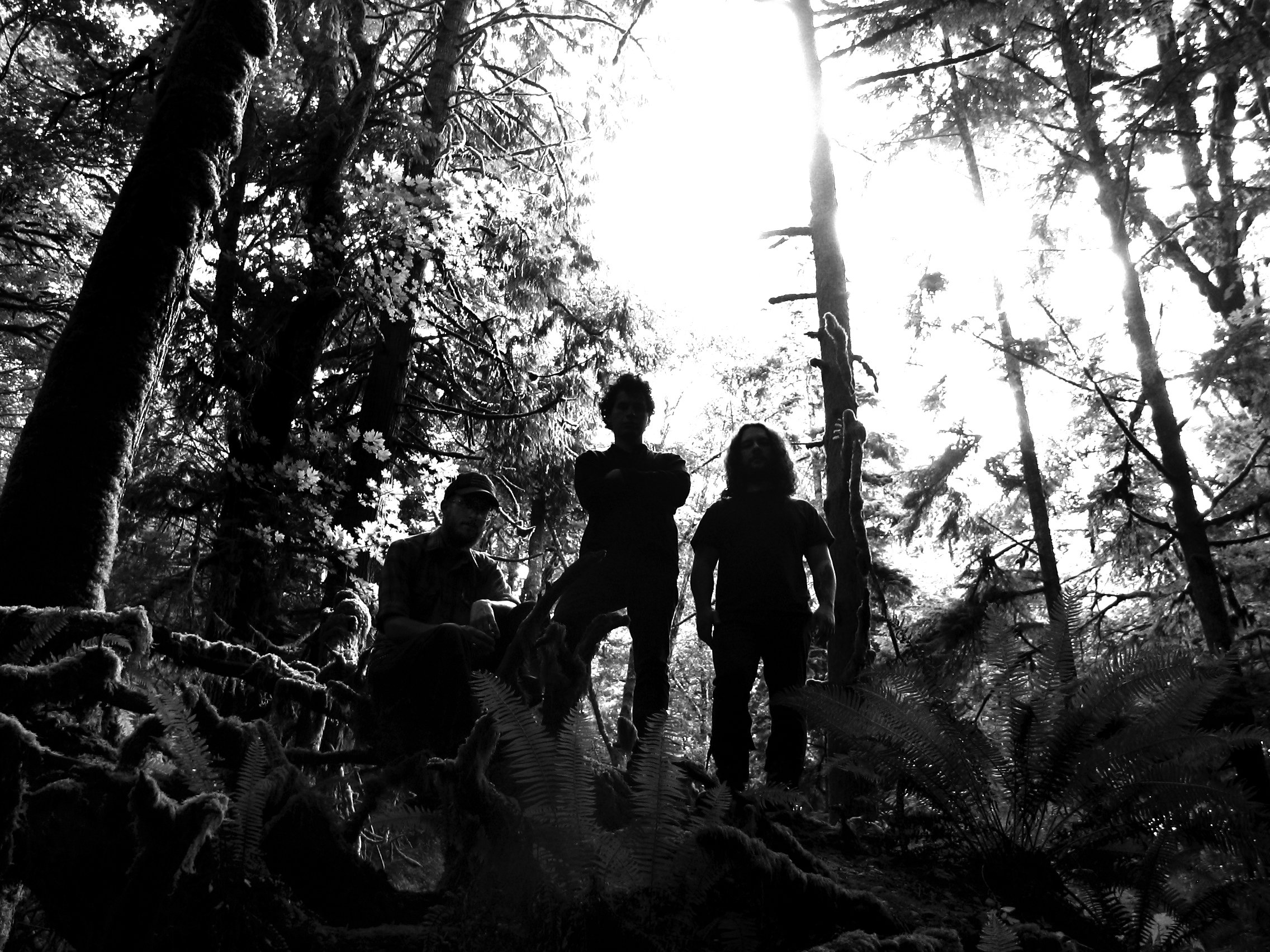
Wolves in the Throne Room are just your average Rudolph Steiner reading, eco-anarchist black metal band. Over the years, they have rightfully gained a reputation for being somewhat eclectic. This, however, does not mean they live in a cave. Nearly every description I heard about the band went like this “They sound like ____________________ and they remind me of ______________________ and, get this, they live in a cave.” In fairness, they do look like they live in a cave, but so do 2/3rds of the metalheads under the age of 25. They live on an organic farm. There are clear structural differences between a cave and a farm that I shouldn’t have to explain.
Dead…Again?

Death rumors are a favorite among metalheads. Back in 2005, Type O Negative pulled off the ultimate hoax when they convinced the world that singer Peter Steele had died. This became quite confusing when Steele actually died last year. Was he really dead this time? Would he rise on the second day as some sort of ironic, Easter-themed publicity stunt? The last album was named Dead Again for gosh sakes! And Rasputin was on the cover. That zany Russian died something like 28 times and kept coming back! This had to be some sick joke. Unfortunately, it was not and Steele has not risen…yet.
The 2005 Steele death was the most convincing death rumor I have heard, but far from the first. I’ll never forget spending an embarrassing evening back in 1993 mourning Pantera singer Phil Anselmo’s untimely death. The word was he had dove off of the stage and the crowd had parted, unwilling to take seriously their responsibilities as members of the metal community, allowing Phil to slam into the floor. His neck broke and he was pronounced dead in the pit. The injustice! I remember mournfully looking at the sky and shouting “I would have caught you, Phil! I would have caught you!”
 The Tyranny of Tradition